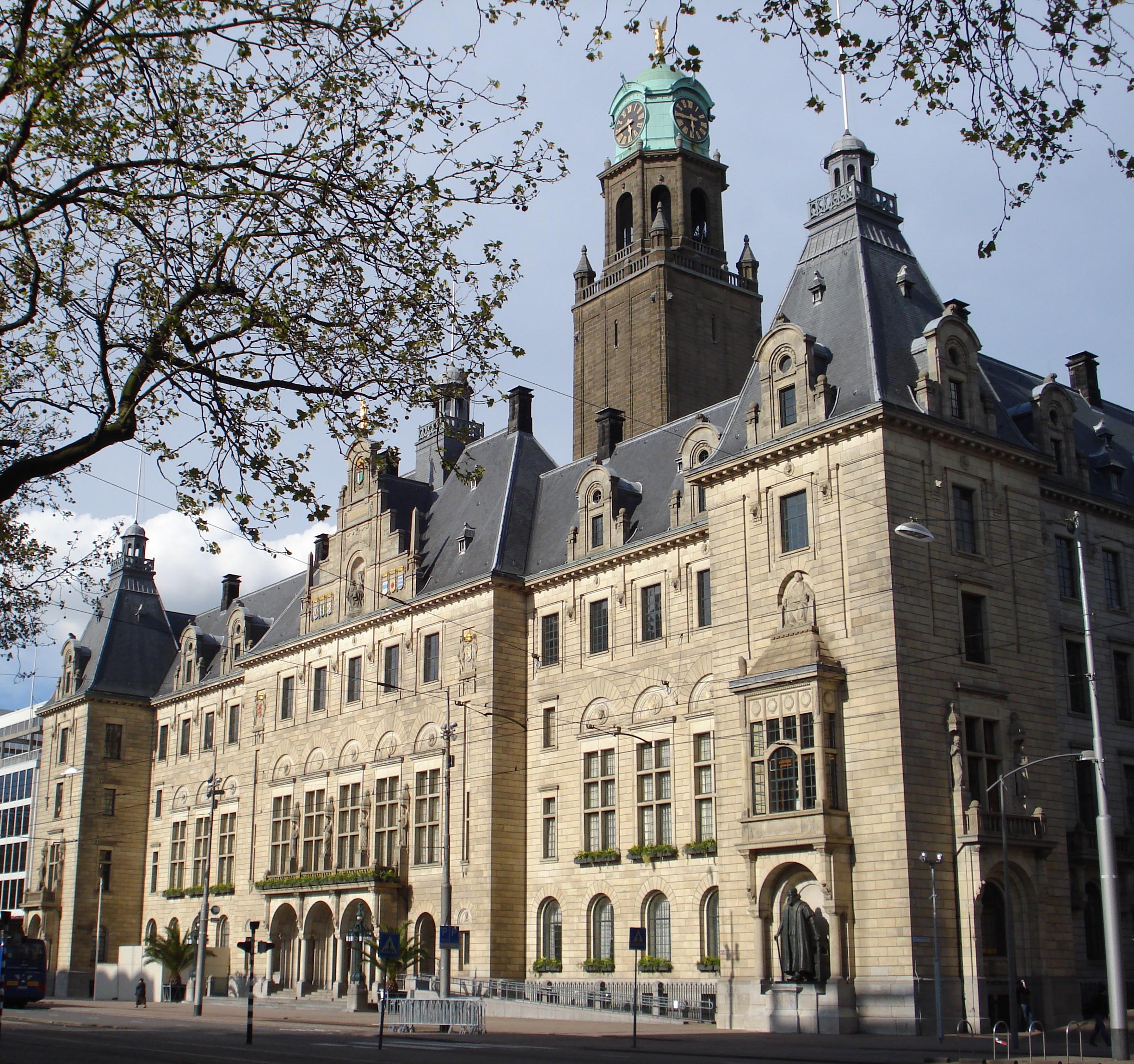
Government of Rotterdam
On 6 March 2002, the populist firebrand Pim Fortuyn led a brand-new local party called Leefbaar Rotterdam to a stunning victory in Rotterdam's municipal elections, winning seventeen seats and unseating the Labour party that had governed the city for decades. Three months later, almost to the day, Fortuyn was shot dead in a parking lot in Hilversum, just nine days before the Dutch national election that he was expected to reshape. The killing - the first political assassination in the Netherlands since 1672, more than three centuries earlier - shocked the country. It did not, however, stop the political shift Fortuyn had set in motion in his adopted city. More than two decades later, Leefbaar Rotterdam is still winning elections in the port city that has spent most of its modern history trying to figure out how to govern itself.
A City That Keeps Eating Its Neighbours
Rotterdam governs the largest port in Europe, and to do that it has had to keep growing - not by accident but by deliberate, often controversial, annexation. The list reads like a survey of the surrounding countryside. The municipality Cool was absorbed in 1816. The historic town of Delfshaven, with 13,651 inhabitants, was annexed in 1886. Charlois followed in 1895. Then, in the great wartime consolidation of 1941, Hillegersberg (population 25,638), IJsselmonde, Overschie, and Schiebroek were all incorporated. The Maasvlakte and the Europoort - those flat, industrial expanses where the supertankers dock - were stitched together from 1966 onward to serve the booming port. As late as 2010, the town of Rozenburg with its 12,500 residents was added. The Rotterdam municipality you see today is not so much a city as a federation of villages, factory towns, dyked polders, and shipping channels, governed from a single building.
The Borough System
For decades Rotterdam tried to soften the strangeness of governing all this from one city hall by giving its fourteen boroughs real autonomy. Until 19 March 2014, each borough had the formal status of a deelgemeente - a submunicipality - with its own directly elected council that held genuine decision-making power over local matters. Schools, parks, neighbourhood policy, much of it was decided in the borough itself, with only city-wide infrastructure left to the central council. The Dutch national government abolished the submunicipalities in 2014. Rotterdam kept the boroughs anyway, replacing the councils with smaller, directly elected gebiedscommissies, area committees, that advise the central council but no longer rule. The port areas, meanwhile, have always been governed straight from the centre. The supertankers do not vote.
The Mayors
Most Dutch mayors are appointed, not elected, which makes Rotterdam's chief executives a roll-call worth knowing. Pieter Oud, the first postwar mayor (1945-1952), helped rebuild the city centre flattened by the Luftwaffe on 14 May 1940. Wim Thomassen oversaw the boom years of the 1960s. Bram Peper governed from 1982 to 1998 and was a quintessential national figure. But the mayor who put Rotterdam on the global political map was Ahmed Aboutaleb, born in 1961 in a Moroccan village near the Mediterranean, who served from 2009 to 2024. He was the first Dutch mayor of immigrant background in a major city, a Labour party figure who in the days after the Charlie Hebdo attack told extremists in his own city, on television, that if they did not like Dutch freedom they could leave. The line travelled around the world. He held the office for fifteen years. In 2024, Carola Schouten of the ChristianUnion succeeded him.
Coalition After Coalition
Dutch local politics runs on coalitions; nobody wins an outright majority. The history of Rotterdam's city executive in this century reads as a study in coalition arithmetic. After Fortuyn's death, his Leefbaar Rotterdam joined the Christian-democratic CDA and the liberal VVD. By 2006 the Labour PvdA was back in power with Green-Left. The 2010 coalition combined Labour, Liberals, social-liberal D66, and Christian Democrats. The 2018 coalition stretched across seven different parties. In 2022, Leefbaar Rotterdam won again and formed a coalition with the VVD, D66, and the multicultural party DENK - a combination almost no other city in the world would assemble. The point is that nobody in Rotterdam governs alone. The port, the boroughs, the immigrant communities, the dockworkers, the white-collar core, the green suburbs of Hillegersberg, the towers of the Kop van Zuid: each has a seat, and any executive that wants to do anything has to negotiate them all into the same room.
From the Air
Rotterdam's city hall sits in the central business district at approximately 51.92°N, 4.48°E. From altitude, the city is unmistakable: the cluster of high-rise towers around Erasmus Bridge and the Kop van Zuid, the snaking Nieuwe Maas, the vast Europoort and Maasvlakte port complex stretching 40 km west to the North Sea. Rotterdam The Hague Airport (EHRD) lies 6 km north of the centre. Amsterdam Schiphol (EHAM) is approximately 65 km north.