The Mansion Nobody Wanted
No governor of California has ever been entirely comfortable in the mansion at 1526 H Street. Ronald Reagan lasted four months before Nancy declared it a firetrap and moved the family to the suburbs. Jerry Brown refused the brand-new replacement mansion that Reagan had built and chose instead a sparsely furnished two-bedroom apartment on N Street. When Brown returned to the governorship decades later, he picked a 1,450-square-foot downtown loft. Gavin Newsom moved in briefly, then decamped for a $3.7 million house in Fair Oaks. The thirty-room Victorian at H Street has survived all of them -- their arrivals, their departures, their complaints about the plumbing -- and it is still standing, which is more than can be said for the replacement mansion Reagan commissioned. That one was sold off and is now a private home.
A Hardware Merchant's Showpiece
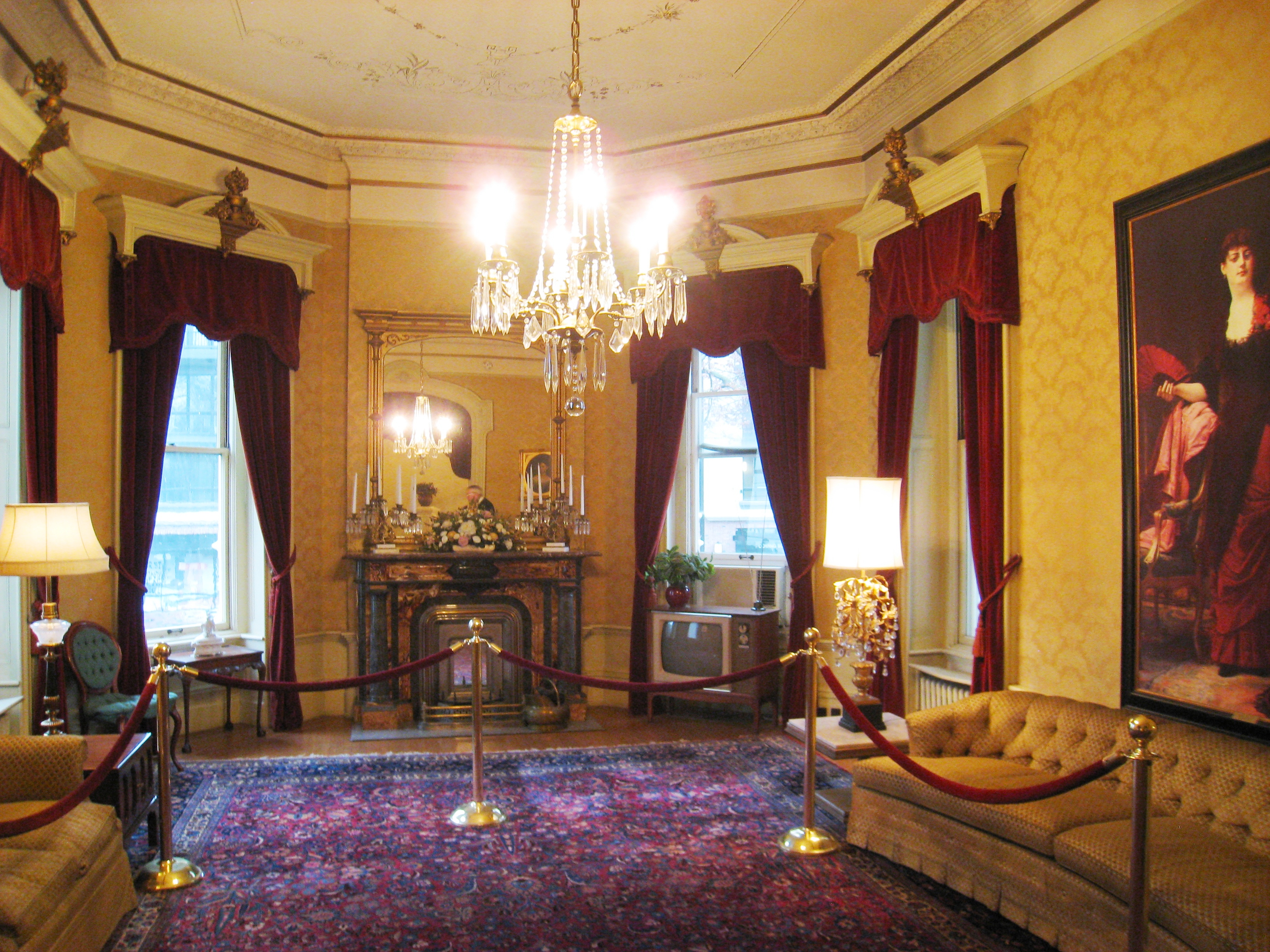
The mansion began as a private home, built in 1877 for Albert Gallatin, a Sacramento hardware merchant with expensive taste. Architect Nathaniel Goodell designed a thirty-room, three-story confection in the Second Empire-Italianate style -- a mansard-roofed tower of ornamental ambition that cost more than $75,000, an enormous sum for the era. Gallatin sold it a decade later to Joseph Steffens, a businessman whose son Lincoln would grow up to become one of America's most famous muckraking journalists. In 1903, the State of California purchased the Steffens house for $32,500 to serve as the official governor's residence. Governor George C. Pardee and his family moved in that November, becoming the first of fourteen governors to call it home. Each left something behind: Pardee's 1902 Steinway piano, Hiram Johnson's velvet chairs, Persian rugs selected by the wife of Earl Warren.
Fourteen Governors and a Firetrap
For sixty-four years the mansion served its purpose, though never without friction. The Victorian bones of the place meant drafty winters, temperamental heating, and a layout designed for nineteenth-century entertaining rather than twentieth-century security. When Ronald Reagan took office in 1967, Nancy Reagan took one look at the mansion's proximity to a busy street, its aging electrical system, and its lack of modern fire safety features, and declared it unfit for a family with children. Fire officials agreed, labeling the building a firetrap. The Reagans leased a house in East Sacramento's upscale "Fabulous 40s" neighborhood at their own expense -- a move that many viewed as snobbish but that set a precedent every subsequent governor would follow for nearly fifty years. In 1967, ownership of the mansion transferred to California State Parks, and by 1970 it had been designated a historic house museum and opened to the public.
The Mansion That Jerry Brown Refused
Reagan's solution to the mansion problem was to build a new one. From 1974 to 1975, the state constructed Casa de los Gobernadores in Carmichael, a Sacramento suburb. It was a sprawling modern residence that Joan Didion would later skewer in her essay "Many Mansions" as "an enlarged version of a very common kind of California tract house, a monument not to colossal ego but to a weird absence of ego." Reagan never lived there -- it was finished after his term ended. His successor, Jerry Brown, flatly refused the new mansion and moved into a two-bedroom apartment at the Dean Apartments on N Street, furnishing it so sparingly that the austerity itself became a political statement. In 1982, the state sold the Carmichael house. It became a private residence, and California was left with neither a usable governor's mansion nor a replacement anyone wanted.
A House That Kept Coming Back
The old Victorian at H Street proved more durable than any plan to replace it. Twice it faced closure -- in 2008 and again in 2012, when it was one of seventy California state parks proposed for elimination during a budget crisis. Both times the threatened closures were averted by cutting hours and maintenance across the park system. Then, improbably, the mansion returned to its original purpose. In 2015, Jerry Brown -- the same governor who had refused the Carmichael replacement -- moved into 1526 H Street with his wife Anne Gust Brown after a $4.1 million renovation updated the electrical and plumbing systems, removed lead-based paint, and installed fire sprinklers and modern security features. For four years, the mansion was simultaneously a working governor's residence and a public museum. Gavin Newsom continued the arrangement briefly in 2019 before relocating to Fair Oaks.
Still Standing on H Street
Today the mansion operates as a state historic park, its rooms furnished with artifacts accumulated across more than a century of gubernatorial occupancy. The Steinway piano still sits in the parlor. The Persian rugs still cover the floors. Visitors walk through the same rooms that housed the father of a muckraking journalist, the friend of Earl Warren, and a succession of governors who each found their own reasons to stay or leave. Around the corner, the Leland Stanford Mansion -- home of the railroad baron and eighth governor -- serves as the state's official ceremonial reception house. Between the two mansions, Sacramento holds more layers of California political history per block than any neighborhood in the state. The Victorian at H Street endures not because it was ever the ideal governor's residence, but because no one has managed to replace it. Every alternative has been abandoned, sold, or refused. The original, imperfect and persistent, remains.
From the Air
Located at 38.58N, 121.48W at 1526 H Street in downtown Sacramento, three blocks northeast of the State Capitol dome. The white three-story Victorian mansion with its distinctive mansard-roofed tower is identifiable from low altitude among the surrounding government buildings. The Leland Stanford Mansion is one block southwest. Sacramento Executive Airport (KSAC) lies 3nm south; Sacramento International (KSMF) is 10nm northwest. Best viewed at 2,000-3,000 feet AGL.