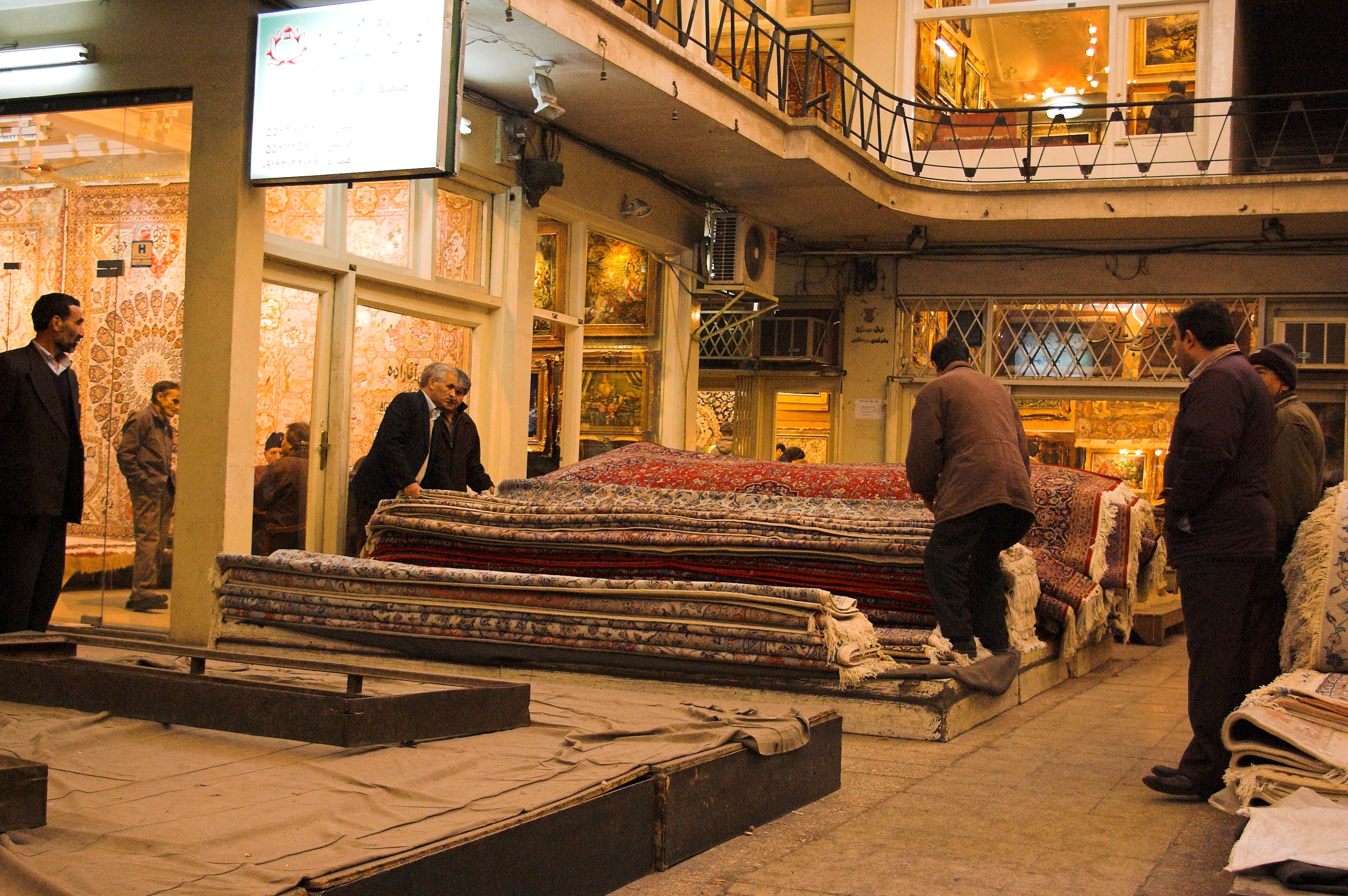
Grand Bazaar, Tehran
Step through one of its arched entrances and the city disappears. Sunlight filters through stained glass set high in vaulted ceilings, casting colored shadows across corridors that stretch for more than ten kilometers. Tehran's Grand Bazaar is not a market in the way most visitors imagine one. It is a city within a city -- a labyrinth of specialized passages where carpets occupy one corridor, gold another, spices a third, and the sound of commerce has echoed off these brickwork ceilings for longer than anyone can precisely date.
Older Than the Capital Itself
No one knows exactly when the bazaar began. Travelers passing through the region in the centuries after the Muslim conquest of Iran -- between 632 and 654 CE -- reported growing commerce in the area the bazaar now occupies. Research suggests that portions of the market predated the rise of Tehran as a significant settlement during the Safavid era. By 1660, Western travelers described it as largely open-air, only partially covered. The bazaar grew as Tehran grew, but it has always been the older presence, the commercial heart that existed before the political one was built around it.
Under the Arches
Walking its corridors today, you can read the bazaar's history in its architecture. Older sections share a consistent style -- arched brick ceilings, natural light channeled through openings above, thick walls that keep the interior cool in Tehran's fierce summers. The sections added in the twentieth century look different, built with less regard for continuity. Under Reza Shah in the early 1900s, modernization reshaped Tehran at breakneck speed, and much of the original bazaar vanished. What survived carries the weight of centuries in its load-bearing walls. Beyond shops, the bazaar contains mosques, guesthouses, and banks. Two Tehran Metro stations -- Khayam and Khordad 15th -- now feed directly into it, connecting the medieval and the modern in a single transit ride. The bazaar was added to the Iran National Heritage List on 24 October 1977.
The Bazaaris and the Revolution
The Grand Bazaar has never been merely commercial. The bazaaris -- the merchant class who have operated here for generations -- form one of the most politically potent forces in Iranian society, bridging the clergy and the middle class. When the 1979 Iranian Revolution gathered momentum, the Grand Bazaar became a center of pro-revolutionary finance and feeling. The bazaaris had their reasons. Mohammad Reza Pahlavi's industrialization program threatened to leave traditional traders behind. The oil boom of 1974 to 1978 enriched the state and its allies but bypassed the bazaar economy. Faced with marginalization, the merchant class threw its considerable financial weight behind the revolution, helping to topple the monarchy they saw as an existential threat to their way of life.
A Barometer of Discontent
The relationship between the bazaar and political power did not end with the revolution. For decades, conservative political forces have maintained the alliance by offering the bazaaris a favorable economic environment -- low taxes, minimal regulation. But the bazaar's loyalty has limits. When the economy strains, the Grand Bazaar speaks. In 2018, merchants shuttered their shops in protest strikes over currency collapse. The pattern repeated in late December 2025, when strikes broke out in the Grand Bazaar over the plummeting rial, quickly escalating into broader demonstrations. What begins among the carpet sellers and goldsmiths of these corridors has a way of spreading through the country. The Grand Bazaar remains what it has been for centuries: not just a place to buy and sell, but a place where the mood of a nation takes physical form.
From the Air
Located at 35.68N, 51.42E in central Tehran, Iran. The bazaar's sprawling footprint is visible from the air as a dense cluster of covered structures near the Golestan Palace in Tehran's historic core. Nearest airport is Mehrabad International Airport (OIII), approximately 10 km west. Imam Khomeini International Airport (OIIE) is about 50 km south. Best observed at 3,000-5,000 feet AGL. The bazaar lies south of the main east-west avenues that define Tehran's modern grid.