Grand Central Airport (California)
The runway is a street now. Grand Central Avenue in Glendale follows the precise path of what was once a 3,800-foot concrete runway — the first paved runway west of the Rocky Mountains, built in 1923 when this patch of Glendale flatland was becoming one of the most important airfields in the country. Charles Lindbergh flew from here. Amelia Earhart bought her first plane here. Howard Hughes built his record-breaking H-1 Racer in a small building at 911 Air Way in 1935. Walt Disney's Imagineering team now works where the hangars used to stand.
The Eccentrics Who Built It
The idea for Grand Central started with Leslie Coombs Brand, a wealthy land developer who built his mansion — Brand Castle, now the Brand Library — on the lower slopes of Mount Verdugo in 1904. Looking across the Los Angeles River, he could see the Griffith Park Aerodrome's grass field. By 1916, Brand had built his own airstrip below his mansion and was hosting fly-in parties. The invitation was unconventional: guests had to arrive by plane and bring passengers.
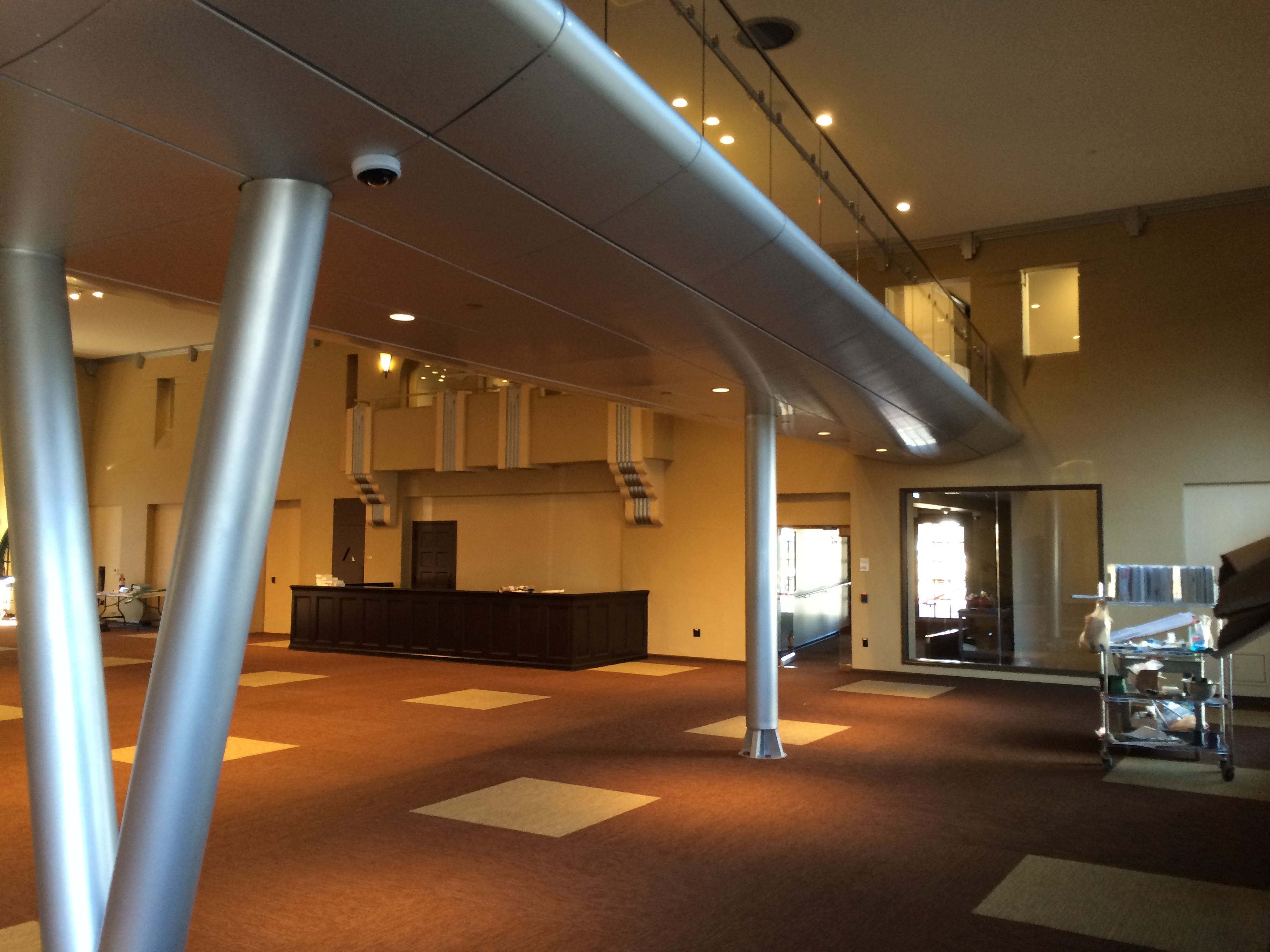
From this hobbyist's beginning, local entrepreneurs developed a proper airport on nearby land. The Glendale Municipal Airport opened in 1923 with a paved runway. It became Grand Central Air Terminal after venture capitalists bought and expanded it. The terminal building, designed by Henry L. Gogerty and opened February 22, 1929, combined Spanish Colonial Revival architecture with Art Deco zigzag moderne. Intended to echo a great railroad station, it announced aviation as the future. It still stands — owned by the Walt Disney Company since 1997 and restored between 2012 and 2014.
The Legends Who Flew Here
Grand Central's guest list reads like the index of an aviation history textbook. Charles Lindbergh organized the first regularly scheduled coast-to-coast passenger flights from Grand Central's runway, through Transcontinental Air Transport — the carrier that would eventually become TWA. Amelia Earhart used the airport regularly and purchased her first plane here. In 1930, Laura Ingalls landed at Glendale to complete the first solo transcontinental flight by a woman.
In 1933, Albert Forsythe and Charles Anderson completed the first transcontinental flight by African American pilots, ending at Grand Central. Their achievement — accomplished at a time when aviation was almost entirely closed to Black pilots — helped inspire the program that would produce the Tuskegee Airmen of World War II. Jack Northrop started his Avion Aviation company on the field in 1927. William Boeing bought Northrop's company and moved it to Burbank. Thomas Benton Slate built an all-metal dirigible here in 1925, named it City of Glendale, and watched it briefly leave the ground in 1929 before it popped some rivets and crashed.
War, Closure, and What Came After
When Pearl Harbor was attacked on December 7, 1941, Grand Central Airport closed immediately to private aviation, like all West Coast fields. The Army moved in, camouflaged the facilities, extended the runway to 5,000 feet, and began training thousands of pilots for World War II — including Royal Air Force cadets who would go on to fly with the Eagle Squadrons against Germany. Hundreds of P-51s, C-47s, and B-25s passed through for refurbishment and reconditioning.
After the war, the airport returned to private use but struggled financially. In 1959, it closed. A portion became an LAPD helicopter pad until 1983. In 1961, Walt Disney bought a large section to establish the creative workshop that would become Walt Disney Imagineering — the team that designs theme parks and attractions worldwide. The Vanguard rocket program built its third stages here in the 1950s; the first two Vanguard rockets to reach orbit had components from the Grand Central Rocket Company.
Today the terminal building operates as a Disney event space and office facility with a small museum. The airplane hangars still stand. The runway is a street.
From the Air
Located at 34.16°N, 118.29°W in Glendale, the former airport site lies south of the Verdugo Mountains along the Los Angeles River. The terminal building at 1310 Air Way is identifiable from low altitude. Grand Central Avenue follows the former runway alignment on a roughly north-south axis. Nearest active airports: Burbank (KBUR, 2 miles NW — the primary regional airport). Best viewed at 1,500–3,000 ft AGL approaching KBUR from the south.