Grand Egyptian Museum
For the first time in history, all 5,398 artifacts from Tutankhamun's tomb are displayed in one place. Not in the cramped halls of the old Egyptian Museum in Tahrir Square, which gave its longtime director Farouk Hosni "headaches and depression," but in a $1.2 billion structure two kilometers from the pyramids themselves. The Grand Egyptian Museum opened on November 1, 2025, after a gestation period longer than most pharaonic building projects -- first announced in 1992, its foundation stone laid in 2002, construction begun in 2005, and its opening postponed so many times that Egyptians began to joke it would outlast the pyramids in construction time.
Designed to Frame the Pyramids
The architectural competition drew 1,557 entries from 82 countries -- the second largest in history. The winners were Roisin Heneghan and Shi-Fu Peng of Ireland's Heneghan Peng Architects, whose chamfered-triangle design does something deceptively simple: its north and south walls align directly with the Great Pyramid of Khufu and the Pyramid of Menkaure, framing the ancient monuments through the museum's glass facade. Visitors standing in the 10,000-square-meter atrium can see the pyramids rising beyond the translucent alabaster and marble walls. At the entrance, an 11-meter, 83-ton statue of Ramesses II -- moved from Ramses Square in Cairo in 2006 -- greets visitors with a reminder of the scale of what lies ahead. A grand staircase six stories tall connects the twelve exhibition halls, displaying more than 60 artifacts arranged in four thematic sections.
Tutankhamun's Complete Court
Two halls spanning 7,500 square meters are dedicated exclusively to the boy king who ruled from roughly 1332 to 1323 BC. The golden Mask of Tutankhamun anchors the display, surrounded by three overlapping coffins -- one solid gold weighing 110 kilograms, two of gold-plated wood. The Golden Throne shows scenes of Tutankhamun and his wife Ankhesenamun in gold and silver relief. There are daggers, bows, beds, chairs, dining utensils, and ushabti -- small figurines meant to serve the king in the afterlife. The halls themselves are designed to echo the original tomb in the Valley of the Kings, with environmental controls protecting the most sensitive pieces. Tutankhamun's mummy, however, remains in the Valley of the Kings. Some things, it seems, are better left where they were found.
A Journey Through Five Thousand Years
Beyond Tutankhamun, the museum's twelve main halls display over 24,000 artifacts arranged chronologically from around 3100 BC to 400 AD. Artifacts were gathered from museums and storage facilities across Egypt -- from Cairo and Luxor to Alexandria and the Nile Delta. Halls one through three cover prehistory through the Old Kingdom. The middle galleries address the Middle Kingdom and the era of foreign rule. Halls seven through nine belong to the New Kingdom, the age of Ramesses and Hatshepsut. The final galleries carry the story through the Greek and Roman periods, when Egypt became a province of empires it had once dwarfed. In a separate hall, the two solar boats of Pharaoh Khufu rest in climate-controlled splendor -- among the oldest wooden ships ever discovered, transferred from the old Giza Solar Boat Museum in 2021.
Opening Night, Thirty-Three Years Late
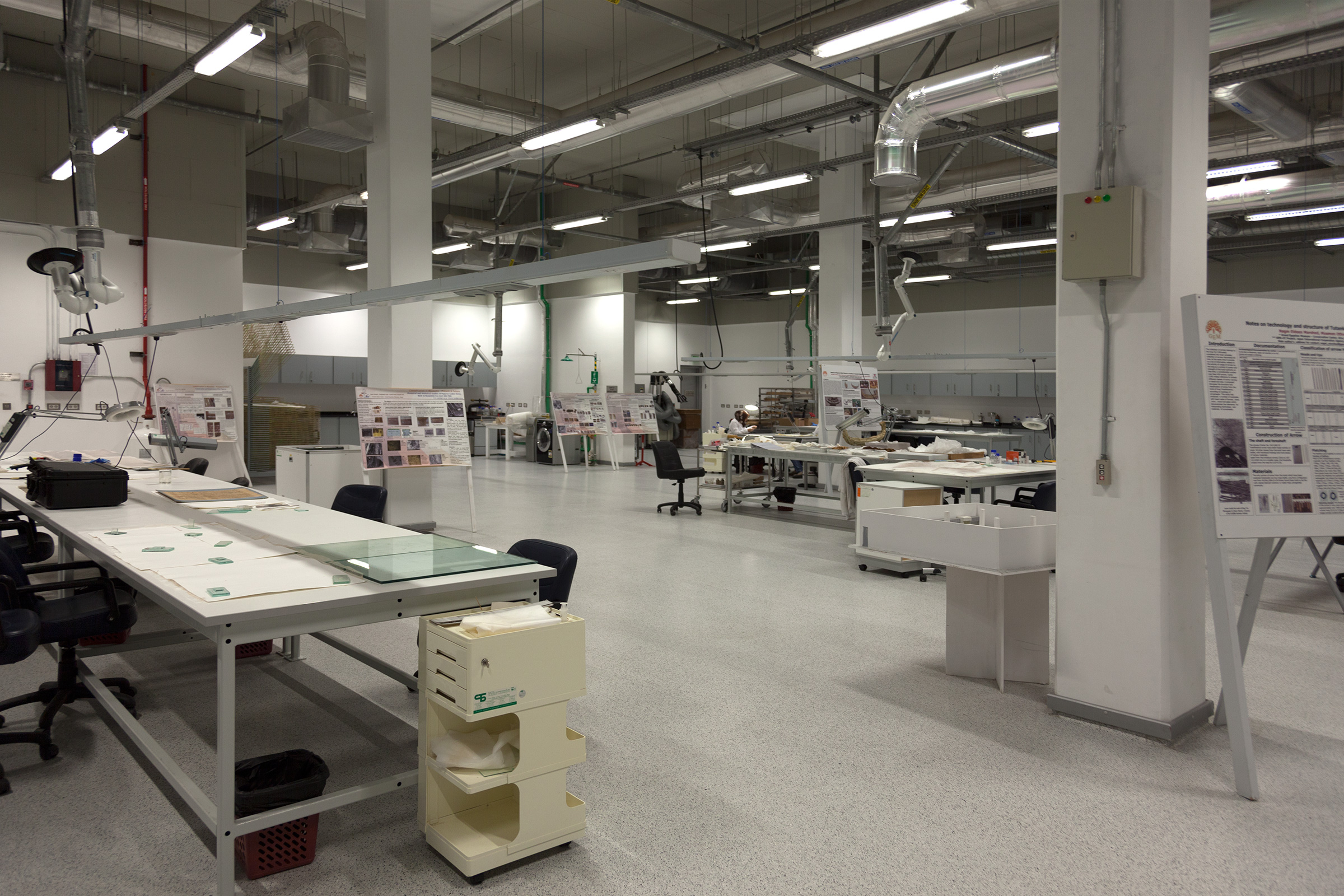
The inauguration ceremony on November 1, 2025, drew an audience that would have impressed a pharaoh: King Philippe of Belgium, King Felipe VI of Spain, Prince Albert II of Monaco, Queen Rania of Jordan, and heads of state from across Europe. The museum had already welcomed approximately 1.5 million visitors during its trial opening beginning in October 2024, averaging 4,000 per day. On its first official day open to the public, 18,000 people walked through the doors. The 500,000-square-meter complex includes a children's museum with augmented reality exhibits, a 1,000-seat conference center, a conservation center that is the largest antiquities restoration facility in the Middle East, and four temporary exhibition halls. It is, by any measure, the largest museum in the world dedicated to a single civilization -- a fact that would not have surprised the civilization in question.
From the Air
Located at 29.994N, 31.120E, approximately 2 km northwest of the Giza Pyramid Complex near a major motorway interchange. The museum's angular modern roof is visible from the air, contrasting sharply with the pyramids to its southeast. Nearest major airport: Cairo International (HECA), approximately 37 km northeast. Sphinx International Airport (HESX) is about 13 km southwest. Recommended viewing altitude: 2,000-4,000 ft AGL to see the museum's geometric relationship to the pyramids. The building's triangular footprint and large plaza of date palms are identifiable features.