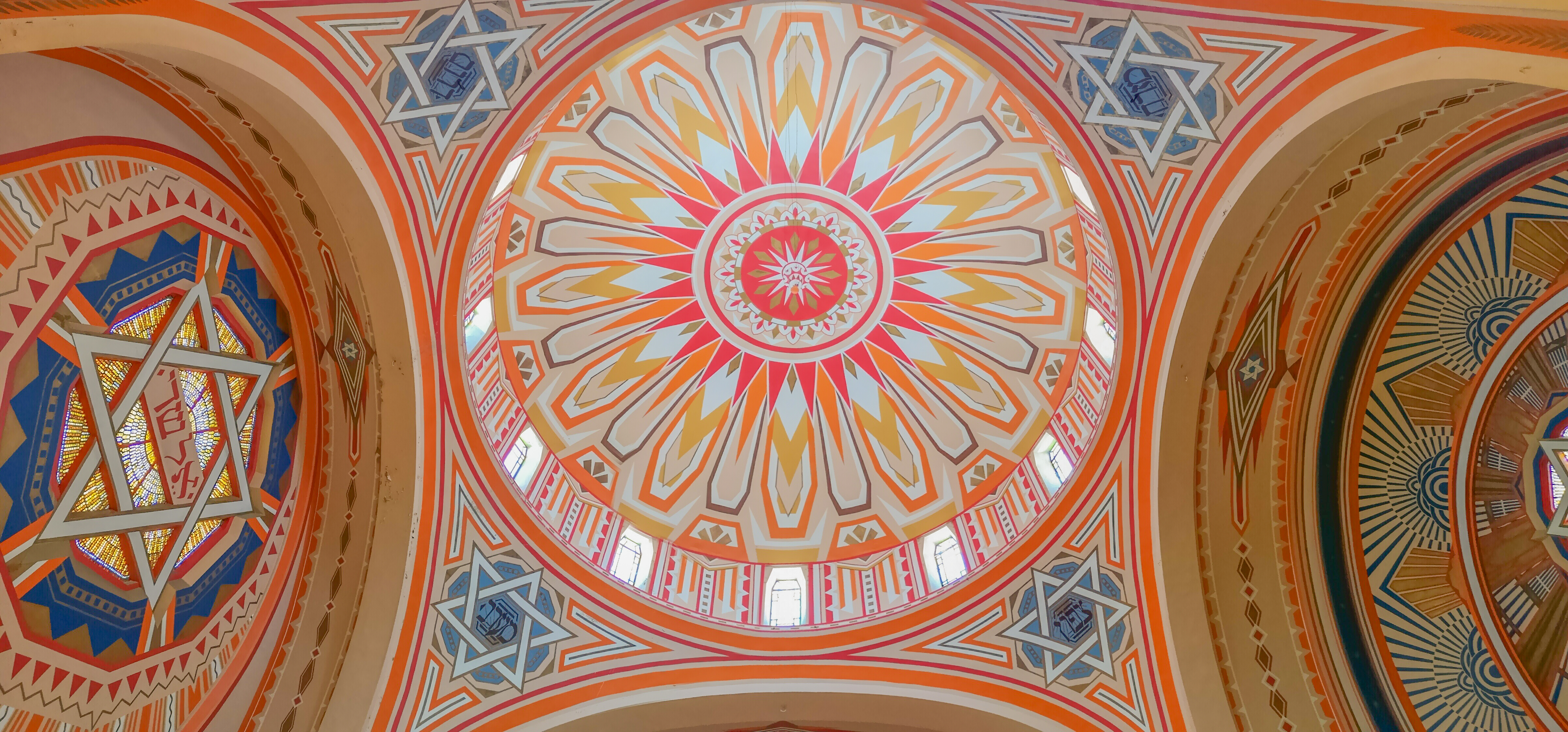
Grand Synagogue of Tunis
A rainbow arched over the Grand Synagogue of Tunis in 2016, captured in a photograph that circulated as a symbol of hope for a building that has needed a great deal of it. The synagogue on Avenue de la Liberte has been shut down by Nazis, burned to the ground by rioters, abandoned for decades, restored by a president, and attacked again. Its history reads like a compression of every trial the Jewish community of Tunisia has endured -- and every act of resilience that kept it from disappearing entirely.
The Dream and the Architect
The idea for a grand synagogue in Tunis originated with Giacomo Di Castelnuovo, a nineteenth-century Italian Jewish statesman who envisioned a building worthy of the community's long presence in North Africa. Jews had lived in Tunisia since antiquity, and by the early twentieth century the community numbered in the tens of thousands. But it took until 1937 for the synagogue to be completed, designed by a French architect who chose the Art Deco style then sweeping through European capitals. The building's geometric lines and decorative flourishes placed it firmly in the modernist vocabulary of the interwar period -- a statement that Tunisian Jewry was cosmopolitan, contemporary, and rooted. The timing, however, was catastrophic. Within three years, France would fall, and the ripples would reach Tunis.
Occupation and Destruction
When Nazi Germany occupied Tunisia during the Tunisian campaign of 1942-1943, the synagogue was shut down. The German occupation, though briefer than in Europe, brought forced labor, confiscation of property, and the deportation of some Tunisian Jews to concentration camps. After liberation by Allied forces, the synagogue resumed operations and the community rebuilt. But the greatest devastation came not from foreign occupiers but from within the region. In 1967, as the Six-Day War raged between Israel and its Arab neighbors, anti-Jewish rioters in Tunis attacked the synagogue, trashing and looting the building, burning it to the ground, and destroying sacred Torah scrolls. The community, already diminished by emigration, largely abandoned the ruined building. For decades the Grand Synagogue stood as a shell.
Restoration and Ongoing Vigilance
In the 1990s, President Zine El Abidine Ben Ali funded the synagogue's restoration -- a political gesture that acknowledged Tunisia's Jewish heritage at a time when most of the community had emigrated to France or Israel. The restored building reopened, though the congregation it serves is a fraction of what it once was. Tunisia's Jewish population, which numbered over 100,000 at independence, has dwindled to roughly 1,500. On June 24, 2022, the synagogue faced violence again when a man stabbed two police officers outside the building. Authorities identified the attack as terrorism. The incident was a reminder that the synagogue's survival requires more than restoration of its Art Deco walls; it requires the kind of vigilance that communities under threat learn to maintain as a matter of daily life. The Grand Synagogue endures on Avenue de la Liberte -- its address, fittingly, the Avenue of Liberty.
From the Air
Located at 36.81N, 10.18E on Avenue de la Liberte in Tunis, in the Ville Nouvelle district. The synagogue's dome is visible from above amid the residential and commercial buildings of the neighborhood. Best viewed at 2,000-3,000 feet. Nearest airport is Tunis-Carthage International (DTTA), approximately 7 km to the northeast.