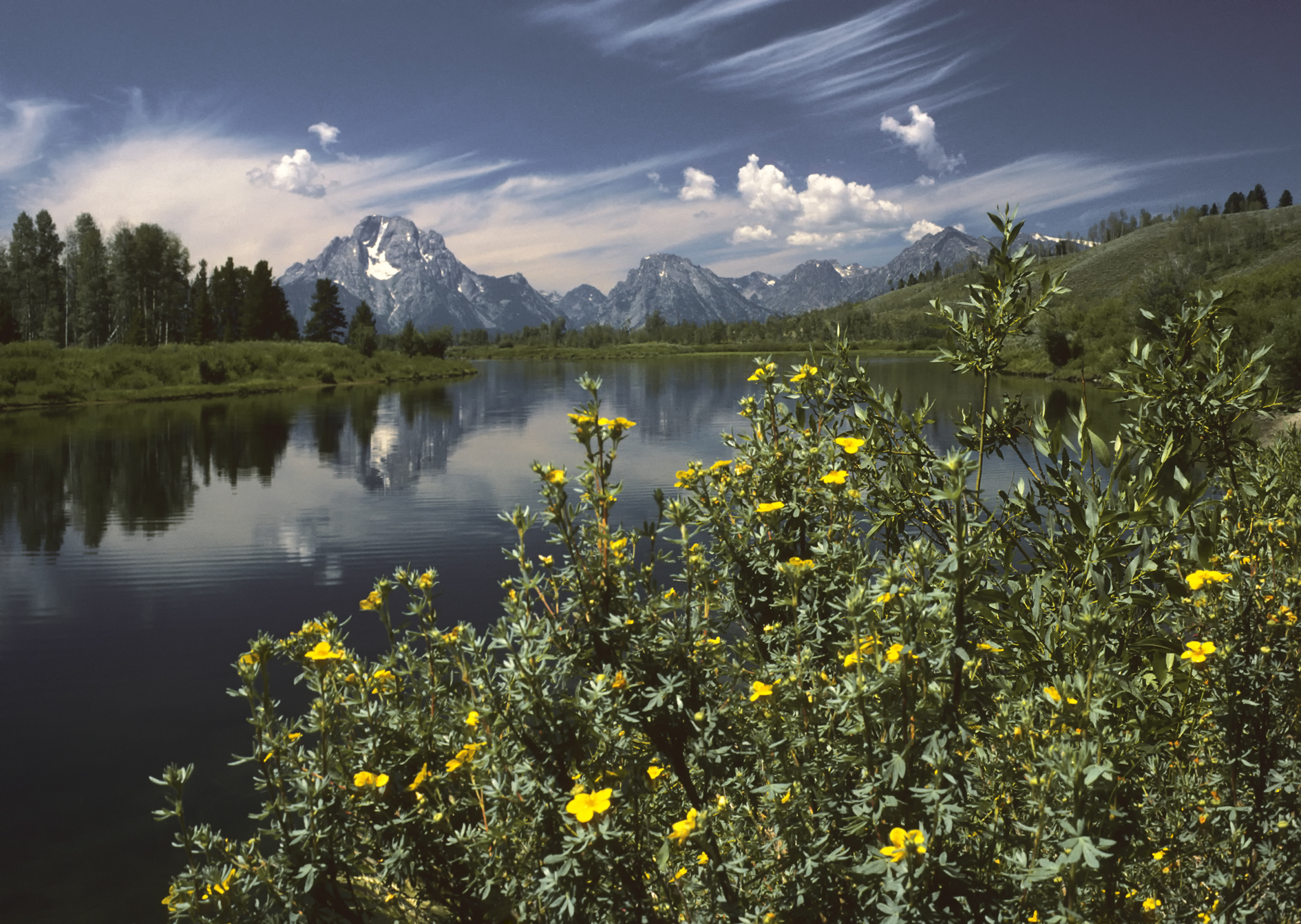
Grand Teton National Park
John D. Rockefeller Jr. employed deception to create this park. In the 1920s, he established a front company to secretly buy up land in Jackson Hole, hiding both his identity and any federal connection. When local ranchers discovered they had unknowingly sold their property for eventual donation to the National Park Service, their outrage nearly derailed the entire project. The legal battles that followed took decades to resolve. This contested history makes Grand Teton unusual among America's national parks: a place saved through subterfuge, where compromise with hunters and ranchers was the only path to preservation.
The Reluctant Park
The story begins in the late 1800s when Colonel S.B.M. Young, acting Superintendent of Yellowstone, first proposed extending that park's boundaries southward to include the Tetons. Local ranchers fought every such effort, fearing the loss of grazing rights. The deadlock broke in 1923 when Yellowstone Superintendent Horace Albright convinced a group of residents to pool private funds to purchase land and lock it away from developers. Albright was the only one at that meeting who openly supported a national park. The others simply wanted to preserve hunting and ranching access. On February 26, 1929, President Calvin Coolidge signed the law creating Grand Teton National Park, but it protected only the mountain peaks and six lakes at their base. The vast Jackson Hole valley remained in private hands.
Rockefeller's Gambit
Rockefeller had fallen in love with Jackson Hole during a visit in the late 1920s. To acquire land without inflating prices, he created the Snake River Land Company as a front. Locals sold willingly to what they believed was a private cattle company. When the deception became public, it sparked a firestorm. Congress repeatedly tried to abolish the monument that President Franklin Roosevelt created in 1943 using the Antiquities Act to protect the Rockefeller-purchased lands. World War II delayed final resolution, but by 1950, national sentiment had shifted toward conservation. The compromise that merged monument and park allowed limited hunting and grazing and permitted some private guest ranches to continue operating.
Seasons of Extremes
Jackson Hole averages fifteen feet of snow in winter and can reach eighty degrees Fahrenheit in summer. The valley sits at over 6,000 feet elevation, with temperatures dropping four degrees for every thousand feet of rise. Valley trails remain snow-covered until late May, and high-elevation hiking routes stay frozen until mid-July. Afternoon thunderstorms are common in summer, and the weather can change with little warning. Sub-zero temperatures are standard throughout winter. Moose and other wildlife frequently cross roads year-round, a reminder that vehicles share these landscapes with creatures that have traveled these paths for millennia.
One Airport, Inside the Park
Jackson Hole Airport holds the distinction of being the only commercial airport located entirely within a U.S. national park. The airstrip was built in the 1930s, before the monument designation absorbed it. Today it operates under some of the strictest noise abatement regulations in the country. American, Delta, Frontier, and United serve the airport with seasonal variations in service. Salt Lake City International lies about six hours away by car. The park's entry fee stations sit deep within its boundaries, which means visitors can access sections of the park, including the airport, without paying admission.
Wildlife at Every Turn
The park is famous for its populations of elk, bison, moose, and bald eagles. Elk migrate between the National Elk Refuge at the southern end of Jackson Hole and Yellowstone to the north, passing through Grand Teton in spring and fall in numbers that make them easily spotted any time of year. Moose tend to stay near waterways and wetlands. Bison graze the valley floor. The 3,100-mile Continental Divide Trail passes through the park, and an extensive network of trails enters from all sides. Yellowstone lies just to the north, connected by the John D. Rockefeller Jr. Memorial Parkway. Together with surrounding national forests, these protected areas form the Greater Yellowstone Ecosystem, one of the largest intact mid-latitude temperate ecosystems on Earth.
From the Air
Grand Teton National Park is centered around coordinates 43.838N, 110.705W in northwestern Wyoming. The Teton Range rises dramatically from the valley floor without foothills, making it one of the most visually striking mountain approaches from the air. Jackson Hole Airport (KJAC) lies within the park at 6,451 feet elevation, with strict noise abatement procedures. The park connects to Yellowstone National Park to the north. Best viewed at 8,000-12,000 feet MSL on clear days. The Snake River winds through Jackson Hole, and alpine lakes including Jackson Lake, Jenny Lake, and Leigh Lake are visible as blue mirrors at the base of the peaks.