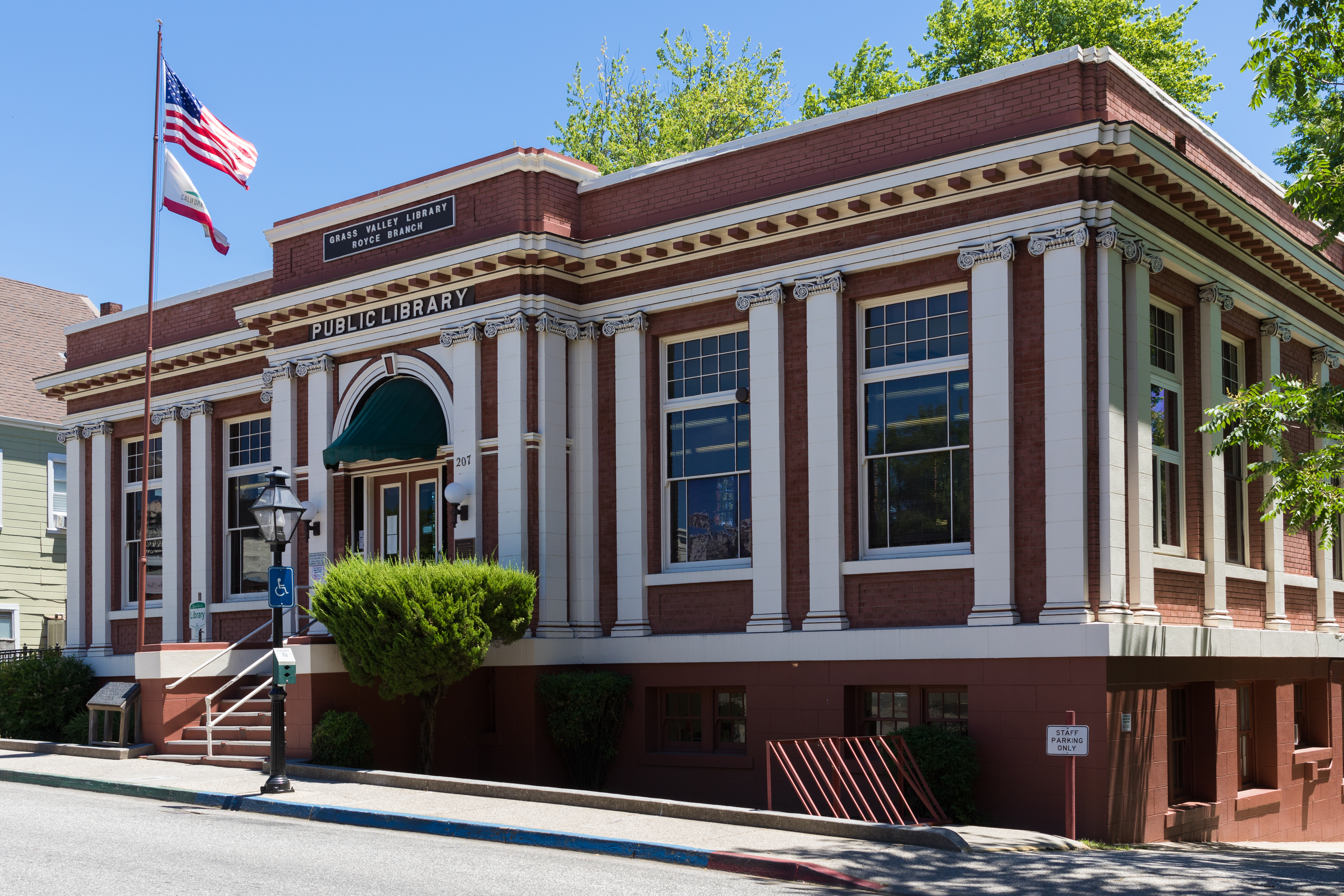
Where Gold Hid in the Rock
In October 1850, a miner named George Knight stumbled on a hillside above Wolf Creek and found gold where nobody expected it -- not in a streambed, not in a gravel bar, but threaded through white quartz rock like veins in marble. He pounded the outcropping with a cast iron skillet, washed out the dust, and dug down to find a four-inch vein of solid gold. That moment changed everything. Placer mining -- scooping nuggets from rivers -- was already fading across the Sierra Nevada foothills. What Knight discovered at Gold Hill launched an entirely different industry: hard-rock quartz mining, which would define Grass Valley for the next century and draw thousands of Cornish miners from the tin and copper mines of southwest England to this unlikely patch of California.
The Cornish Underground
By the 1870s, Grass Valley had become the most Cornish town in the American West. The miners Cornwall sent were not adventurers panning for luck -- they were professionals who had spent generations cutting through hard rock in the world's deepest tin mines. They brought techniques the California miners had never seen: the Cornish pump, a steam-driven engine that could drain 18,000 gallons of water per day from flooded shafts. They brought the knowledge of timbering, ventilation, and controlled blasting that made deep mining survivable. By the 1890s, an estimated sixty percent of Grass Valley's population was Cornish. They brought their culture too -- the Cornish pasty became the miners' lunch of choice, a complete meal baked into a crimped pastry crust that could be eaten with dirty hands, holding the thick edge and discarding it afterward. The town's sister city today is Bodmin, Cornwall.
The Empire's Long Reach
The Empire Mine, which opened in 1850, became the richest hard-rock gold mine in California. Over 106 years of operation, it produced 5.8 million ounces of gold extracted from 367 miles of underground tunnels -- a labyrinth that extended more than a mile beneath the surface. At its peak, the mine employed hundreds of men working in stifling heat at depths where the rock itself was warm to the touch. The operation survived fires, floods, labor disputes, and two world wars. It did not survive economics. In 1956, a miners' strike over falling wages shut the Empire down for good. The tunnels flooded. The headframes rusted. Then in 1975, the State of California purchased the property and transformed it into Empire Mine State Historic Park, preserving both the industrial ruins and the mine owner's elegant stone cottage -- a jarring reminder that the wealth extracted from darkness built beautiful things in the sunlight above.
Dancers, Philosophers, and the Voice of Minnie Mouse
Grass Valley's most improbable legacy may be its residents. On Mill Street in the 1850s, the scandalous dancer Lola Montez -- former mistress of the King of Bavaria -- kept pet bears and taught her six-year-old neighbor, Lotta Crabtree, to sing and dance. Crabtree went on to become the highest-paid actress in America. Down the road, the philosopher Josiah Royce grew up in a household shaped by the moral intensity of Gold Rush California, experiences that fed his lifelong work on community and loyalty. Marcellite Garner, who painted animation cels at Disney, became the original voice of Minnie Mouse. Chuck Yeager, the first pilot to break the sound barrier, lived here. Lyman Gilmore, a locally celebrated aviation pioneer, built and flew experimental aircraft from a field that now bears his name as a middle school. Wallace Stegner set his Pulitzer Prize-winning novel Angle of Repose in the town, drawing on the life of the illustrator Mary Hallock Foote, who had lived and worked here alongside her mining engineer husband.
Gold Country, Still
Modern Grass Valley is a town of about 14,000, perched at 2,500 feet in the Sierra Nevada foothills where State Routes 49 and 20 intersect. The Gold Rush left a physical legacy that the town has learned to live with -- and on. Tourism anchors the economy now, feeding off the historic downtown, the Empire Mine park, and the Holbrooke Hotel, which has operated since 1862. Nevada County's fertile soil supports a growing wine industry and organic farms. A surprising cluster of high-tech electronics companies operates here, a lineage traceable to the Grass Valley Group, a media technology firm founded in 1959 whose broadcast equipment became an industry standard. Many working residents commute the long haul to Sacramento or even the Bay Area, making Grass Valley one of California's super-commuter towns. But the town's identity remains rooted in rock and gold. The site where George Knight swung his skillet is California Historical Landmark number 297. The quartz veins are still there, locked in the hillside, glinting when the light is right.
From the Air
Located at 39.219N, 121.058W at approximately 2,500 feet elevation in the western Sierra Nevada foothills, Nevada County, California. From the air, Grass Valley appears as a compact town nestled in forested hills at the junction of SR-49 and SR-20. The Empire Mine State Historic Park is visible to the east as cleared land with historic structures. Nevada County Air Park (KGOO) is 3 miles east at 3,154 feet elevation. Sacramento International Airport (KSMF) is approximately 55 nm southwest. Auburn Municipal Airport (KAUN) is about 25 nm south. Best viewed at 3,000-5,000 feet AGL in clear conditions.