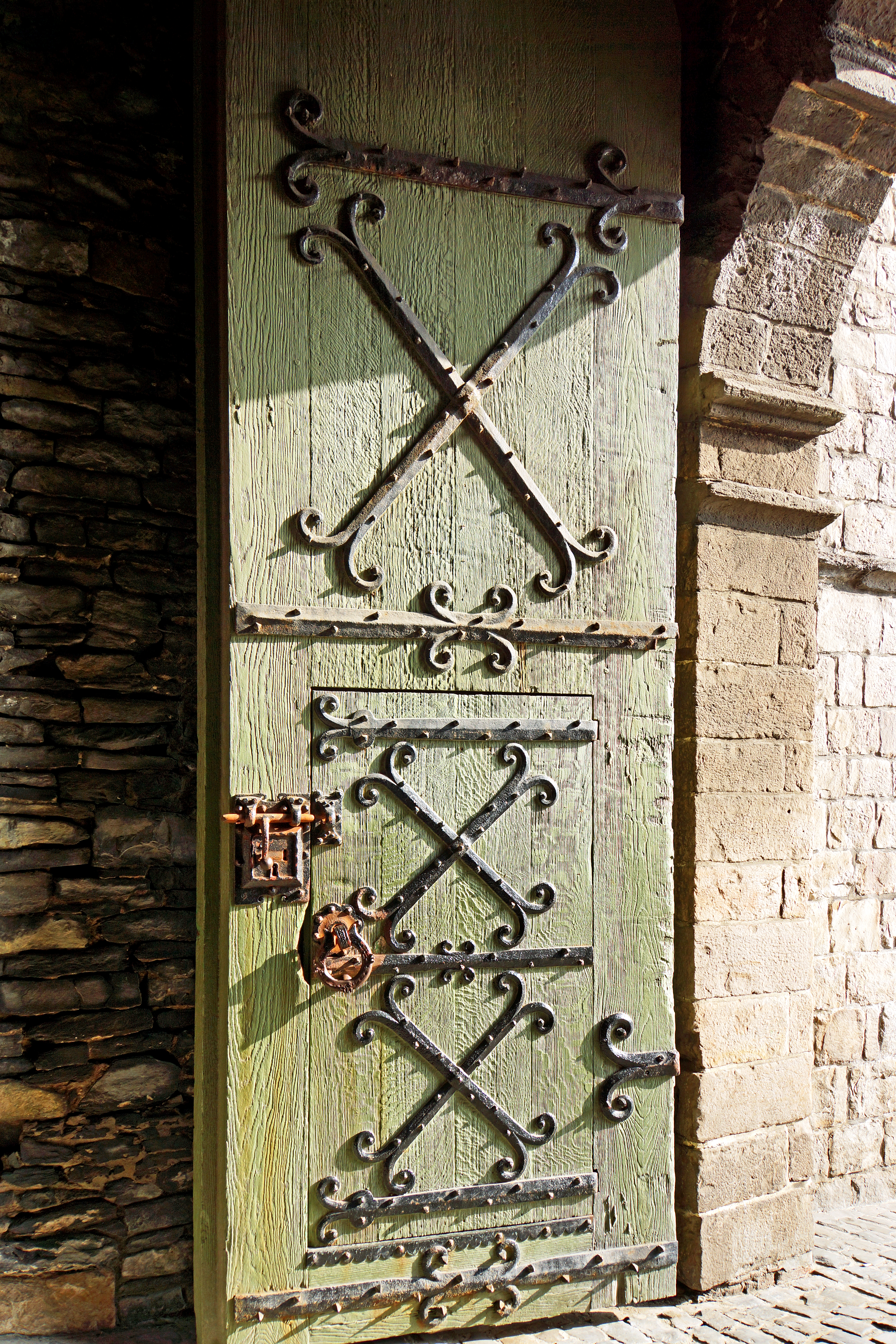
Gravensteen
The Gravensteen nearly became a parking lot. By the late 19th century, Ghent's Castle of the Counts had spent five centuries declining from feudal stronghold to courtroom to prison to cotton mill. Factory buildings cluttered the medieval walls. The city discussed demolition. Instead, between 1893 and 1907, architect Joseph De Waele stripped away the industrial additions and restored the fortress in a romantic Gothic style that captured what Victorians imagined a medieval castle should look like. Today the Gravensteen dominates central Ghent exactly as the Counts of Flanders intended when they rebuilt it in 1180.
Origins in Wood and Stone
The site's strategic value was obvious to Arnulf I, Count of Flanders, who ruled from 890 to 965. Two branches of the river Lys met here, creating a natural defensive position. Around the year 1000, the first fortifications appeared, initially in wood. Stone replaced timber, and the structure evolved into a motte-and-bailey castle, the standard military architecture of early medieval Europe. That fortress burned in 1176. The current castle dates from 1180, when the rebuilt Gravensteen emerged as a statement of Flemish power. A dedication stone from that year still marks the entrance, announcing the origins of what would serve as the counts' residence until 1353.
From Counts to Cotton
When the Counts of Flanders departed in 1353, the castle began its long decline. Courts met within its walls, and the dungeon held prisoners. From 1353 to 1491, the Gravensteen housed Ghent's mint, pressing coins in chambers where nobles once dined. Private buildings crept over and around the medieval remains, obscuring the original form. The Industrial Revolution transformed Ghent into a major textile center, and the castle's thick walls proved useful for a new purpose: a cotton mill took up residence within the fortress. Looms and spindles occupied spaces designed for armored knights. The conversion seemed logical at the time, putting old stones to profitable use.
Rescue and Reinvention
The City of Ghent gradually acquired portions of the castle, recognizing that demolition would erase something irreplaceable. Beginning in 1893, Joseph De Waele led a restoration that lasted until 1907. His approach reflected Victorian sensibilities: a romanticized Gothic style that emphasized dramatic features and swept away the accumulated layers of later centuries. Photos from before the restoration show factory buildings still attached to the walls. During the work, these additions were demolished, revealing the medieval silhouette beneath. The result is not precisely what the 12th-century builders created, but it captures the spirit of a fortress built to intimidate.
A Castle for the Citizens
The Gravensteen now serves as a museum, welcoming visitors to explore the great hall, the count's residence, the dungeons, and the ramparts with their views across Ghent's rooftops. The castle that once enforced aristocratic rule belongs to the city it once dominated. Inside, exhibits display arms and armor alongside the instruments of justice and punishment that were used when the building served as a court and prison. The transformation from seat of power to public monument mirrors Ghent's own journey from medieval trading powerhouse to modern Belgian city. On the streets below, cafes and shops fill the spaces where subjects once approached their lord's fortress with appropriate fear.
From the Air
Located at 51.057N, 3.721E in the heart of Ghent's old city center. The castle sits between two branches of the Lys river, with the distinctive central keep and surrounding walls clearly visible from altitude. The Execution Bridge lies immediately adjacent. Look for the fortress shape amid the medieval street pattern, with the Belfry's golden dragon visible to the southeast. Nearest airports: Ghent-Wevelgem (EBKT) 45km west, Brussels (EBBR) 55km east. The castle's footprint is compact but unmistakable from the air.