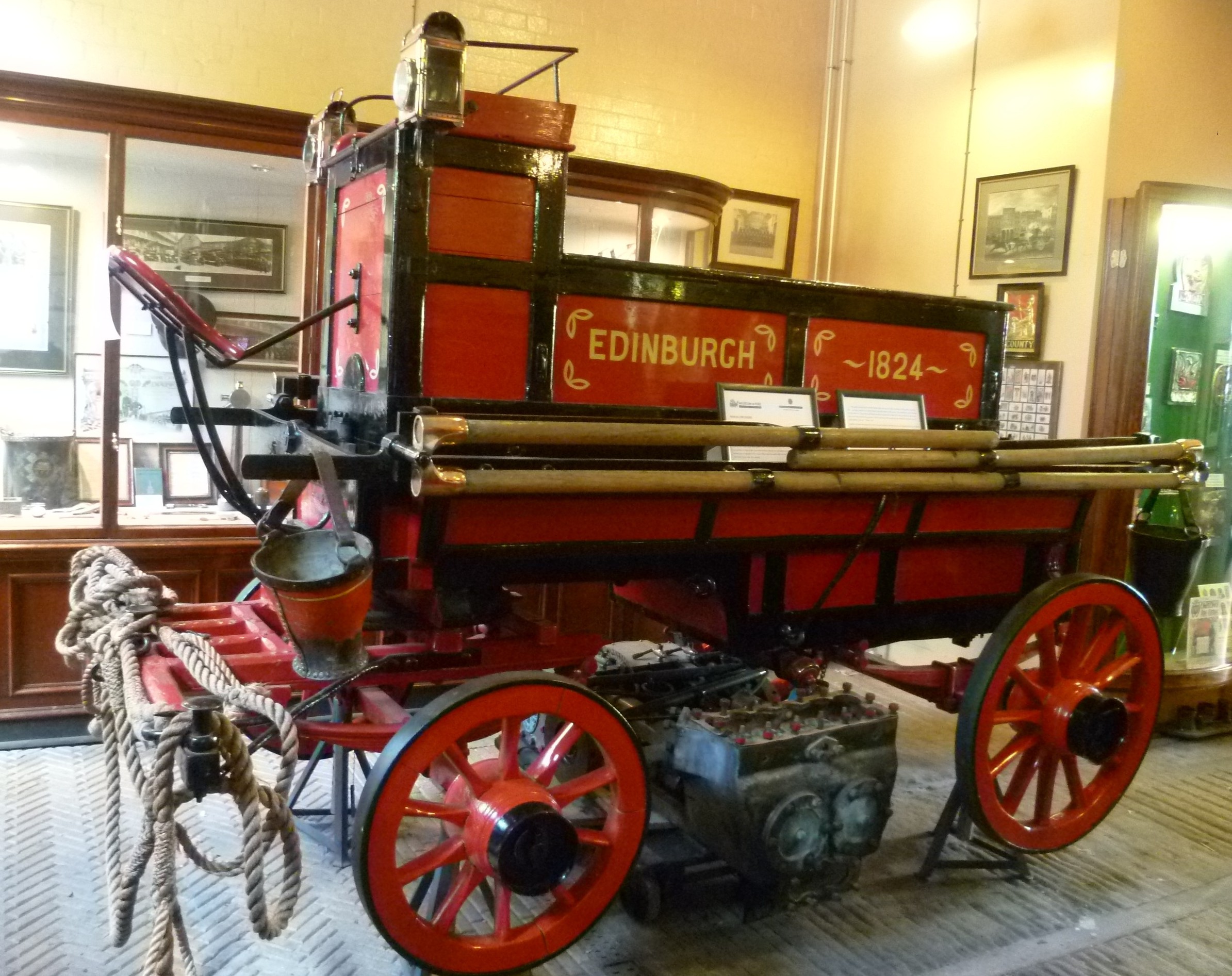
Great Fire of Edinburgh
Edinburgh had formed its permanent fire brigade only two months earlier. On the evening of 15 November 1824, at around ten o'clock, that brigade received its baptism by fire -- literally. A blaze erupted in James Kirkwood's engraving workshop on the second floor of Old Assembly Close, a narrow alleyway off the High Street, and it would burn for five days. The Great Fire of Edinburgh destroyed approximately 400 homes, left up to 500 families homeless, killed thirteen people including two firemen, and consumed some of the oldest buildings in the Old Town. It also transformed how Britain thought about fighting fires.
Monday Night to Tuesday Noon
The new firemaster, James Braidwood, arrived quickly with custom-built fire engines. But the brigade could not locate a water supply and did not begin fighting the blaze until eleven o'clock, by which time six storeys of the building were engulfed. The Old Town's narrow closes acted as chimneys, channeling the flames upward and outward. By midnight, four tenements were ablaze and the fire was advancing toward the Cowgate. The Old Assembly Hall, which had given the close its name, was destroyed overnight. Around midday on Tuesday, the spire of the Tron Kirk caught fire. Molten lead poured from the roof as firemen reached the church only to be forced back by the intensity of the heat.
The Second Outbreak
At ten o'clock on Tuesday evening, a secondary fire erupted on the corner of High Street and Parliament Close -- likely caused by a smouldering ember, though contemporaries whispered about divine punishment. This blaze started on the top floor of an eleven-storey building overlooking the Cowgate and began consuming buildings on the east side of Parliament Close. The fire brigade focused everything on saving Parliament Hall, the Law Courts, and St Giles Cathedral. A young David Octavius Hill, who would later become one of Scotland's pioneering photographers, made watercolour sketches of this second phase from the west side. By five in the morning on Wednesday, the conflagration was described as "grand and terrific." It was rain, not firefighting, that finally brought the fire under control by Wednesday evening, though smouldering continued until Friday.
What Was Lost
The damage inventory reads like a catalogue of the Old Town's history. Four six-storey tenements on the High Street. Four seven-storey tenements on Old Assembly Close. Six tenements on Borthwick's Close. Four double tenements of seven to eleven storeys on Parliament Close, including the birthplace of the biographer James Boswell. The offices of the Edinburgh Courant newspaper. John Kay's caricature shop. Two timber-framed tenements on Conn's Close of great antiquity were destroyed completely. St Giles Cathedral was scorched so badly that it was entirely refaced in ashlar between 1829 and 1833. The Tron Kirk's steeple was rebuilt in 1828 with a tall stone spire in the Wren style. A surviving building to the west was nicknamed Salamander Land, after the legendary creature that can survive fire.
Braidwood's Legacy
Public criticism of the young firemaster was intense, and an inquiry followed. Braidwood and his pioneers -- as the first professional firemen were called -- were exonerated. The inquiry discovered something more damning: public officials, bailies, law officers, and various "Gentlemen of Importance" had assumed authority under outdated regulations and issued contradictory orders to the firemen as they fought the flames. The resulting reform was simple and revolutionary: the City Firemaster was given complete command of all firefighting operations, with no civilian interference. This principle was subsequently adopted throughout Britain's fire services. The number of fire hydrants was increased from 45 to 97 within a year, with 88 more following. In 2008, a statue of Braidwood was unveiled in Parliament Square, on the spot where his brigade made its stand to save St Giles Cathedral.
From the Air
The Great Fire of Edinburgh occurred along the Royal Mile at approximately 55.950N, 3.189W, centered around the High Street between the Tron Kirk and St Giles Cathedral. Parliament Square and the surrounding closes are visible from altitude. Nearest airport: Edinburgh (EGPH), approximately 6 nm west. The Old Town's medieval layout of closes and tenements is still visible from the air.