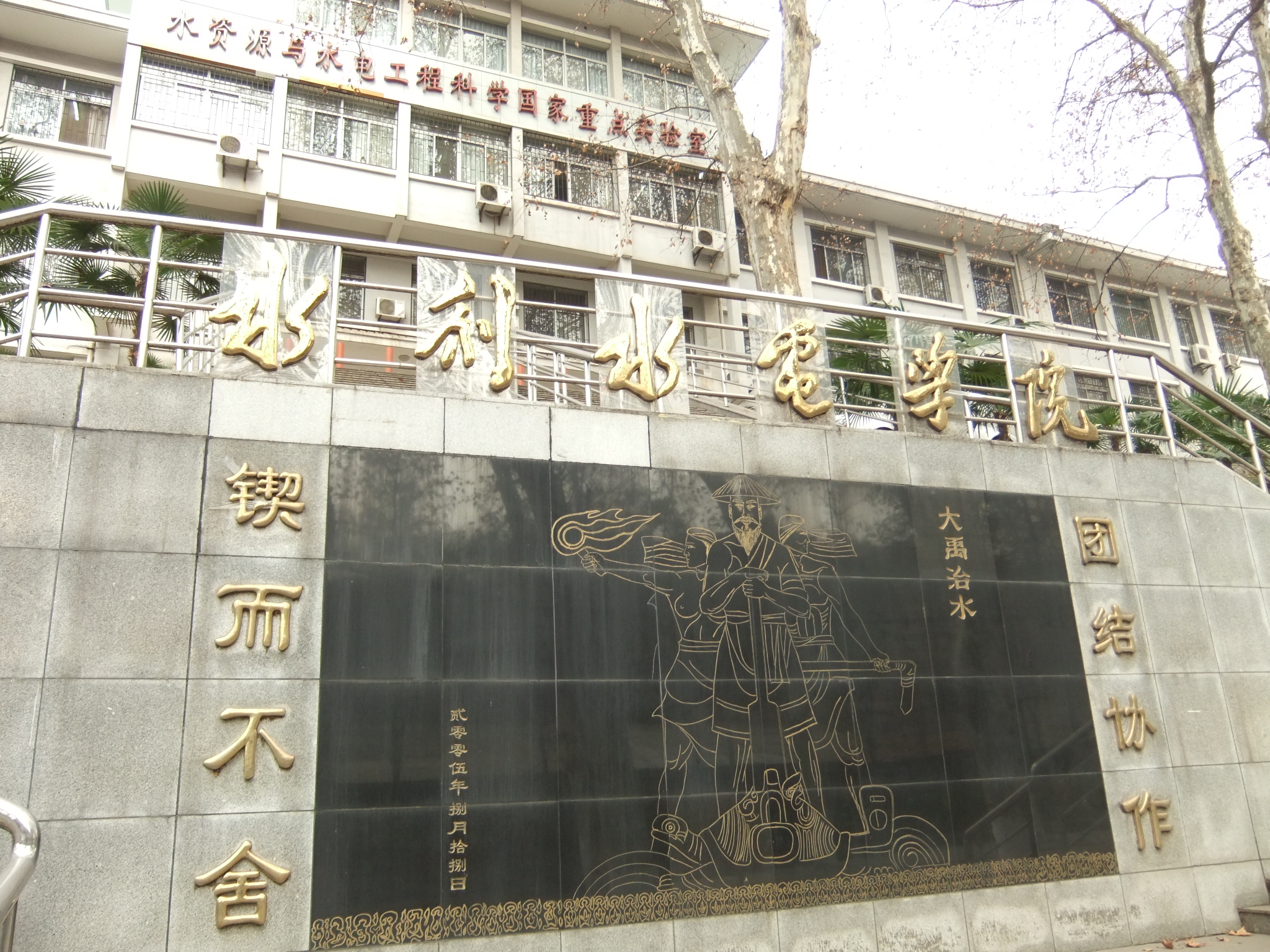
Great Flood (China)
Every civilization has a flood story. China's is different. Where Noah simply survived the deluge and the Mesopotamian Utnapishtim was warned by a god, the Chinese hero Yu the Great spent thirteen years fighting the flood itself, digging channels, draining marshes, and reshaping the landscape until the waters receded. He did not wait for divine rescue. He engineered his own. The Great Flood of Gun-Yu, traditionally dated to around 2300 to 2200 BCE during the reign of Emperor Yao, is not merely a myth of destruction and survival. It is a creation story for Chinese civilization, the narrative that explains how organized society emerged from chaos and how the first dynasty earned the right to rule.
A Flood That Lasted Generations
According to mythological and historical sources, the Great Flood continued for at least two generations, engulfing both the Yellow River and Yangtze valleys. People abandoned their homes for high hills and mountains, or built nests in trees. Emperor Yao sought someone who could control the waters and, on the advice of his counselors the Four Mountains, reluctantly appointed Gun, the Prince of Chong, a distant relative through common descent from the Yellow Emperor. Gun's strategy was containment: build dikes, raise barriers, wall the water out. For nine years he labored, and for nine years he failed. The flood did not recede. It kept rising. Gun's insistence on building ever-higher walls despite their repeated failure became a parable about the limits of one approach to a problem, a story the Chinese returned to for millennia whenever leaders stubbornly refused to change course.
The Rise of Shun and the Fall of Gun
When Yao could no longer govern effectively amid the ongoing disaster, he offered his throne to the Four Mountains, who declined and instead recommended Shun, another descendant of the Yellow Emperor who had been living in obscurity despite his royal lineage. Yao tested Shun extensively, including marrying his two daughters to him, before granting him co-imperial authority. Shun reorganized the flooded territory into zhou, literally "islands," an administrative innovation born from the practical reality that flood-isolated regions needed to be governed as separate units. These political islands became the ancestors of China's modern provinces, both written with the same character. But Gun still could not solve the fundamental problem. After thirteen years of failure, and after Gun questioned Shun's legitimacy as a ruler, the old prince was removed from his position.
Yu the Great Controls the Waters
Gun's son Yu took a radically different approach. Where his father had tried to contain the flood with barriers, Yu worked with the water's natural tendencies, digging drainage channels, widening existing waterways, and directing the flow rather than fighting it. According to the more elaborate versions of the myth, he also recruited supernatural helpers: a channel-digging dragon and a giant mud-hauling tortoise. Yu's success transformed him from a provincial official into a national hero. His method, drainage rather than containment, became a foundational principle of Chinese water management that persisted for millennia. After controlling the flood, Yu founded the Xia dynasty when his son Qi succeeded him, establishing hereditary dynastic rule. The story encoded a radical idea: that political authority derives not from birth or divine appointment, but from the demonstrated ability to solve the problems that threaten human survival.
The Flood That May Have Happened
In 2016, archaeologists published evidence of a massive outburst flood at Jishi Gorge on the Yellow River, dated to approximately 1920 BCE. A colossal landslide had created a natural dam across the river, which was breached about a year later. The resulting flood could plausibly have traveled 2,000 kilometers downstream, and the instability it caused in river channels might have persisted for up to twenty years. The timing places this event several centuries later than the traditional dating of the Xia dynasty, but the researchers suggest it may have coincided with the actual beginning of the Xia, and that the Erlitou culture represents its archaeological manifestation. Whether or not this specific flood inspired the Gun-Yu myth, the Yellow River's real history of catastrophic flooding provides a concrete basis for the story. The myth may be layered with supernatural embellishment, but the terror it describes, entire valleys submerged, generations displaced, civilization itself threatened, was grounded in experiences the Yellow River delivered with devastating regularity.
From the Air
The Great Flood myth is associated with the Yellow River basin across multiple provinces. The coordinates 36.124N, 116.098E place this entry in the western Shandong plain near the Yellow River's lower reaches, where the river's historical flooding and course changes shaped the landscape. The Yellow River is clearly visible from altitude. Nearest airports include Jining Da'an Airport (ZSJG) to the south and Jinan Yaoqiang International Airport (ZSJN) to the north. The flat terrain of the North China Plain stretches in all directions.