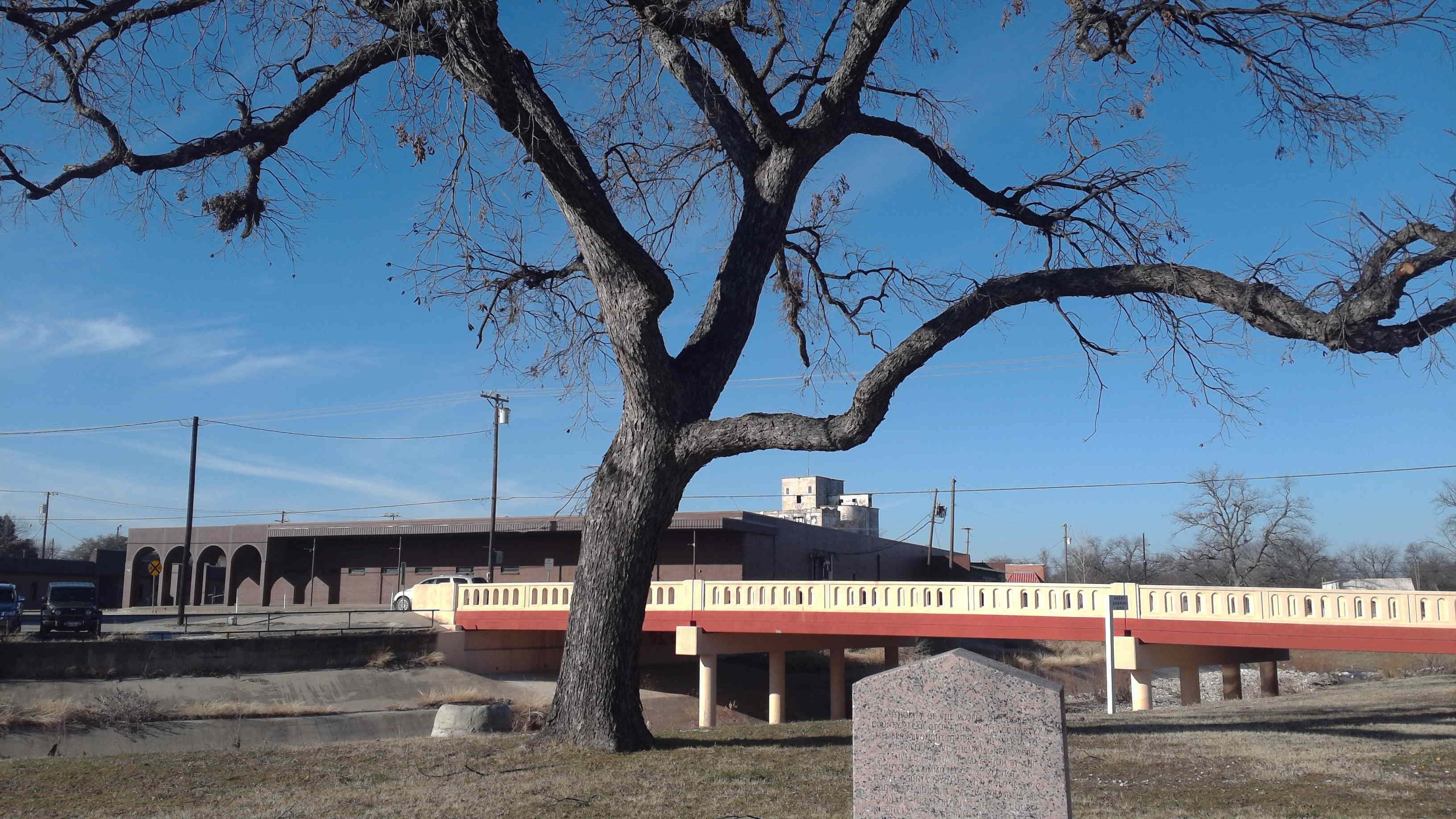
Great Hanging at Gainesville
Forty-one men were hanged in a single month. Not on a battlefield. Not after a military tribunal. They were killed by their own neighbors, in their own county seat, under the authority of a court that had no legal standing and a jury stacked with enslavers. The Great Hanging at Gainesville in October 1862 remains the largest mass hanging in United States history, and it happened not because these men took up arms against the Confederacy, but because they refused to fight for it.
A County That Voted No
Cooke County, Texas, sat along the Oklahoma border in a region where cotton was not king. Only 10.9 percent of households enslaved people, yet enslavers controlled the county's chief justice seat, the sheriff's office, and three of four commissioner positions. When Texas held its secession referendum in February 1861, amid secessionist violence and intimidation, 61 percent of Cooke County voted to remain in the United States -- one of just 18 out of 122 Texas counties to do so. Governor Sam Houston, who had won 73 percent of the county's vote in 1859, refused to swear allegiance to the Confederacy and was deposed. North Texans fled the state by the hundreds. Confederate officials mistook this exodus for the disappearance of dissent. They were wrong.
Thirty Men and a Petition
What finally lit the fuse was conscription, passed on April 16, 1862. The draft law exempted large enslavers -- the very men who had pushed for secession -- while forcing small farmers and laborers to fight. Thirty men of Cooke County formed a Union League and signed a petition to Richmond protesting the exemption. A broader Peace Party pledged to resist Confederate conscription. Colonel James G. Bourland, a former state senator and enslaver, began arresting suspected Unionists in early October. Within days, Confederate troops had seized between 150 and 200 men. A Confederate military officer organized a so-called Citizens' Court with no legal standing under Texas state law. Of its twelve jurors, seven were enslavers.
The Mob Takes Over
The first convictions came quickly, and the condemned were hanged within hours. After eight guilty verdicts, the jury raised its threshold to a two-thirds majority, which produced an acquittal. But the mob outside the jail had no interest in due process. When the jury acquitted several more men, a crowd threatened to lynch every remaining prisoner. The head of the jury handed over fourteen names. These men were dragged from jail and lynched on October 12 and 13 without any trial at all. Then nineteen previously acquitted men were hauled back before the court, convicted on no new evidence, and hanged. By the end of October, 41 men had been executed by hanging and at least three others shot to death. They left behind 42 widows and roughly 300 children.
Aftermath and Memory
Confederate President Jefferson Davis dismissed General Paul Octave Hebert as military commander of Texas for failing to control the violence, replacing him with General John Bankhead Magruder. But the killing did not stop the resistance it was meant to crush. Hundreds of families fled North Texas to escape the chaos, and military commanders alternated between helping lynch mobs and trying to suppress them. For more than a century, the hanging was largely unspoken in Gainesville. A privately organized annual memorialization began in 2007. When the Cooke County Heritage Society planned a formal 150th anniversary commemoration in 2012, the mayor objected and the public event was canceled. A private gathering brought together descendants of the victims instead, under the name 'Remembering Our Past, Embracing Our Future.' In 2014, a memorial was finally erected near the execution site.
From the Air
Located at 33.630°N, 97.140°W in Gainesville, Cooke County, along the Texas-Oklahoma border. The town sits in flat North Texas prairie -- look for the grid pattern of streets and the Red River to the north marking the state line. Nearest airport: KGLE (Gainesville Municipal Airport, 3 nm west). KDFW (Dallas/Fort Worth International) lies approximately 60 nm to the south. Best viewed at 2,000-4,000 ft AGL. The 2014 memorial is near the historic courthouse square in central Gainesville.