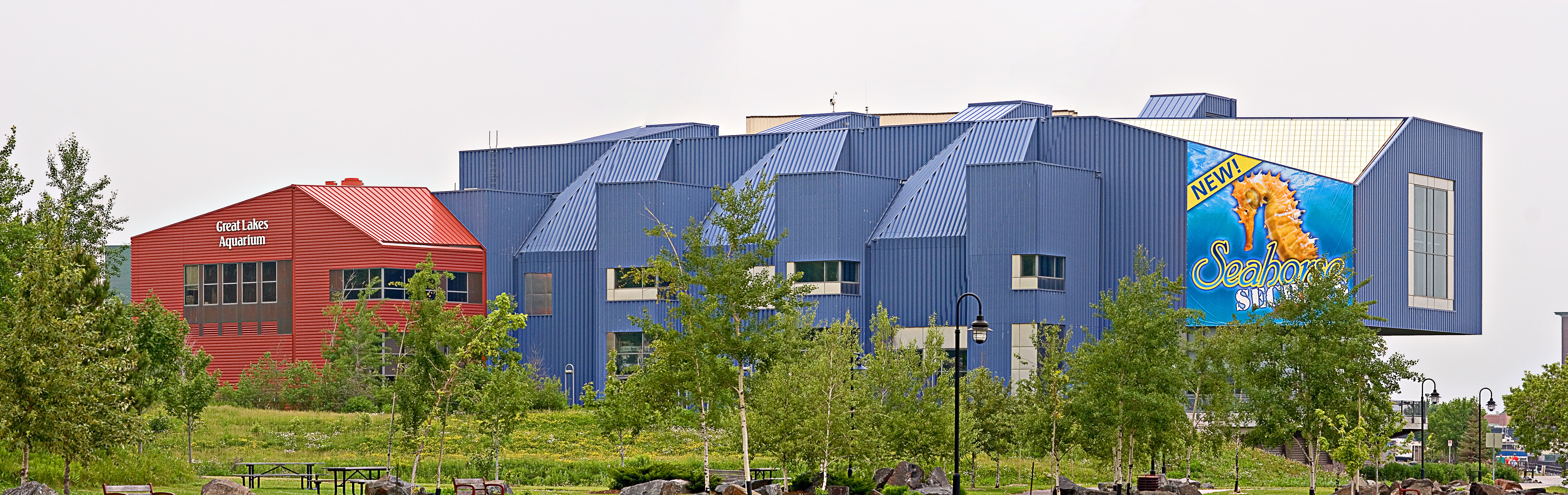
Great Lakes Aquarium
Most aquariums sell the ocean. The Great Lakes Aquarium sells fresh water -- and makes a surprisingly compelling case that the world's largest surface freshwater system deserves the same wonder usually reserved for coral reefs and tropical fish. Opened in 2000 on the Duluth waterfront, on land donated by local philanthropists Julia and Caroline Marshall, this 62,000-square-foot institution houses 205 species of fish, birds, reptiles, amphibians, and mammals. It is one of only a handful of aquariums in the United States that focuses predominantly on freshwater exhibits, recreating actual habitats from the Lake Superior basin -- slices of the Saint Louis River, the Baptism River, Pictured Rocks National Lakeshore, and Isle Royale -- in tanks visitors can examine from inches away.
A Rocky Start on the Harbor
The Great Lakes Aquarium opened its doors on July 29, 2000, built with a combination of state and local funds plus more than $6 million in private donations. Construction took three and a half years and cost around $34 million. The opening months drew enthusiastic crowds, but construction delays had already cost the facility roughly 30 percent of its anticipated first-year revenue. By 2002, Mayor Gary Doty appointed a task force to address the aquarium's shaky finances, and the city briefly took over managerial control. In May 2003, management was handed to Ripley's Entertainment -- the "Believe It or Not" company -- which cut two-thirds of the staff and slashed costs to stave off permanent closure. Attendance continued to decline under Ripley's, and the company departed in 2007. The board then brought management back to local control, recruiting Jack LaVoy as executive director and launching a program called "The Three R's": repair, replace, or remove all defective exhibits.
Unsalted Seas and Ancient Sturgeon
The centerpiece of the aquarium is the Isle Royale exhibit, a two-story tank in the center of the building that contains Minnesota native fish including perch, panfish, trout, lake sturgeon, and gar. Visitors can view it from multiple angles across both floors. Nearby, the Baptism River exhibit recreates a fast-moving stream complete with waterfall, home to kamloops and siscowet -- deep-water lake trout native to Superior. The Unsalted Seas gallery, opened in 2016, explores large freshwater lakes around the world and features the second-largest sturgeon touch pool in North America, stocked primarily with species from Russian and North Asian waters: Beluga, Sevruga, Sterlet, and Russian sturgeon, most originally sourced from aquafarms in Florida. Running your hand along a living sturgeon -- a fish whose lineage predates the dinosaurs -- is a tactile encounter with deep time.
Otters, Eagles, and the Amazon
Otter Cove, designed after a cove in Ontario's Pukaskwa National Park, is home to two North American river otters named Agate and Ore. The female otters, believed to be sisters, arrived in early 2014 after being captured in live traps near a crayfish farm in Louisiana, where they faced extermination as nuisance animals. The aquarium's Amazing Amazon gallery, opened in 2008, ventures far from Lake Superior to showcase freshwater creatures from the world's largest river -- pacu, arowana, piranha, catfish, electric eels, and discus. Raptor Ridge, added in 2019, brought the outdoors inside with a bald eagle named Bogey and a turkey vulture named Horus, both non-releasable birds that serve as ambassadors for raptor rehabilitation.
Freshwater in a Saltwater World
What makes the Great Lakes Aquarium unusual is its insistence that freshwater ecosystems matter. In a country where aquariums typically compete for the most spectacular shark tank or the most vibrant reef, Duluth's institution argues that the Great Lakes -- holding roughly 21 percent of the world's surface fresh water -- deserve sustained attention. The Origins exhibit traces the earth's biological timeline from before animals appeared to the present day, featuring corals, invertebrates, alligators, and opossums. Aquatic Invaders highlights the threat posed by invasive species. The facility also hosts a local history center, a science center, and rotating exhibits -- past installations have profiled Lake Superior shipwrecks, African Lake Victoria, and creatures of the deep ocean abyss. For visitors accustomed to saltwater spectacle, the aquarium offers a quieter revelation: that the fresh water lapping at Duluth's harbor is itself a kind of ocean, vast and deep and full of life.
From the Air
Located at 46.779N, 92.100W on the Duluth waterfront in the Canal Park area, adjacent to the harbor. The aquarium building is visible on the lakefront near the Aerial Lift Bridge. Duluth International Airport (KDLH) is approximately 6 miles northwest. The building sits at the western tip of Lake Superior, where the harbor meets the open lake. Best aerial perspective from 2,000-4,000 feet AGL on approaches from over Lake Superior. The Canal Park district and harbor are easily identifiable from altitude, with the Aerial Lift Bridge and the long sandbar of Minnesota Point serving as visual references.