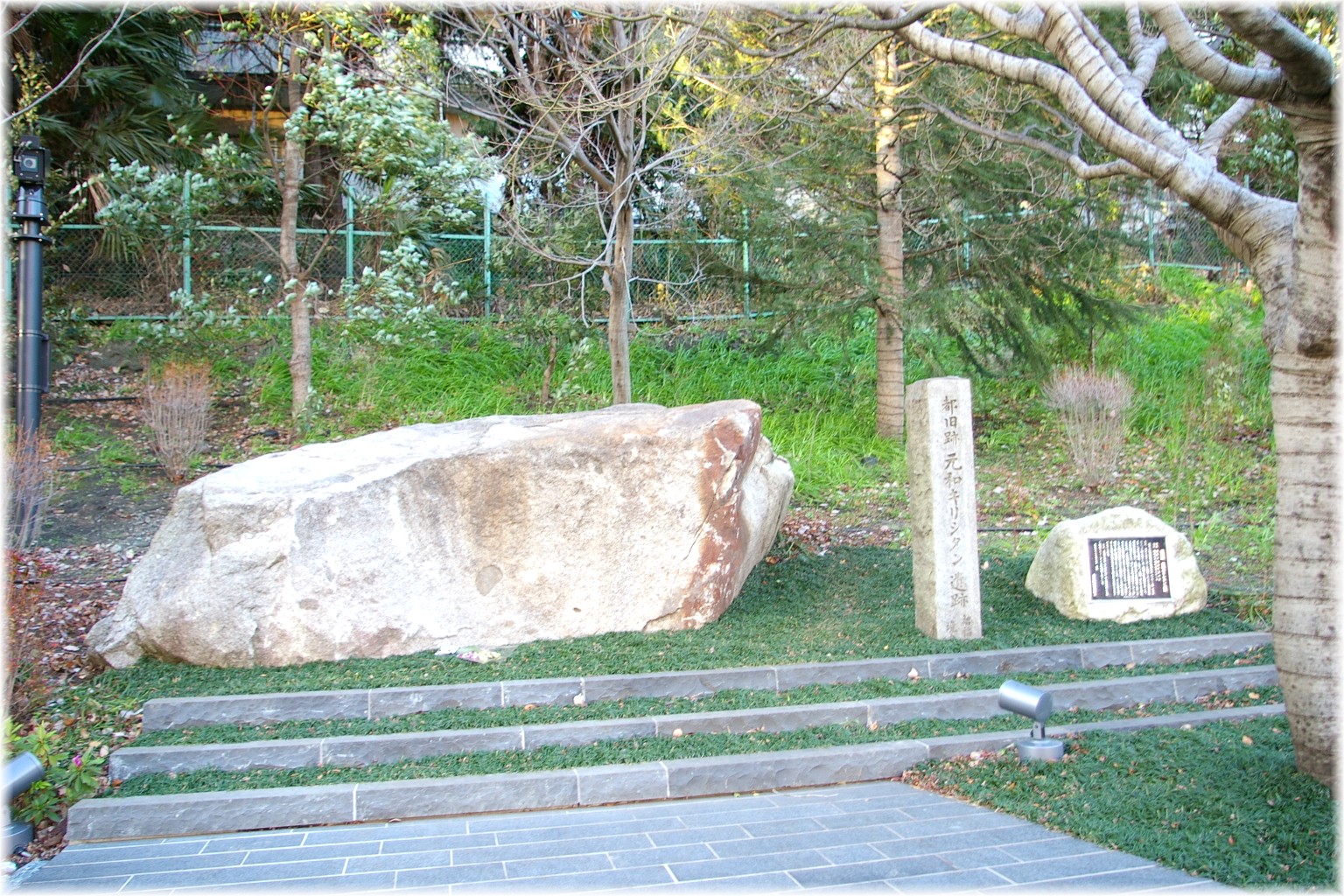
Great Martyrdom of Edo
Fifty people were paraded through the streets of Edo before being led to stakes along the Tokaido road, the busiest highway in Japan. It was December 4, 1623, and the new shogun had a message to deliver. Tokugawa Iemitsu, barely twenty years old and freshly installed as Japan's third Tokugawa ruler, had chosen both the location and the timing with calculated precision. The daimyo lords were gathered in the capital for their annual attendance. The road connected Edo to Kyoto, ensuring maximum witnesses. The condemned were kirishitans -- Japanese and foreign Catholics -- and their execution by burning was designed not merely as punishment but as a warning that Christianity had no future in Japan.
A New Shogun's First Decree
In August 1623, Tokugawa Hidetada formally retired and his son Iemitsu assumed the shogunate. The elder Tokugawa had already banned Christianity and expelled foreign missionaries, but enforcement was inconsistent. Iemitsu intended to change that. He established the office of inquisition to systematize the eradication of the faith across Japan. But legislation alone was not enough for the young shogun -- he wanted a spectacle. Shortly before or after his return from Kyoto on October 18, 1623, authorities arrested a group of Christians and confined them at the Kodenmachi Jailhouse in Edo. The arrests followed a betrayal by a servant of a Christian hatamoto, a direct vassal of the shogun. When the question of what to do with the prisoners reached Iemitsu, he hesitated and consulted his retired father. Hidetada replied that such decisions must be made by the shogun. Iemitsu ordered all fifty-one executed.
The Procession Along the Tokaido
The execution was staged in the Tamachi area of Edo, along the roadside of the Tokaido -- the most important of the Five Routes connecting Japan's great cities. Three prisoners were placed on horseback to lead the procession: Jerome de Angelis, an Italian Jesuit missionary who had spent decades in Japan; Francis Galvez, a Spanish Franciscan priest; and John Hara Mondo-no-suke Tanenobu, a Japanese Christian hatamoto of samurai rank. A sign was erected explaining the reason for the punishment. According to a Jesuit annual letter, fifty-one people had been led to the stakes, but one renounced the faith at the last moment and was spared. The forty-seven who were not on horseback were burned alive first. Then the three leaders -- de Angelis, Galvez, and Hara -- were put to the flames. The entire spectacle unfolded in public view, along a road lined with travelers, merchants, and the retinues of feudal lords.
The Martyrs Known and Unknown
Of the fifty people executed, only thirty-six have been identified by name. They included Japanese converts with names like Leo Takeya Gonshichi, who had sheltered Jerome de Angelis in his home, and Hilary Magozaemon, who had hosted Francis Galvez. Simon Empo, born in 1580, served as a dojuku -- a lay catechist -- to de Angelis. Others bore only first names in the records: Kishichi, Anthony, Isaac. Fourteen remain entirely anonymous, their identities lost to the deliberate erasure that followed. The community they belonged to had existed in Japan since the arrival of Francis Xavier in 1549, growing to an estimated 300,000 converts by the early 1600s. The Tokugawa shoguns viewed this Christian population as a political threat, loyal to a foreign pope rather than a Japanese sovereign. The Great Martyrdom of Edo was one episode in a campaign that would, within two decades, drive Christianity almost entirely underground.
Beatification Across Centuries
Recognition came slowly. In 1867, Pope Pius IX beatified Jerome de Angelis, Simon Empo, and Francis Galvez as part of the 205 Martyrs of Japan, but the other forty-seven were excluded because the Vatican deemed there was insufficient documentation about them. It took until the twenty-first century for John Hara Mondo-no-suke Tanenobu to receive beatification from Pope Benedict XVI, as part of a larger group of Japanese martyrs. A stone monument now marks the approximate execution site in Minato City, Tokyo -- a quiet memorial in a modern neighborhood where office workers pass daily without knowing what happened on the ground beneath their feet. The monument stands near the waterfront, not far from the route of the old Tokaido road, in a city that has been rebuilt so many times that traces of the 1620s survive only in documents, church records, and this single stone.
From the Air
Located at 35.645N, 139.742E in the Tamachi/Mita area of Minato City, central Tokyo. The execution site was along the historic Tokaido road near the waterfront. From the air, this is the area between Tokyo Bay and the JR rail lines south of central Tokyo. Nearest airports: Tokyo Haneda (RJTT) approximately 6 nm south, Narita International (RJAA) approximately 38 nm east. Best viewed at 2,000-3,000 feet AGL. The memorial monument is near Tamachi Station and the Minato waterfront area.