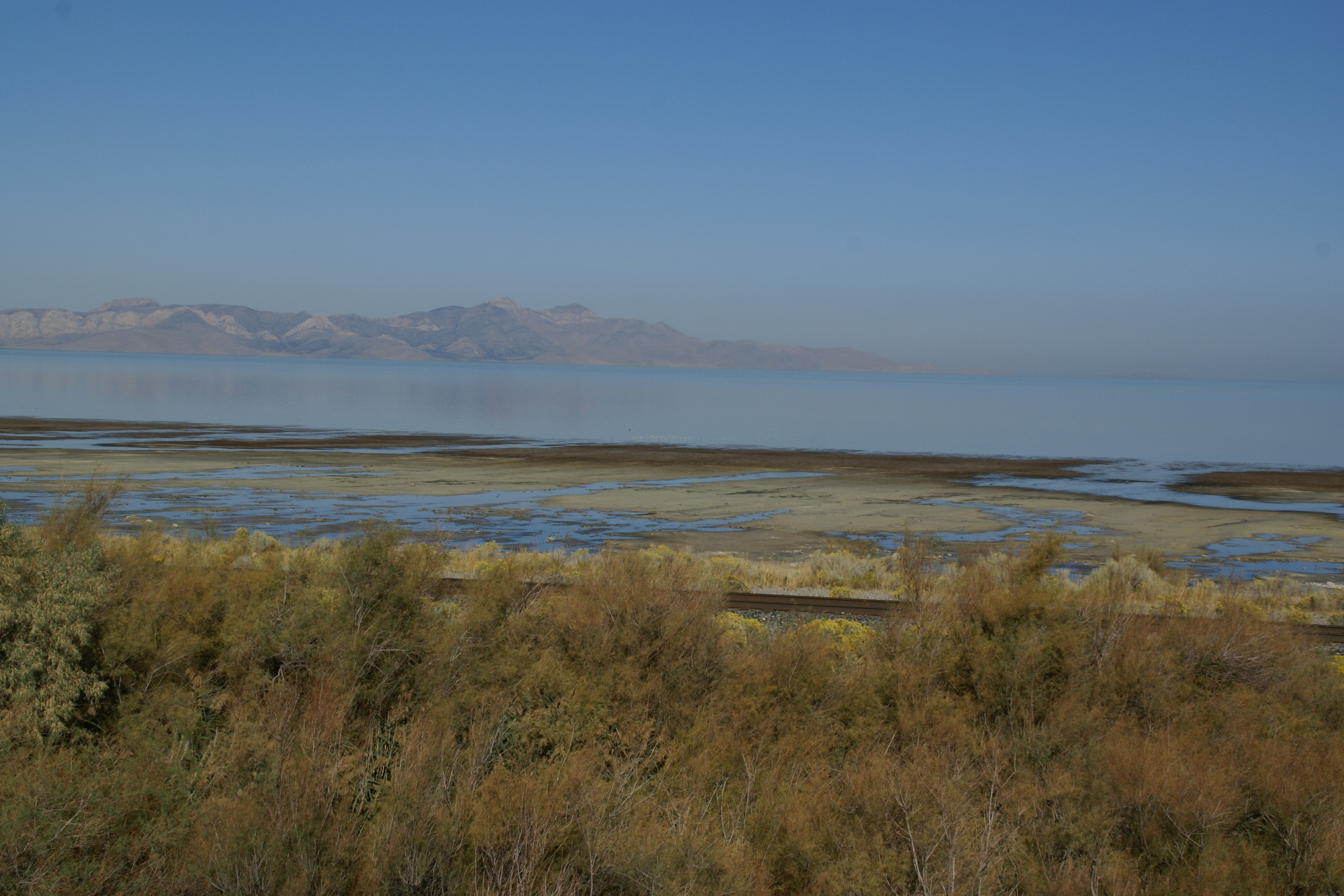
Great Salt Lake
In the desert west of Salt Lake City, a lake slowly disappears. Great Salt Lake is the largest saltwater lake in the Western Hemisphere, a remnant of ancient Lake Bonneville that once covered 20,000 square miles. Today, the lake varies between 1,000 and 2,000 square miles depending on conditions - and conditions have been bad. Drought and water diversion for agriculture have shrunk the lake to historic lows, exposing lake bed that blows toxic dust across the region. Yet Great Salt Lake remains remarkable: water salty enough to float in effortlessly, brine shrimp that support a global aquaculture industry, millions of migratory birds, and strange beauty where water meets desert. The lake is simultaneously dying and fascinating, a geologic wonder in slow-motion crisis.
The Salt
Great Salt Lake has no outlet - water flows in from the Bear, Weber, and Jordan Rivers, then evaporates, leaving dissolved minerals behind. The salt concentration varies by location and water level, ranging from 5% to 27% (the ocean is about 3.5%). The railroad causeway that crosses the lake created two separate basins with different salinities. The north arm, cut off from most freshwater inflows, can exceed 27% salt - approaching saturation. At these concentrations, humans float effortlessly, unable to sink. The sensation is unique and slightly unsettling - water that refuses to let you descend. Swimming is possible but challenging; the buoyancy fights normal movement.
The Life
Despite the salinity, Great Salt Lake supports abundant life - just not the kind found in fresher waters. Brine shrimp (Artemia franciscana) thrive in the lake's salty waters, their eggs harvested and sold globally as fish food for aquaculture. The harvest is worth over $60 million annually. Brine flies produce larvae that feed millions of migratory birds. The lake is crucial habitat on the Pacific Flyway - Wilson's phalaropes, American avocets, and other shorebirds depend on it. Eared grebes gather here in numbers exceeding 2 million. The pink tinge of the lake's northern arm comes from halophilic (salt-loving) bacteria and algae; flamingos that eat brine shrimp get their pink color from carotenoids.
The Crisis
Great Salt Lake is shrinking. In 2022, it reached its lowest level since records began in 1847. The causes are primarily human: agricultural diversion of tributary rivers, reduced snowpack from climate change, and increased evaporation from rising temperatures. As the lake shrinks, it exposes lake bed laden with mercury, arsenic, and other toxins accumulated over millennia. Wind picks up this dust and carries it toward Salt Lake City - a potential public health disaster. The lake's ecosystem faces collapse; the $1.7 billion brine shrimp industry is at risk; migratory birds have nowhere else to go. The state is scrambling to find water to save the lake, but the solutions require reducing agricultural use.
The Experience
Swimming in Great Salt Lake is unlike any other water experience. The buoyancy is remarkable - you bob like a cork, unable to sink or swim normally. The salt stings any cuts or abrasions; getting water in your eyes is painful. The smell can be intense - brine fly larvae and decaying organic matter produce a distinctive aroma. The beaches are unusual - fine sand mixed with brine fly casings, salt crystals, and bird droppings. Despite all this, the experience is worth having once. Antelope Island State Park provides the best access, with beaches, showers, and interpretive displays. The island also has free-roaming bison.
Visiting Great Salt Lake
Great Salt Lake is accessible from Salt Lake City via Interstate 80 (west) or Antelope Island State Park (north). Antelope Island offers beaches, trails, camping, and wildlife viewing (bison, pronghorn, bighorn sheep). The Great Saltair concert venue sits on the southern shore. Swimming is best at Antelope Island's Bridger Bay Beach, which has facilities. The lake level fluctuates significantly - check current conditions. Salt Lake City is 40 miles east. Salt Lake City International Airport provides commercial service. Summer is best for swimming; spring and fall are optimal for bird watching. The smell and bugs are less intense in cooler weather. Bring fresh water to rinse after swimming - the salt is pervasive.
From the Air
Located at 41.00°N, 112.50°W northwest of Salt Lake City, Utah. From altitude, Great Salt Lake is unmistakable - a large body of water in the desert, its color varying from blue to pink depending on salinity and organisms. The railroad causeway crossing the lake is visible, dividing the pinker north arm from the bluer south. Salt Lake City spreads east toward the Wasatch Mountains. Antelope Island is visible in the lake's southeastern portion. The Bonneville Salt Flats are visible to the west - the floor of the ancient lake. The lake's shrinking is visible in the wide bands of exposed lake bed along the shores.