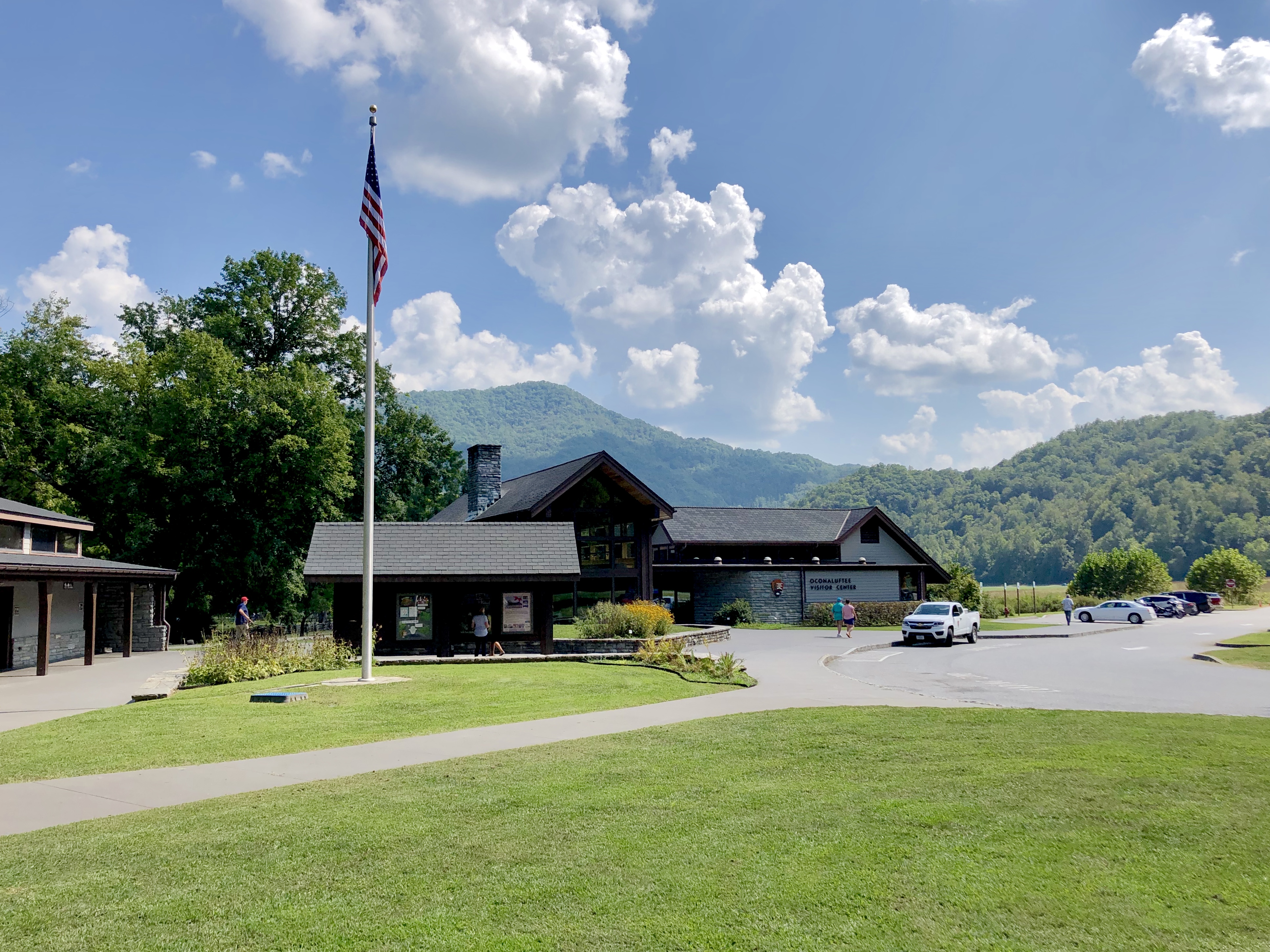
Great Smoky Mountains: The Park That Gets More Visitors Than Anywhere
The haze is real. The blue smoke that softens the Smoky Mountain ridges isn't mist or pollution but hydrocarbons released by vegetation - the forest breathing, visible in the humid southern air. Great Smoky Mountains National Park is the most visited in America, over 12 million people annually, more than Yellowstone and Grand Canyon combined. The popularity comes from accessibility: two major cities flank the park, entrance is free, and the mountains offer beauty without extreme altitude or climate. The park preserves Appalachian culture alongside ecology - historic cabins, churches, and mills scattered through the forests. The Cherokee, whose ancestors were forced from these mountains on the Trail of Tears, maintain presence and interpretation. The Smokies belong to everyone; everyone seems to visit.
The Mountains
The Great Smoky Mountains are among the oldest on Earth, their roots formed over 300 million years ago. Erosion has softened what were once peaks rivaling the Alps into rounded ridges rarely exceeding 6,000 feet. The range contains the highest mountains in eastern North America - Clingmans Dome at 6,643 feet. The forest is exceptionally diverse: more tree species than all of Europe, old-growth remnants in remote coves, wildflower displays that draw botanists from around the world. The biodiversity reflects the mountains' role as refuge during ice ages, when species retreated southward and survived in these protected valleys.
The Culture
European settlers arrived in the Smokies in the 1800s, establishing communities in isolated coves and hollows. They built log cabins, water-powered mills, and simple churches - structures that survive today as historic sites. The culture was Appalachian: self-sufficient, musical, connected to the land. When the park was established in 1934, residents were relocated, but their buildings were preserved as cultural artifacts. Cades Cove, a valley of historic structures, is the park's most visited area - a preserved landscape of 19th-century Appalachian life, crowded with tourists driving the 11-mile loop past cabins and churches their ancestors never saw.
The Cherokee
The Cherokee lived in the Smoky Mountains for centuries before European contact. Their removal in 1838 - the Trail of Tears - forced most to Oklahoma, but some evaded the roundup and their descendants remain on the Qualla Boundary, adjacent to the park's southern entrance. The Eastern Band of Cherokee Indians operates museums, cultural centers, and the casino that funds tribal services. Cherokee interpretation in the park has expanded, acknowledging that these mountains were homeland before they were park. The history is painful; the Cherokee presence insists that their removal wasn't complete, that the connection to these mountains survived the attempt to sever it.
The Fireflies
For two weeks each June, the synchronous fireflies of Elkmont put on a show found nowhere else in the Western Hemisphere. Photinus carolinus males flash in unison - thousands of insects coordinating their bioluminescence, going dark together, flashing together, creating waves of light through the forest. Scientists aren't certain why; attracting females while confusing predators is one theory. The spectacle draws crowds; the park now requires lottery for vehicle passes during peak firefly season. The experience is genuinely magical - the forest performing something that seems designed for wonder. The fireflies don't know they're famous; they flash regardless.
Visiting Great Smoky Mountains
Great Smoky Mountains National Park straddles the Tennessee-North Carolina border, with major entrances at Gatlinburg and Cherokee. Entrance is free - the only major park without admission fees. Newfound Gap Road crosses the park, climbing to 5,046 feet at the state line. Clingmans Dome offers the highest viewpoint, accessed by steep paved path. Cades Cove requires patience: the one-way loop road is beautiful and extremely congested. Over 800 miles of trails range from easy waterfall walks to challenging backpacking. Gatlinburg and Pigeon Forge offer tourism excess; Cherokee offers cultural depth. Visit weekdays to avoid worst crowds. The park rewards all seasons: wildflowers in spring, greenery in summer, color in fall, solitude in winter.
From the Air
Located at 35.61°N, 83.53°W on the Tennessee-North Carolina border. From altitude, the Great Smoky Mountains appear as a continuous forested ridge system, the characteristic blue haze visible in humid conditions. The park boundary separates unbroken forest from surrounding development. Gatlinburg and Pigeon Forge are visible as developed areas at the park's northern edge; Cherokee marks the southern entrance. Clingmans Dome's observation tower is the highest point. The mountains extend northeast toward Asheville. The characteristic rounded ridge profiles distinguish the Appalachians from younger western ranges. What attracts 12 million visitors annually is visible from altitude as unbroken green ridges fading into blue distance - the forest that gives the mountains their name.