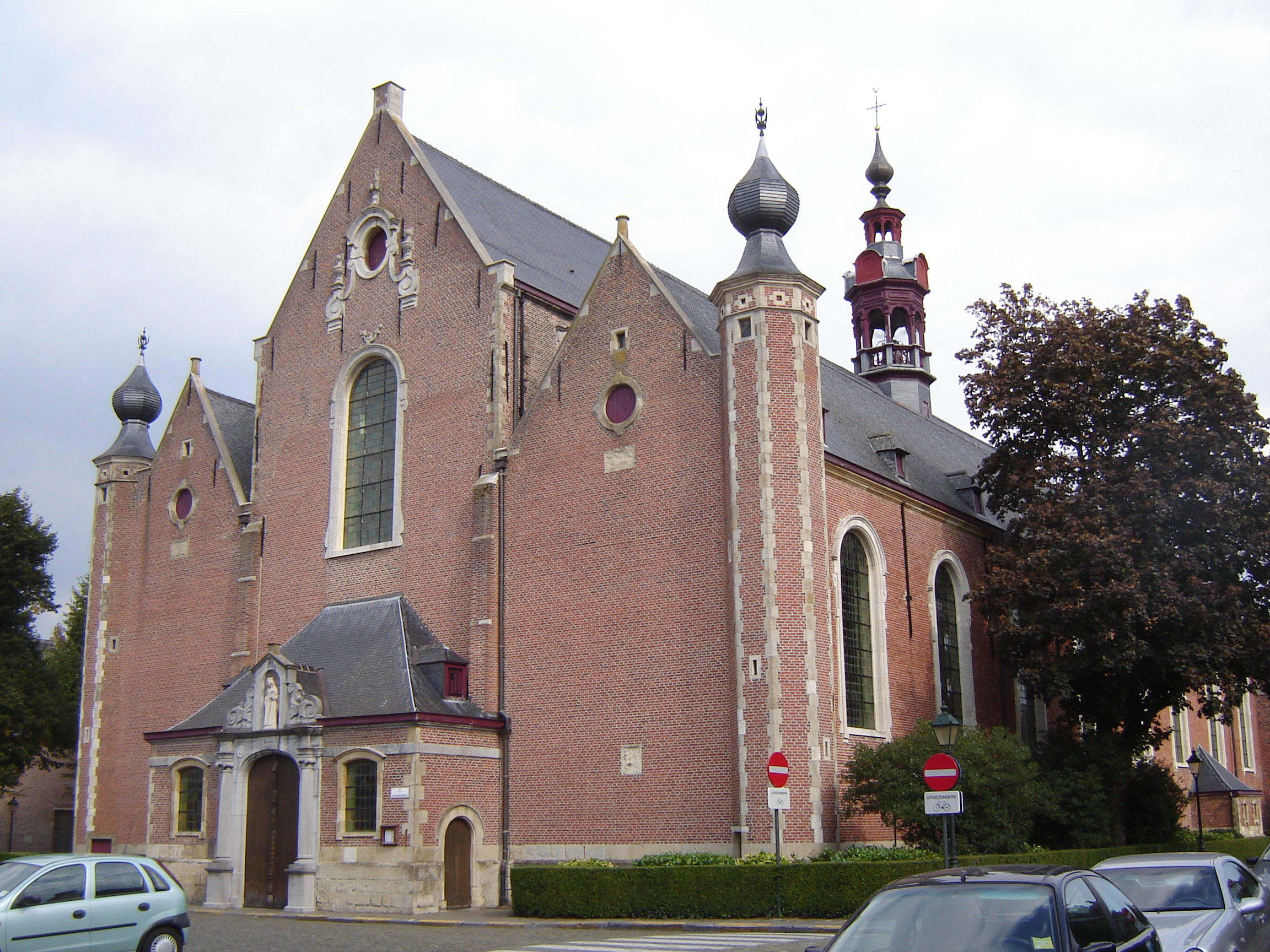
Great St. Elizabeth Beguinage, Ghent
On the morning of 29 September 1874, more than six hundred women climbed into carriages provided by the Roman Catholic aristocracy of Ghent and left a neighborhood their predecessors had inhabited for six hundred and forty years. The departure was orderly. The carriages were comfortable. But the Great St. Elizabeth Beguinage, founded in 1234 as a refuge for women who wanted to live devoutly without taking permanent vows, was effectively over - emptied not by war or plague, but by the patient pressure of a city that needed cheap housing for its factory workers.
A Town Inside a Town
The beguines were neither nuns nor laywomen but something quieter in between. Countess Joanna of Constantinople, daughter of Baldwin IX of Flanders, granted them their own premises in 1234, recognizing women who had already been helping the Cistercian sisters with medical work. What grew on that land was extraordinary by the standards of any era. A church. A Grootjuffer house for the prioress. An infirmary with its own chapel. Eighteen convents. An orchard. A vast laundry meadow, where beguines washed the linens of wealthy Ghent in exchange for income they kept themselves. The settlement was named for Elizabeth of Hungary in 1236, the year she was canonized - and within its walls, women managed their own affairs, kept their own property, and could simply walk out if they chose to marry. In medieval Europe, this was nearly unheard of.
The Long Squeeze
The French Revolution did not destroy the beguinage outright. Instead, the city of Ghent acquired it under the obligation to maintain it - an obligation Ghent's liberal city government found increasingly inconvenient as the Industrial Revolution arrived. Mills needed workers. Workers needed housing. The walled enclave of devout unmarried women, occupying valuable land near the city center, looked less and less like medieval heritage and more like an opportunity. Pressure mounted decade by decade. A new beguinage opened at Our Lady Ter Hoyen for those who would relocate quietly. The dispute hardened. Finally the Duke of Arenberg stepped in with money, funding the construction of an entirely new beguinage in the village of Sint-Amandsberg between 1872 and 1874. On that September morning, the carriages came, and the long argument ended the only way it could.
Decay, Then Painters
What followed was decades of slow ruin. The houses became cheap working-class lodging. The infrastructure crumbled. The neighborhood became a textbook example of urban decay - until, in the twentieth century, voices began arguing that this peculiar medieval grid of low brick houses and inner courtyards was worth saving. Artists arrived first, as they often do. Constant Permeke, Albert Servaes, and Frits Van den Berghe all lived at one point at Van Akenstraat 7 - not at the same time, but each drawn by the cheap rents and the strange atmosphere of a place built for a way of life nobody remembered. Gentrification followed from around 1984 onward. The beguine houses are now protected heritage.
Holy Corner
An English vicar of Scottish descent named Cameron Walker gave the neighborhood the name it now carries in English: Holy Corner, possibly echoing a junction of the same name in Edinburgh. For a stretch it was geographically accurate. Four churches of four different denominations clustered within a few blocks - Roman Catholic, Eastern Orthodox, Protestant, and Anglican - sharing an ecumenical Whitsun walk between them. On Sunday mornings the streets carried Russian, Greek, Ukrainian, Romanian, Serbian, Amharic, and English alongside the Dutch of the neighborhood. In 2016, in a kind of inversion, the Roman Catholic Bishop of Ghent disaffected the original beguinage church and handed it to the Anglican congregation that had outgrown its borrowed chapel nearby. The first fully Anglican service in St. Elizabeth Church took place on 24 January 2016 - a building begun in the thirteenth century for women whose movement Rome had eventually viewed with suspicion, now housing a different Christianity entirely.
What Survives
The Groothuis and the Infirmerie still stand at the heart of the old beguinage, repurposed now as De Muze primary school. Walking the Provenierstersstraat or the Zwartekatstraat, you trace the same lines the beguines walked between their convents and the laundry meadow. The orchard is gone. The walled enclosure has long since been opened to the surrounding city. But the proportions of the place - the narrow streets, the modest brick houses turned inward toward shared courtyards, the air of a settlement built for women who wanted a life on their own terms - all of that survives. Tram 4 from Gent-Sint-Pieters station passes through on its way to a Ghent neighborhood that, by coincidence of nineteenth-century enthusiasm, is named Moscou.
From the Air
Located at 51.06 degrees north, 3.71 degrees east in northeast Ghent, between the Burgstraat and the Begijnhoflaan. Approach from the south-southwest, with the city's three medieval towers (Saint Nicholas, the Belfry, Saint Bavo's) as visual landmarks slightly southeast. Nearest airport is Brussels (EBBR), approximately 50 km southeast; alternates include Antwerp (EBAW) 50 km east and Kortrijk-Wevelgem (EBKT) 55 km southwest. Brussels area weather typically gives 8-15 km visibility with frequent low stratus in autumn and winter. The beguinage itself is a low brick neighborhood, not a single landmark - find Saint Elizabeth Church, now Anglican, as the centerpiece.