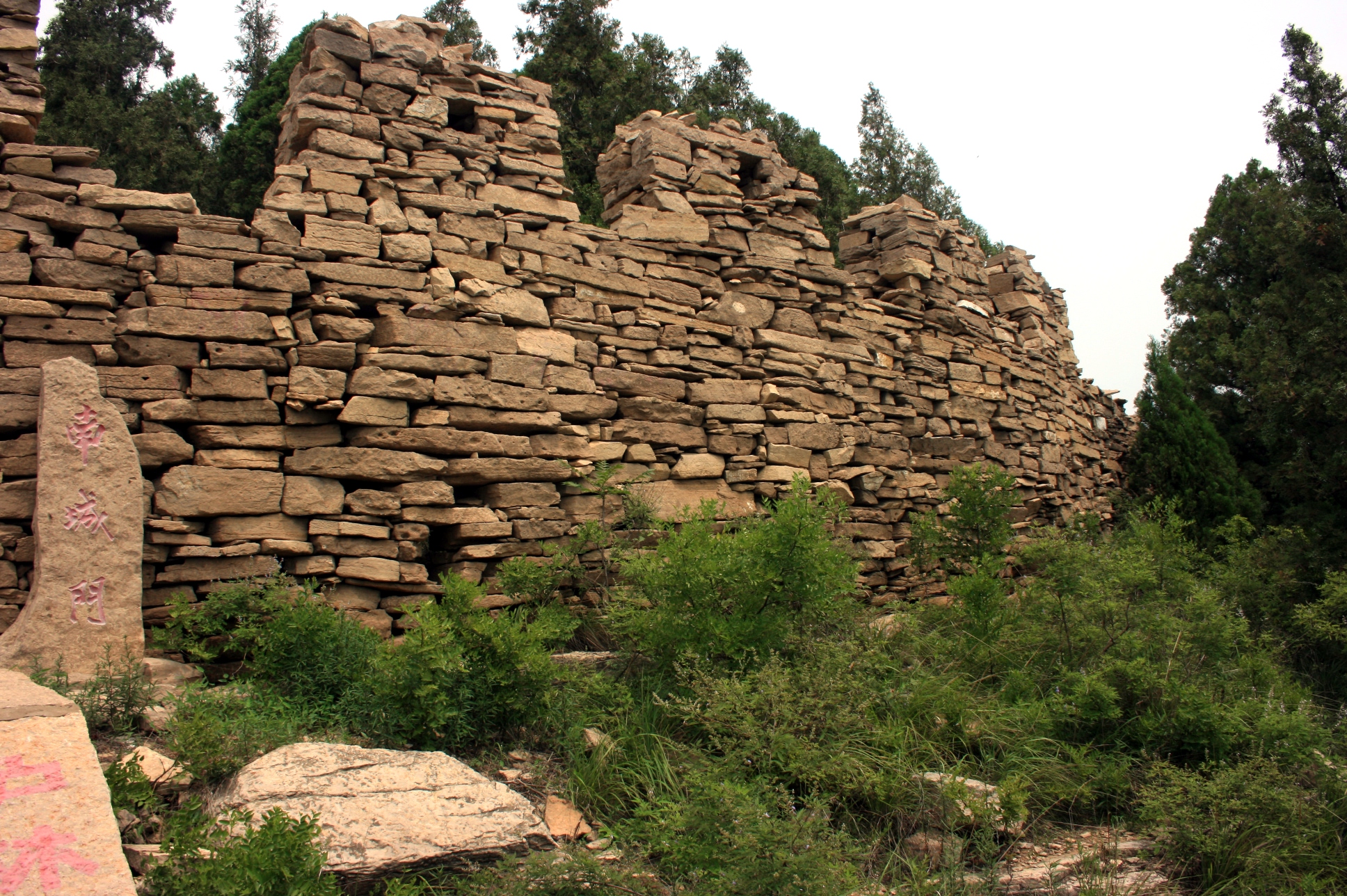
Great Wall of Qi
Everyone knows the Great Wall of China. Almost nobody knows there is an older one. The Great Wall of Qi was already ancient when the first stones of the more famous northern wall were laid. Reliable textual evidence dates its construction to 441 BC, built by the state of Qi to defend against rival kingdoms during the fractious Warring States period. And in 2024, archaeologists digging at the village of Guangli in Shandong's Changqing district uncovered something even more surprising: portions of the wall that date to the Western Zhou dynasty, potentially pushing its origins back to between 1046 and 771 BC.
A Wall Between Rivals
The state of Qi built its great wall not against northern nomads, as the later Qin dynasty would, but against fellow Chinese kingdoms that were jockeying for supremacy during one of the most violent periods in Chinese history. The wall's construction began in 441 BC, according to the Xinian chronicle found among the Tsinghua bamboo strips, a collection of ancient texts discovered in a Chu tomb and acquired by Tsinghua University in 2008. The Xinian records that Qi built the wall "for the first time" after Zhao Huanzi of the state of Jin allied with the state of Yue to invade Qi. This dating aligns with records of battles fought along the wall in 404 BC, 365 BC, and 350 BC, documented in the Bamboo Annals and inscriptions on the Piaoqiang bronze bells discovered in Luoyang between 1928 and 1931.
From Jinan to the Yellow Sea
The wall stretches from Guangli village in today's Changqing District of Jinan, running eastward across the mountain ridges of central Shandong Province all the way to the Yellow Sea at the present-day city of Qingdao. Unlike the northern Great Wall, which traverses deserts and grasslands, the Wall of Qi follows a mountainous route through the rugged interior of the Shandong Peninsula, using natural ridgelines to amplify its defensive value. The wall served as Qi's southern border defense against enemy states including Ju, Lu, and Chu. Most of the wall's course can still be traced today, its remnants visible as low stone ridges running along hilltops and through valleys, a ghost of the border it once enforced.
A Centuries-Long Debate
Before the Tsinghua bamboo strips provided the 441 BC date, scholars argued over when the wall was built. One theory pointed to the reign of Lord Huan of Qi, who ruled from 685 to 643 BC, based on a passage in the Guanzi text. But the relevant chapters of the Guanzi were likely composed much later, during the Warring States period, making them unreliable for events centuries earlier. Another proposed date was 555 BC, drawn from the Zuo zhuan's description of a Jin invasion of Qi that year. The Shui Jing Zhu later claimed that a fortification mentioned in that passage was part of the Great Wall, but the Zuo zhuan itself never uses the term "great wall" and makes no reference to other fortifications along Qi's southern border. The 2024 excavation at Guangli added yet another layer: physical evidence that the oldest sections were built during the Western Zhou dynasty, potentially making parts of the wall over three thousand years old.
Older Than Fame
The Great Wall of Qi is a designated Major National Historical and Cultural Site, yet it remains far less visited and far less known than the walls built by the Qin and later dynasties. This relative obscurity is itself a kind of historical irony. The Qi wall was built by one of the most powerful states of its era, a kingdom wealthy enough from its salt monopoly and fertile farmland to construct fortifications spanning an entire province. Its builders lived during the age that produced Confucius, Sun Tzu, and the philosophical schools that shaped Chinese civilization. The wall they raised outlasted the state that built it, the wars it was designed to fight, and the entire political system that made those wars necessary. It still runs across the Shandong ridgelines, the oldest great wall in China, waiting for the fame it has always deserved.
From the Air
The wall stretches from Changqing District, Jinan (36.56N, 116.75E) eastward across Shandong's mountain ridges to Qingdao (36.07N, 120.38E) on the Yellow Sea. The article's coordinates (35.97N, 120.08E) mark the eastern portion near Qingdao. The wall follows ridgelines and hilltops, and remnants are visible as low stone formations from lower altitudes. Nearest airports include Qingdao Jiaodong International Airport (ZSQD) and Jinan Yaoqiang International Airport (ZSJN). Best viewed at 3,000-8,000 feet along the mountain ridges.