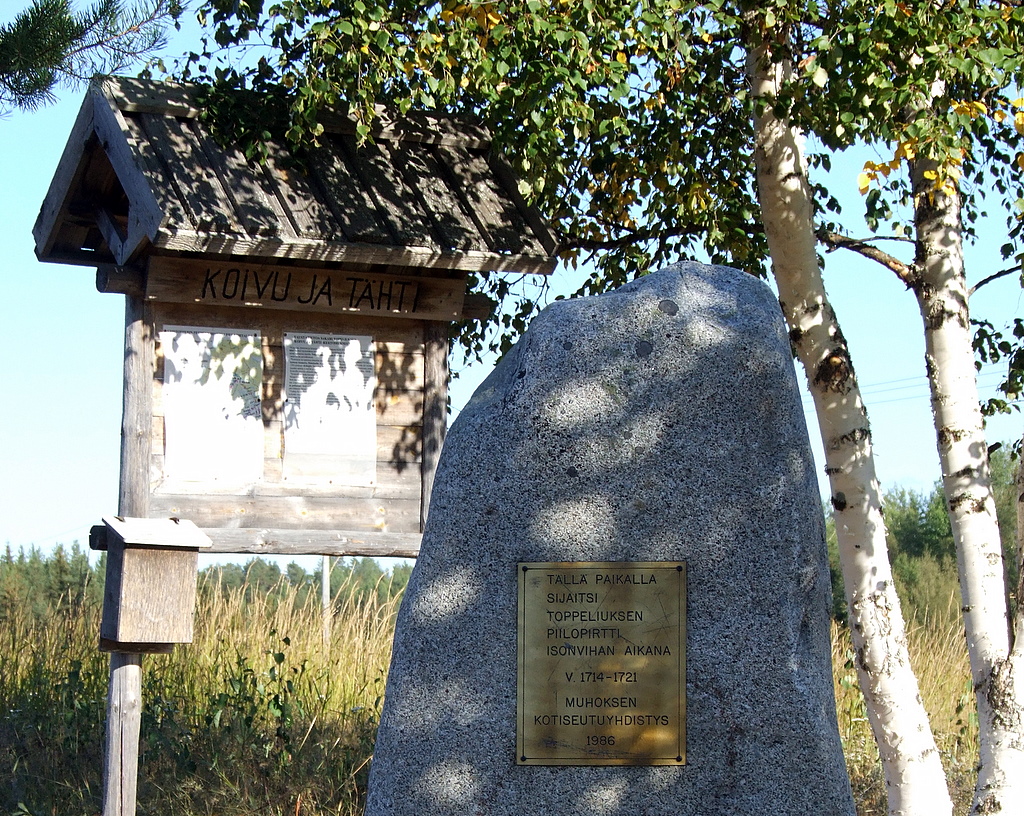
The Great Wrath
The Finns called it Isoviha -- the Great Wrath. Between 1714 and 1721, while the Great Northern War ground toward its conclusion, Russian forces occupied Finland and subjected its people to seven years of systematic violence that scarred the nation for generations. At least 5,000 civilians were killed outright, and recent scholarship has revised the total casualties upward to perhaps 20,000. Tens of thousands more were abducted into slavery. In a country that was then a sparsely populated province of the Swedish Empire, these losses were catastrophic -- proportionally among the worst any European population endured in the eighteenth century.
The Collapse of Swedish Protection
Finland's ordeal began with a series of Swedish military defeats. After the Battle of Poltava in 1709 crippled Swedish power, Russia turned its attention northward. The siege of Viborg fell in 1710, and a full campaign to capture Finland launched in 1713. Russian forces won the Battle of Helsinki and pushed the Swedes from the coast. The decisive blow came in February 1714 at the Battle of Storkyro, where the Swedish army in Finland was destroyed. When a Russian galley fleet broke through the Swedish naval blockade at Hangö in the Battle of Gangut that July, the Swedish fleet and army abandoned Finland almost entirely. The country that had been part of the Swedish realm for centuries was suddenly defenseless, left to face an occupying army with no prospect of relief.
Seven Years of Terror
Governor Mikhail Golitsyn oversaw an occupation that descended rapidly into organized brutality. Finnish peasants who attempted partisan resistance were met with collective punishment. Plundering and sexual violence were widespread, particularly in Ostrobothnia and along the major roads. Churches were stripped bare. Isokyrö was burned to the ground. The Russians created a scorched-earth zone several hundred kilometers wide to prevent any Swedish counteroffensive. The worst single atrocity came on 29 September 1714, when Cossack troops killed approximately 800 inhabitants of the island of Hailuoto with axes in a single night -- an event remembered as Murder Friday. Peter the Great himself twice ordered the destruction of North Ostrobothnia, turning it into wasteland. In Porvoo, the corpses of tortured locals were displayed publicly as early as 1708. By the occupation's end, roughly a quarter of Finnish farmhouses stood empty.
The Human Toll of Enslavement
Beyond the killing, the Great Wrath fed an enormous trade in human lives. Between 10,000 and 20,000 Finns were taken as forced laborers to build Peter the Great's new capital of Saint Petersburg. Recent research estimates that as many as 30,000 women and children were enslaved -- abducted as domestic servants, agricultural serfs, or sex slaves by Russian officers. Some were sold onward into the Crimean slave trade. About 4,600 people, the majority of them children, were taken from Ostrobothnia and Eastern Finland alone. A few thousand eventually returned after the Treaty of Nystad in 1721, but most never saw Finland again. Among the known individuals abducted were Annika Svahn and Kustaa Lillback, whose documented fates have become symbols of the broader catastrophe.
A Wound That Shaped a Nation
The Treaty of Nystad ended the Great Northern War in 1721, but Finland's recovery took decades. Plague had already weakened the population before the invasion -- in Helsinki, nearly two-thirds of the city's inhabitants died of disease. The combined toll of war, occupation, enslavement, and epidemic left Finland demographically hollowed out. The trauma embedded itself in Finnish collective memory, shaping attitudes toward both Sweden, which had failed to protect its eastern province, and Russia, which would return to occupy Finland again during the Russo-Swedish War of 1741-1743, and would eventually absorb it entirely as the Grand Duchy of Finland in 1809. The Great Wrath remains a foundational event in Finnish historical consciousness -- a reminder that for centuries, Finland's geography placed it at the mercy of its more powerful neighbors.
From the Air
Centered at 65.00N, 27.00E, in the Ostrobothnia and eastern Finland region where much of the devastation occurred. The island of Hailuoto, site of the Murder Friday massacre, lies off the coast near Oulu at approximately 65.02N, 24.75E. Nearby airports include Oulu (EFOU) and Kuusamo (EFKS). Flying over this flat, forested landscape of lakes and coastline, the sparse settlement patterns still visible today hint at the demographic devastation of the early 1700s. Best viewed at 5,000-10,000 feet for the coastal geography.