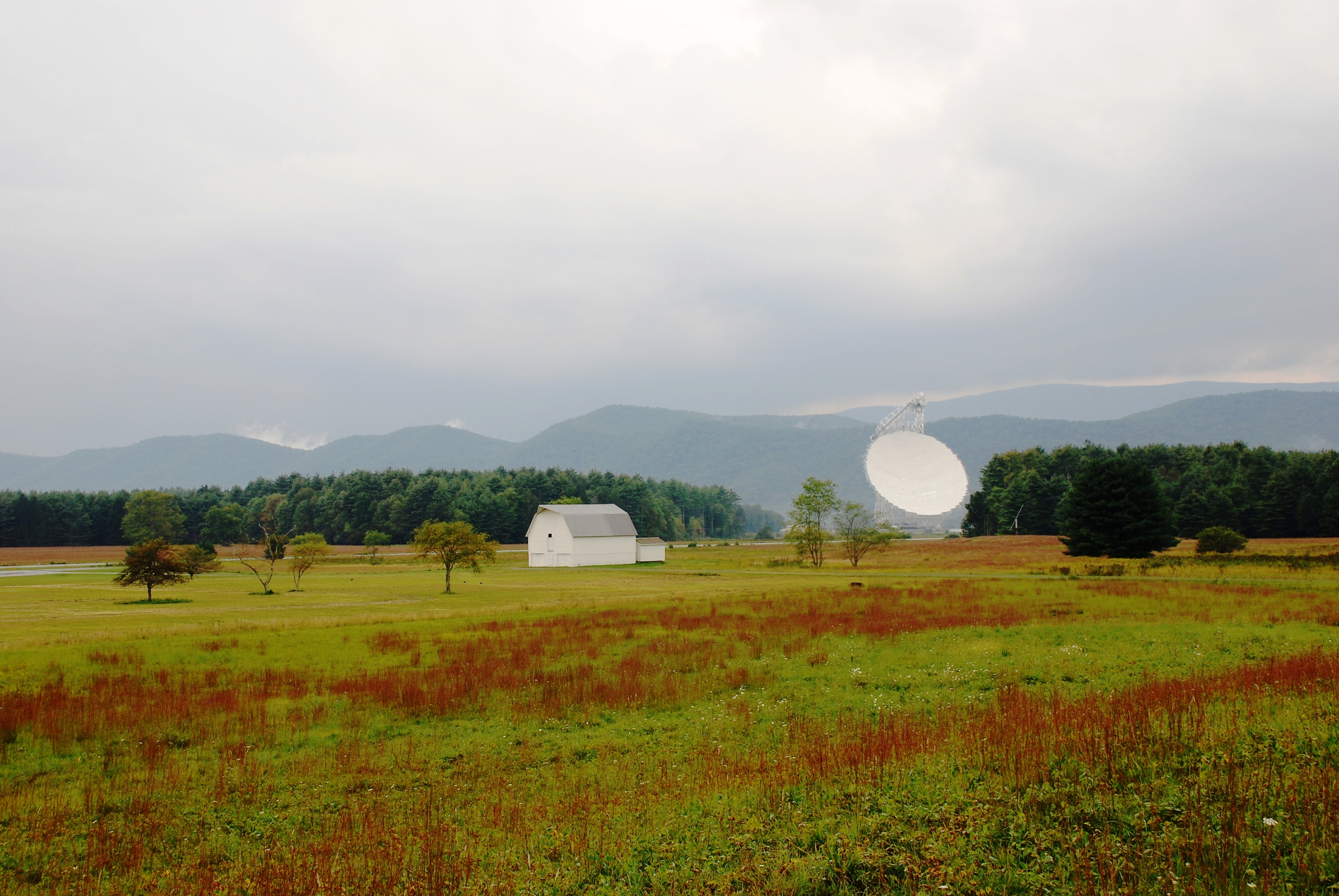
The National Radio Quiet Zone
In the mountains of West Virginia, there's a place where the modern world is illegal. The National Radio Quiet Zone covers 13,000 square miles of the Allegheny Mountains, and within it, wireless signals are heavily restricted or banned. No cell towers. No WiFi in many areas. Microwave ovens must be shielded. All to protect the Green Bank Observatory, home to the world's largest fully steerable radio telescope, listening for signals so faint that a cell phone on Mars would drown them out. The telescope searches for pulsars, studies the formation of galaxies, and participates in SETI - the search for extraterrestrial intelligence. To hear the universe, the universe must be quiet. The Quiet Zone has attracted an unexpected population: 'electrosensitives' who believe wireless signals cause them physical harm. In Green Bank, they've found refuge. The town has become equal parts astronomical research station and sanctuary from the electromagnetic world.
The Telescope
The Green Bank Telescope (GBT) is the largest fully steerable radio telescope in the world. Its dish is 100 meters across - larger than a football field - and can point anywhere in the sky above the horizon. The telescope detects radio waves emitted by celestial objects: pulsars, galaxies, gas clouds, and potentially extraterrestrial civilizations. Radio waves are incredibly faint; the total energy received by all radio telescopes in history is less than a single snowflake falling. Any local interference - a cell phone, a microwave oven, a spark plug - would overwhelm the cosmic signals. The GBT needs silence.
The Quiet Zone
The National Radio Quiet Zone was established in 1958 to protect the Green Bank facility and a nearby Navy communications base. The zone covers 13,000 square miles across West Virginia and Virginia. Within the core area around Green Bank, wireless transmissions are essentially banned. The FCC coordinates all radio emissions; cell towers don't exist; WiFi is prohibited in many buildings. Residents use wired internet or nothing. Cars with malfunctioning spark plugs are asked to leave. The observatory operates a fleet of radio-frequency detection vehicles that hunt down interference sources. A technician might knock on your door because your heating pad is disrupting observations of a galaxy 50 million light-years away.
The Electrosensitives
People with 'electromagnetic hypersensitivity' claim that wireless signals cause headaches, fatigue, and other symptoms. The condition is not recognized by mainstream medicine - studies have consistently failed to demonstrate that sufferers can detect electromagnetic fields. But the symptoms feel real to those who experience them. Green Bank has become a refuge: a town where WiFi doesn't exist, cell phones don't work, and wireless signals are illegal. Several dozen electrosensitives have moved to the area, finding relief in the Quiet Zone. The scientific community at the observatory doesn't necessarily accept their claims, but everyone coexists peacefully in electromagnetic silence.
The Science
The Green Bank Observatory does groundbreaking astronomy. The telescope discovered the first pulsar in a globular cluster, studies the cosmic microwave background, maps hydrogen gas in distant galaxies, and searches for extraterrestrial intelligence. The Breakthrough Listen project uses the GBT to scan nearby stars for artificial signals. If aliens are transmitting radio waves, Green Bank might hear them first. The telescope also trains the next generation of radio astronomers - students from around the world come to learn on equipment that exists nowhere else. The Quiet Zone makes all of this possible. Astronomy requires darkness for optical telescopes; it requires silence for radio telescopes.
Visiting Green Bank
The Green Bank Observatory is located off Route 28 in Pocahontas County, West Virginia, about 150 miles west of Richmond, Virginia. The Science Center offers exhibits, tours, and gift shop. Bus tours of the telescope are available; advance reservations recommended. Cell phones and cameras must be turned off or surrendered near the telescope. The nearest commercial airports are in Charleston, WV (130 miles), or Richmond, VA (180 miles). The area is rural and mountainous; services are limited. Accommodations are available in nearby towns. The Quiet Zone experience is genuine - your phone will stop working as you approach. Consider it a feature.
From the Air
Located at 38.43°N, 79.84°W in the Allegheny Mountains of West Virginia. From altitude, the Green Bank Telescope is visible as a massive white dish in a mountain valley - the largest steerable dish in the world. The surrounding terrain is forested mountains, small farms, and scattered rural communities. No cell towers are visible. The National Radio Astronomy Observatory campus is clustered around the telescope. The Allegheny ridges run northeast-southwest. Charleston is 130 miles west. The isolation is intentional and apparent from the air.