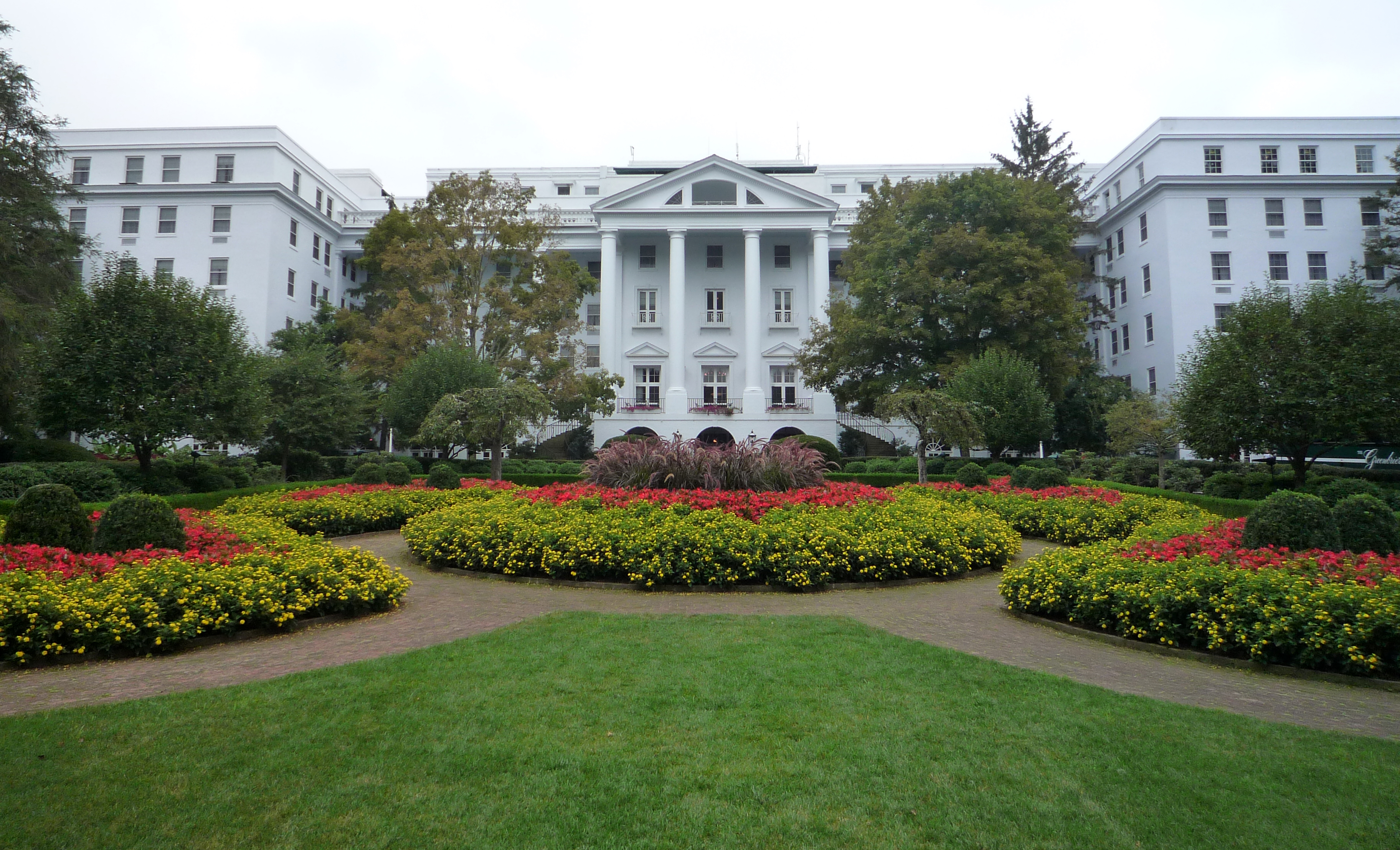
The Greenbrier Bunker
For three decades, guests at the Greenbrier Resort in White Sulphur Springs slept, golfed, and dined directly above one of the Cold War's most elaborate secrets: a 112,544-square-foot underground bunker designed to house the entire United States Congress in the event of nuclear war. Built between 1958 and 1961, the facility was hidden beneath what appeared to be a new convention center wing. Hotel staff who ventured into the wrong corridor found themselves facing men with security clearances and manufactured excuses. The bunker contained a 25-ton blast door, decontamination chambers, 18 dormitories capable of housing 1,100 people, a broadcast studio for emergency addresses, and supplies to sustain Congress for 60 days after the end of civilization. It remained secret until 1992, when a reporter exposed it, ending its operational status overnight.
The Construction
In 1958, the Greenbrier announced construction of an exhibit hall and meeting wing. What it didn't announce was that the project was actually a cover for the U.S. government to build a massive underground facility. Workers believed they were constructing exhibit space; only a small crew with top-secret clearances knew the true purpose. The bunker, codenamed 'Project Greek Island,' was buried 720 feet into the hillside beneath a concrete shell. The exhibit hall built above it was real and functional - but its primary purpose was to disguise what lay beneath. Construction took three years and cost $14 million (over $130 million today).
The Facility
Behind a 25-ton blast door disguised as a painted wall, the bunker spread across 112,544 square feet. It contained dormitories with steel bunk beds for 1,100 people - the full membership of House and Senate plus essential staff. A cafeteria could feed them all. A clinic had operating rooms. The bunker included a broadcast studio where surviving members of Congress could address the nation. There was a vast communications room, air filtration systems to handle radioactive fallout, and diesel generators. Decontamination showers would process members arriving from a contaminated surface. Food and supplies were rotated regularly.
The Deception
The bunker operated under the cover story of being a television repair facility owned by 'Forsythe Associates,' a front company staffed by full-time government employees. These men maintained the facility 24/7, rotating supplies, testing equipment, and turning away curious hotel employees with bureaucratic indifference. Some Greenbrier workers suspected something odd about the basement wing where certain doors were always locked and certain men never seemed to actually repair televisions. But security held. For 30 years, the secret survived despite being hidden beneath one of America's most exclusive resorts.
The Exposure
In 1992, Ted Gup of the Washington Post broke the story. His expose detailed the bunker's existence, location, and purpose. Within 24 hours, the facility's usefulness ended - its secrecy had been its entire value. The government decommissioned it immediately. The Greenbrier, after initial embarrassment, realized they had a unique tourist attraction. Today, the bunker is open for tours. Visitors can walk through the blast doors, see the dormitories, and stand in the House and Senate chambers that were never used. The secrecy that cost millions to maintain now generates tourist dollars.
Visiting The Greenbrier Bunker
The Greenbrier Bunker tours operate daily from the Greenbrier Resort in White Sulphur Springs, West Virginia. The 90-minute tour includes the blast doors, decontamination chambers, dormitories, cafeteria, and the broadcast studio. Reservations are recommended. The resort itself remains a luxury destination with golf courses, spa, and the same elegance that once provided cover for apocalypse planning. The bunker entrance is in the West Virginia Wing. Yeager Airport in Charleston is the closest major airport, 100 miles west. The Greenbrier is accessible via I-64 and Amtrak's Cardinal line stops at White Sulphur Springs.
From the Air
Located at 37.78°N, 80.30°W in White Sulphur Springs, West Virginia, in the Allegheny Mountains. From altitude, the Greenbrier Resort appears as a white-columned main building surrounded by golf courses in a narrow valley. The West Virginia Wing housing the bunker entrance extends from the main structure. I-64 passes just north. The mountains surrounding the valley would have provided some natural shielding from nuclear blasts. Yeager Airport in Charleston is 100 miles west.