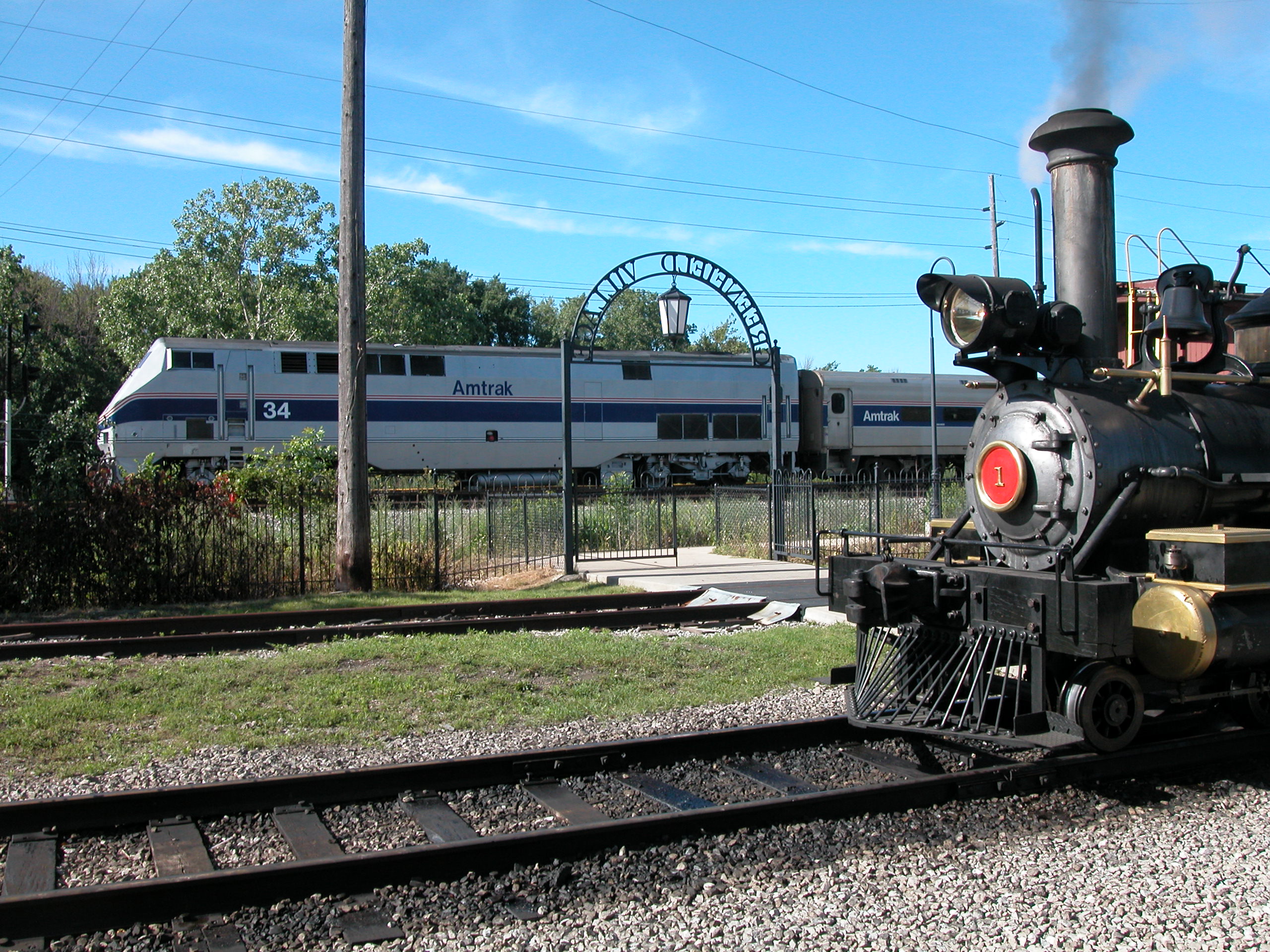
Greenfield Village
Greenfield Village is what happens when the world's richest man becomes obsessed with preserving history on his own terms. Between 1929 and his death in 1947, Henry Ford relocated nearly 100 historic buildings to a 250-acre campus in Dearborn, Michigan, creating an idealized vision of American innovation and small-town life. He moved Thomas Edison's Menlo Park laboratory brick by brick, shipping New Jersey soil to recreate the grounds. He acquired the Wright Brothers' bicycle shop from Dayton. He bought the Illinois courthouse where Lincoln practiced law. He preserved his own birthplace and the factory where he built his first car. The result is simultaneously a serious historical resource and a monument to Ford's peculiar nostalgia for a preindustrial America that his own innovations had destroyed. It's history as theme park, curated by a genius who distrusted history books.
The Vision
Ford hated the way history was taught from books. 'History is bunk,' he famously said - meaning academic history that emphasized politics and war. He wanted to preserve the history of ordinary people and practical innovation. He began collecting Americana in the 1910s: tools, machines, furniture, vehicles. By the 1920s, he was collecting entire buildings. His concept was an outdoor museum where visitors could see how Americans actually lived and worked, from colonial times through the industrial revolution. The village would be arranged chronologically, showing the progression from craft production to mass manufacturing.
The Collection
Ford's collectors swept across America, buying everything that fit his vision. Edison's Menlo Park laboratory was particularly important - Ford idolized Edison, and the laboratory complex was reconstructed in exacting detail, including the soil. The Wright Brothers' cycle shop came from Dayton. The Logan County Courthouse, where Lincoln argued cases, came from Illinois. Noah Webster's Connecticut home, a Cotswold cottage from England, and dozens of other structures were disassembled, shipped, and rebuilt. Ford also moved his own history: his birthplace, the shop where he built his first car, and the one-room schoolhouse he'd attended. The result was a curated American history with Ford and his heroes at its center.
The Museum
Adjacent to Greenfield Village, Ford built the Henry Ford Museum (originally called the Edison Institute) - a massive indoor exhibition space covering 12 acres. Here Ford collected machines: locomotives, automobiles, farm equipment, manufacturing tools. The museum holds the limousine in which JFK was assassinated, the bus where Rosa Parks refused to give up her seat, and the chair Lincoln sat in at Ford's Theatre. It's one of the largest indoor-outdoor museum complexes in America, visited by 1.8 million people annually. Together, village and museum represent Ford's vision of American progress through innovation and work.
The Contradictions
Greenfield Village embodies Ford's contradictions. The man who perfected mass production and paid high wages romanticized pre-industrial craftsmanship. The antisemite who published hateful propaganda preserved American heritage. The modernizer who created the mobile society mourned the rural life his cars destroyed. The village celebrates individuals - Edison, the Wrights, Ford himself - while Ford's own manufacturing system replaced individual craftsmanship with interchangeable workers. These tensions make the village fascinating as historical artifact and as window into Ford's complex psychology.
Visiting The Henry Ford
The Henry Ford (the organization's official name) is located in Dearborn, Michigan, about 10 miles west of downtown Detroit. Greenfield Village is the outdoor component with historic buildings, costumed interpreters, and working demonstrations. The Henry Ford Museum is the indoor component with vehicles, machines, and artifacts. Allow at least a full day; enthusiasts need two. The Rouge Factory Tour offers a look at current Ford manufacturing. Tickets are required; combination packages are available. The complex is open year-round but outdoor elements are seasonal. Detroit Metropolitan Airport (DTW) is 15 minutes away. The complex is one of Michigan's top tourist attractions and an important resource for understanding American technological history.
From the Air
Located at 42.30°N, 83.24°W in Dearborn, Michigan, 10 miles west of downtown Detroit. From altitude, Greenfield Village appears as a green space with scattered small buildings in an otherwise industrial and suburban landscape. The Henry Ford Museum's massive building is adjacent. The Ford Rouge Complex, one of the largest industrial sites in the world, is visible nearby. The Detroit River and Ambassador Bridge to Canada are visible to the east. The juxtaposition of Ford's nostalgic village with the industrial landscape his company created is visible from the air.