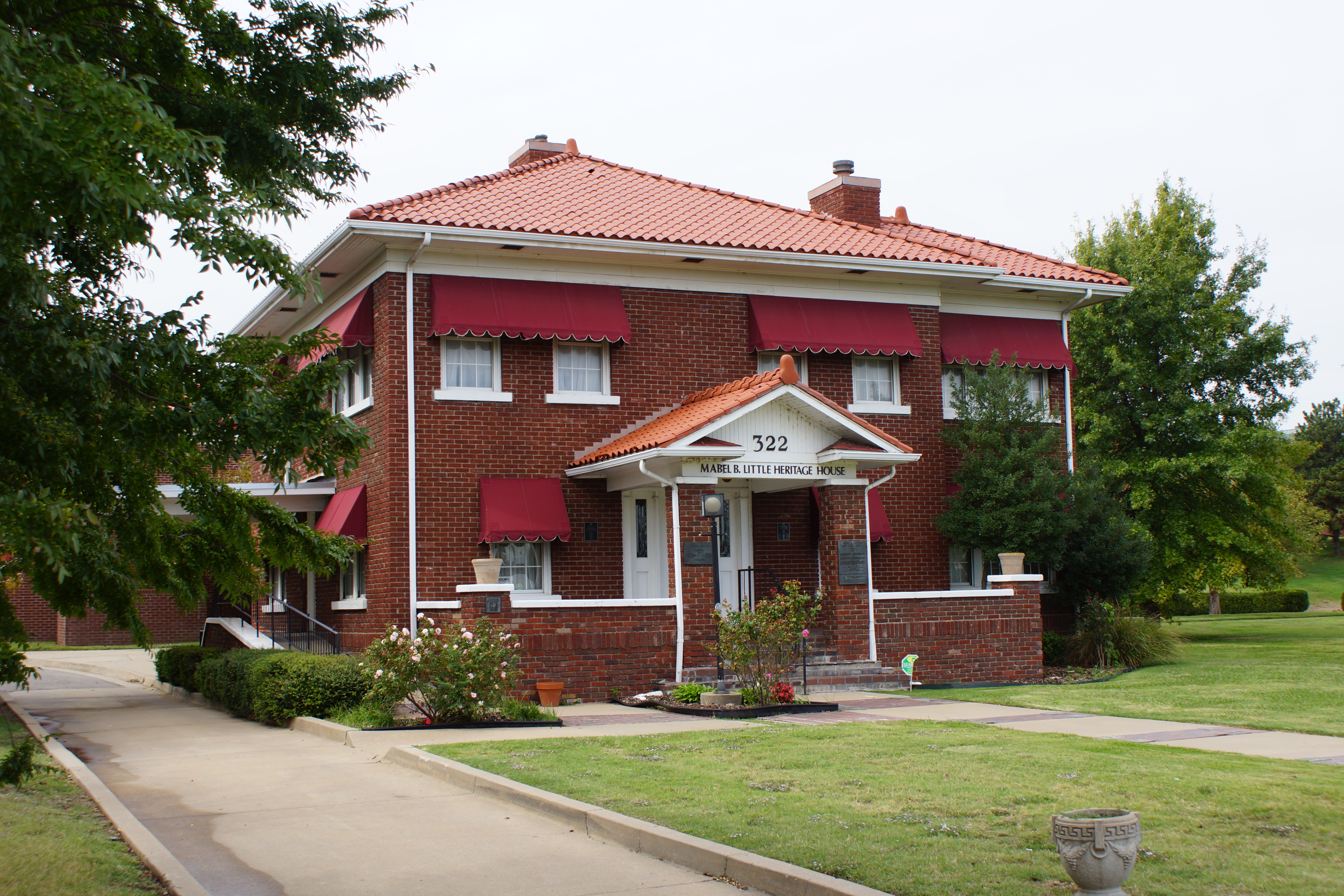
Greenwood District, Tulsa
By 1921, the Greenwood District of Tulsa was home to about 10,000 Black residents, hundreds of thriving businesses, and a nickname that captured something unprecedented in American life: 'Black Wall Street.' There were African-American attorneys, doctors, real estate agents, and entrepreneurs. J.B. Stradford, an Indiana University law graduate, had built a real estate empire and a hotel bearing his name. Red brick buildings lined Greenwood Avenue for over a mile. Then, on the night of May 31, 1921, a white mob attacked. Between 75 and 300 Black Americans were killed, hundreds more injured, and the homes of 5,000 people were destroyed. It was one of the worst episodes of racial violence in American history.
Building a World Within a World
Many of Greenwood's founders were descendants of people who had walked the Trail of Tears alongside the Five Civilized Tribes, or who had fled to Indian Territory seeking escape from the Deep South. After the Civil War, Muscogee Freedmen and Cherokee Freedmen gained citizenship in their respective nations. Others arrived during the Oklahoma land rushes of 1889 through 1891. In 1905, Booker T. Washington visited and encouraged residents to build on what he saw as extraordinary 'industrial capacity.' The following year, the community was formally organized as Greenwood. O.W. Gurley, a wealthy Black landowner from Arkansas who had resigned a presidential appointment under Grover Cleveland, purchased land designated to be 'only sold to colored,' setting the physical boundaries that defined the district. Jim Crow laws, perversely, helped insulate the community's economy by forcing Black residents to spend within their own neighborhood.
Thirty-Five Blocks in Flames
The massacre began when police accused a Black shoe shiner of assaulting a white woman. White Tulsans had grown resentful of Greenwood's prosperity and expanding boundaries. What followed was systematic destruction: an armed mob burned thirty-five blocks, reducing one of the most affluent African-American communities in the country to ash. Insurance claims were denied. Lawsuits were dismissed. For decades afterward, survivors rarely spoke of what had happened, fearing it could happen again. The silence was so effective that many Oklahomans grew up never learning about the massacre at all.
Rebuilt Against the Odds
Within ten years of the massacre, surviving residents who chose to remain in Tulsa had rebuilt much of the district, accomplishing this despite active opposition from white political and business leaders and punitive rezoning laws designed to prevent reconstruction. By 1941, over 240 Black businesses operated in Greenwood. The district continued as a vital community until desegregation in the 1950s and 1960s ironically undermined it. Once Black residents could live and shop elsewhere, Greenwood lost much of its captive economic base. The construction of the I-244 expressway further fractured the neighborhood, a wound some residents consider as damaging as the massacre itself.
Remembrance and Reckoning
The work of remembrance has been slow and contested. A commission established in 1996 recommended full reparations for descendants of massacre victims, but resolution has remained elusive. The Greenwood Cultural Center, dedicated in 1995, anchors preservation efforts, while the Greenwood Rising History Center opened in 2021 at the corner of Greenwood Avenue and Archer Street. John Hope Franklin Reconciliation Park, named for the distinguished historian whose father B.C. Franklin was a Greenwood attorney, was dedicated in 2008 as a space for education and reflection. In 2021, President Biden visited the Greenwood Cultural Center during the 100-year commemoration. In 2022, the Greenwood Historic District was added to the National Register of Historic Places, and in 2023 a Senate bill proposed designating it a National Monument. The ground beneath Greenwood holds layers of meaning: ambition, destruction, resilience, and the ongoing question of what America owes when it burns down what its citizens built.
From the Air
Located at 36.16°N, 95.99°W, just north of downtown Tulsa along Greenwood Avenue. The district is bounded by I-244 to the north and the Frisco railroad tracks to the south. ONEOK Field baseball stadium is a visible landmark within the district. Nearest major airport: Tulsa International (KTUL), approximately 6 nm northeast. At low altitude, the Greenwood Rising History Center and the cultural center are identifiable along the north-south axis of Greenwood Avenue. The I-244 corridor bisects the historic neighborhood.