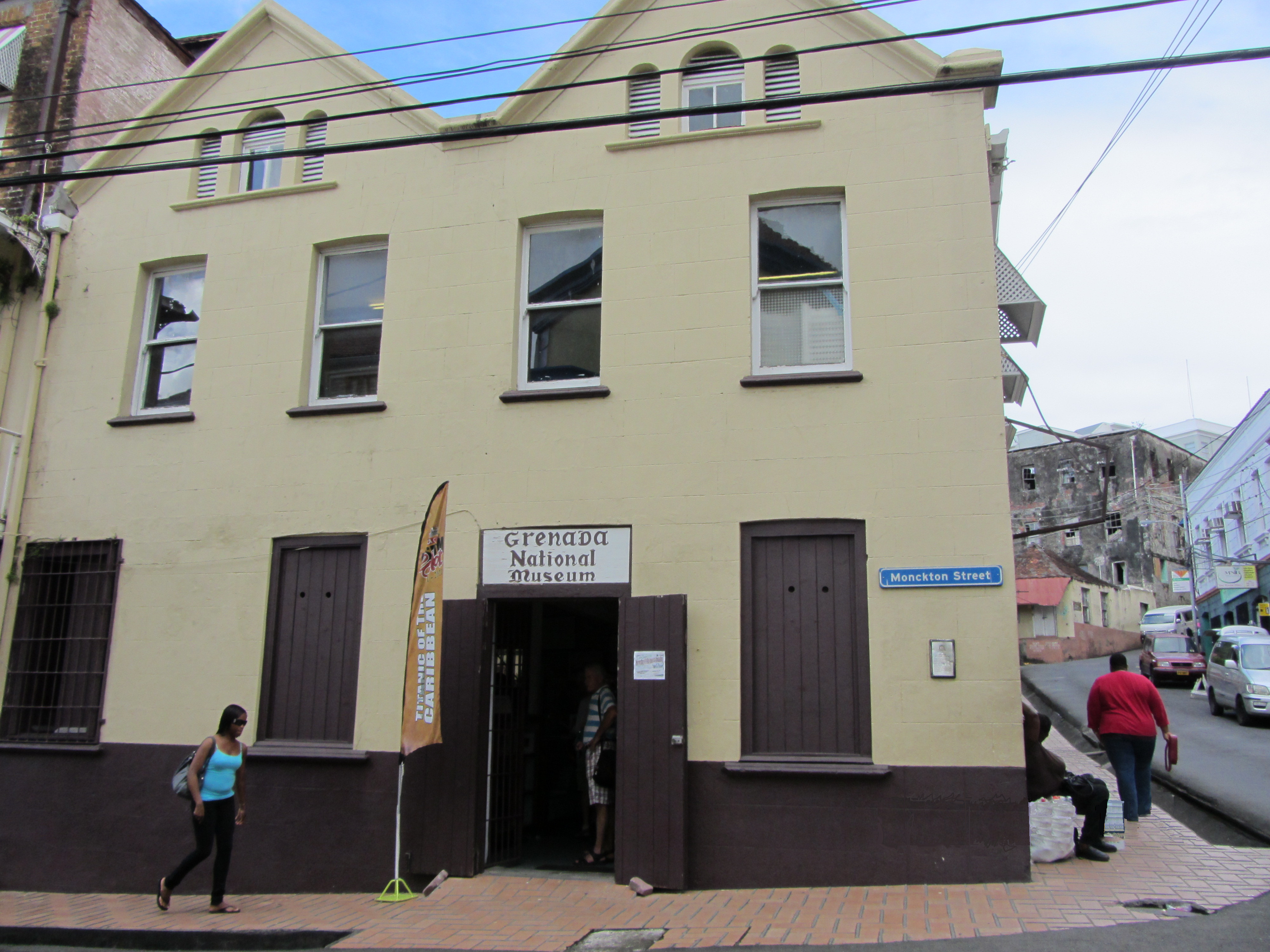
Grenada National Museum
The marble bathtub is the detail everyone remembers. Sitting in a small museum at the corner of Young and Monckton streets in St. George's, it reportedly belonged to Josephine Bonaparte - or more precisely, to the girl who would become Josephine, who spent part of her childhood on the nearby island of Martinique. How the bathtub ended up in Grenada is one of those Caribbean provenance mysteries that may never be fully resolved. But its presence captures something true about the Grenada National Museum itself: a small institution in an old building, holding artifacts that connect this tiny island to empires, revolutions, and the largest currents of world history.
Three Centuries Under One Roof
The building at Young and Monckton streets has reinvented itself more times than most structures survive. It began as a military barracks for the French army in 1704, when Grenada was a growing colony that had only recently come under direct royal control. Parts of the complex later served the adjacent prison until the 1850s, when the land was sold and transformed into the Home Hotel - the island's first. The hotel changed hands and names several times, served briefly as a warehouse in the 1940s when a St. George's merchant needed storage space, and finally closed in the early 1960s. Each incarnation left traces in the walls: French stonework, British-era modifications, the commercial adaptations of the 20th century. By the time the building became a museum, it had already accumulated the physical history it would be asked to display.
From Barracks to Gallery
The museum was established in 1976 through the efforts of private citizens who organized themselves as Grenada's historical society. The Gairy government donated part of the building complex for the purpose, and the society set about creating a museum that could tell an island's story from its earliest inhabitants forward. It was, and remains, a modest operation - not a national museum in the grand European sense of marble halls and endowments, but something more personal. The Grenada Historical Society still operates from within the building, and the collection reflects a community's determination to preserve its own memory. Donations from Republic Bank have supported improvements to exhibits on Amerindian culture and the European colonial period, but the museum's strength has always been authenticity over spectacle.
What the Walls Hold
The collection spans the full arc of Grenadian history with the compression that a small museum demands. Amerindian pottery fragments from archaeological excavations share space with petroglyphs depicting native fauna - reminders that this island had a rich human story long before European ships appeared on the horizon. An ancient rum still speaks to the plantation economy that shaped the colonial centuries. The first telegraph line installed in St. George's in 1871 is here, a technological artifact from the era when the Caribbean was being wired into global communication networks. And the exhibits on more recent history do not flinch from difficulty: there are displays related to the assassination of Prime Minister Maurice Bishop in 1983 and the American invasion that followed. The museum treats these events as what they are - part of the national story, as essential to understanding Grenada as the Amerindian ceramics or the colonial-era equipment.
Small Museum, Deep Roots
The Grenada National Museum was closed during the COVID-19 pandemic, a blow to an institution that operates on dedication more than budget. But its significance extends beyond whether its doors are open on any given day. In a nation where colonial powers repeatedly erased and overwrote the previous regime's records - where Governor Macartney's personal papers were destroyed during the 1779 French capture, where the 1983 coup consumed documents along with lives - the act of preserving anything is itself a statement. The museum sits in the heart of St. George's, steps from the harbor where merchant ships and warships have anchored for three centuries. Its building has been barracks, prison, hotel, and warehouse. Each transformation could have erased what came before. That the building now holds the island's memory, imperfect and incomplete as any memory is, represents a quiet insistence that Grenada's story belongs to Grenadians - all of it, from the first Amerindian settlements to the most painful chapters of the recent past.
From the Air
Located at 12.05N, 61.75W in the heart of St. George's, the museum sits at the corner of Young and Monckton streets near the waterfront. Maurice Bishop International Airport (TGPY) is approximately 8km south. From altitude, St. George's horseshoe harbor is the primary visual landmark, with the colorful waterfront buildings of the Carenage visible along the inner harbor. The museum is within the dense commercial district on the harbor's south side, near Fort George on the headland. The red-tiled roofs of St. George's colonial-era buildings are distinctive from above. Trade winds from the east; generally good visibility.