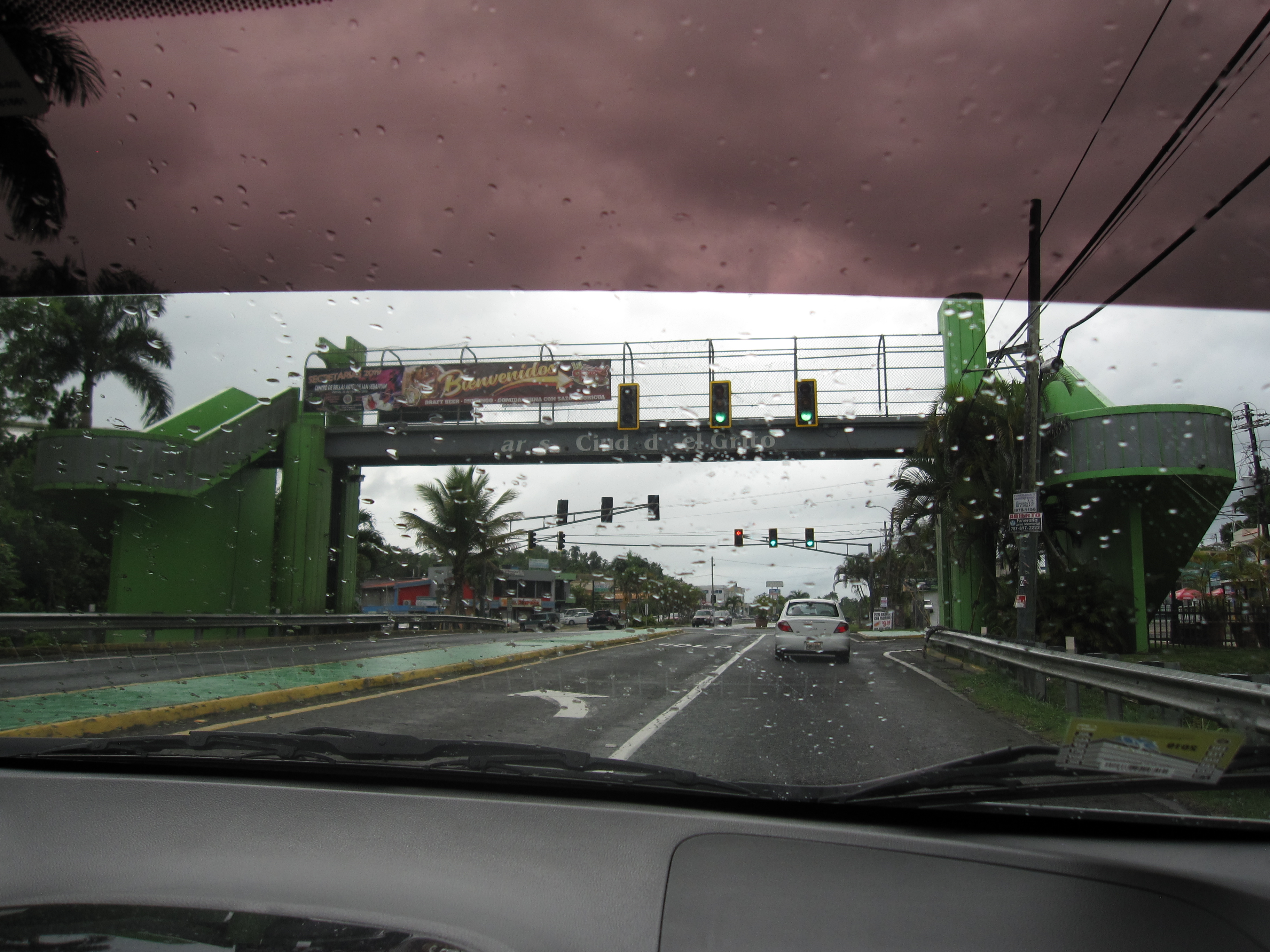
Grito de Lares
Drive into Lares today and the overpass greets you with the town's nickname: Ciudad del Grito -- City of the Cry. On September 23, 1868, several hundred Puerto Ricans marched into this mountain town and declared independence from Spain. They were farmers and merchants, professionals and enslaved people, united by the conviction that three centuries of colonial extraction had to end. The revolt lasted barely a day before Spanish militia fire drove the revolutionaries from the town plaza. But the Grito de Lares -- the Cry of Lares -- cracked open a question that would define Puerto Rican politics for the next century and beyond: who decides the island's future? The flag sewn for that uprising, a white cross on fields of red and blue with a lone white star, is recognized as the first flag of Puerto Rico.
The Pressure That Built for Decades
By the 1860s, Spain was bleeding. Wars in Peru and Chile, slave revolts in Cuba, and the cost of occupying the Dominican Republic had drained the treasury, and the crown's solution was to squeeze its remaining colonies harder. Puerto Rico and Cuba faced rising tariffs and taxes on imports and exports. On the island, anyone who openly supported independence -- or even moderate reform -- risked jail or exile. In 1865, Madrid made a conciliatory gesture: a review board called the Junta Informativa de Reformas de Ultramar, where colonial representatives could voice complaints. Puerto Rico sent freely elected delegates, including the separatist Segundo Ruiz Belvis representing Mayaguez. The board changed nothing. Ramon Emeterio Betances, the revolution's intellectual architect, concluded that reform was impossible. From exile in Saint Thomas, he wrote Los Diez Mandamientos de los hombres libres -- The Ten Commandments of Free Men -- directly modeled on the French Declaration of the Rights of Man and of the Citizen. The document became the philosophical foundation for armed revolt.
The Secret Cells
Betances could not organize the revolution from exile alone. Inside Puerto Rico, Mathias Brugman, Mariana Bracetti, and Manuel Rojas built a network of secret revolutionary cells that cut across every stratum of colonial society. Landowners worked alongside enslaved people; merchants conspired with peasants. Most were criollos -- people of Spanish descent born on the island -- but the movement's reach was deliberately broad. Bracetti, often credited with sewing the revolutionary flag, actually managed the encrypted communications that held the conspiracy together. It was Eduviges Beauchamp Sterling who embroidered the banner. The Revolutionary Committee named twelve generals, with Manuel Rojas as Commander-in-Chief of the Liberation Army. Poet Lola Rodriguez de Tio wrote patriotic lyrics to the tune of La Borinquena, Puerto Rico's anthem, inspired by Betances's vision. In the mountain towns of western Puerto Rico, the revolution took root in the soil of daily grievance -- debt, taxation, slavery, and the suffocating knowledge that a distant crown cared nothing for the people it governed.
Plans Unraveled, But They Marched Anyway
The uprising was supposed to begin on September 29 in Camuy, coordinated with reinforcements arriving by ship and simultaneous revolts across the island. It fell apart almost immediately. A Spanish captain in Quebradillas overheard two conspirators discussing a plan to poison the garrison's bread rations. Authorities raided a conspirator's home, confiscated planning documents, and arrested the Camuy cell leaders. Worse, the ship carrying weapons from the Dominican Republic -- organized by Betances with Dominican government support -- was intercepted in the Danish West Indies. Spanish authorities in Saint Thomas boarded the vessel and confiscated its cargo. Without weapons, without surprise, and without their chief strategist, the remaining leaders faced a choice: wait and be arrested, or act now. They chose to fight. On September 23, they moved the date forward without consulting Betances and marched on Lares.
Half an Hour on the Plaza
The revolutionary cavalry rode toward the militia barracks in Lares and was met with rifle fire. After half an hour of fighting, the cavalry and infantry pulled back to regroup. Under General Rojas's unified command, they launched a second assault from the southern end of the plaza. Again, heavy fire from the militiamen and armed local residents drove them back. The revolt was over almost as quickly as it had begun. In the days that followed, Spanish authorities arrested participants across the island. But the Grito's failure as a military action proved irrelevant to its power as a symbol. The Spanish government, shaken by the breadth of the conspiracy, granted more political autonomy to the island. Minor pro-independence protests and skirmishes continued in Las Marias, Adjuntas, Utuado, Vieques, Bayamon, Ciales, and Toa Baja. Juan de Mata Terreforte, who fought alongside Rojas, was exiled to New York City, where he became vice-president of the Puerto Rican Revolutionary Committee.
A Cry That Still Echoes
Three decades after Lares, the Revolutionary Committee organized a second revolt in the southwestern municipality of Yauco -- the Intentona de Yauco -- which also failed. But the Grito de Lares had planted something deeper than any single uprising could uproot. It established September 23 as a touchstone of Puerto Rican national identity, a day when ordinary people from every walk of life stood together and said: enough. Betances's Ten Commandments, with their insistence on human dignity and self-governance, shaped the independence movements that followed across the next century -- from the Puerto Rican Nationalist Party revolts of the 1950s to the ongoing debate over the island's political status. The flag embroidered by Beauchamp Sterling, with its white star in the blue corner symbolizing liberty, became the visual language of Puerto Rican sovereignty. In Lares, the cry is not history. It is inheritance.
From the Air
Lares (18.295N, 66.879W) sits in the mountainous interior of western Puerto Rico. From 4,000-6,000 feet AGL, the town is nestled in a valley surrounded by the green, deeply folded ridges of the Cordillera Central. The central plaza where the revolt took place is the heart of the town. Nearest airports: Rafael Hernandez Airport (TJBQ/BQN) in Aguadilla, approximately 20 miles northwest; Mercedita Airport (TJPS/PSE) in Ponce, approximately 30 miles south. The mountain roads connecting Lares to the coastal towns of Camuy and Arecibo trace the routes the revolutionaries would have used. Western Puerto Rico's mountainous terrain -- the stronghold of the independence movement -- is dramatically visible from the air.