Groninger Studentencorps Vindicat atque Polit
On 4 February 1815 a group of University of Groningen students put their names to the founding of an association whose Latin motto carried two meanings at once. Vindicat atque Polit translates literally as "(the sword) avenges and (the file) scrapes", and more loosely as "uphold and refine". The reason for the founding was practical: students were being attacked in the streets of Groningen by local townspeople, and they wanted an organised way to defend themselves. Two centuries on, Vindicat is still on the Grote Markt - and the trouble it makes national news for is, almost always, generated from inside its own walls.
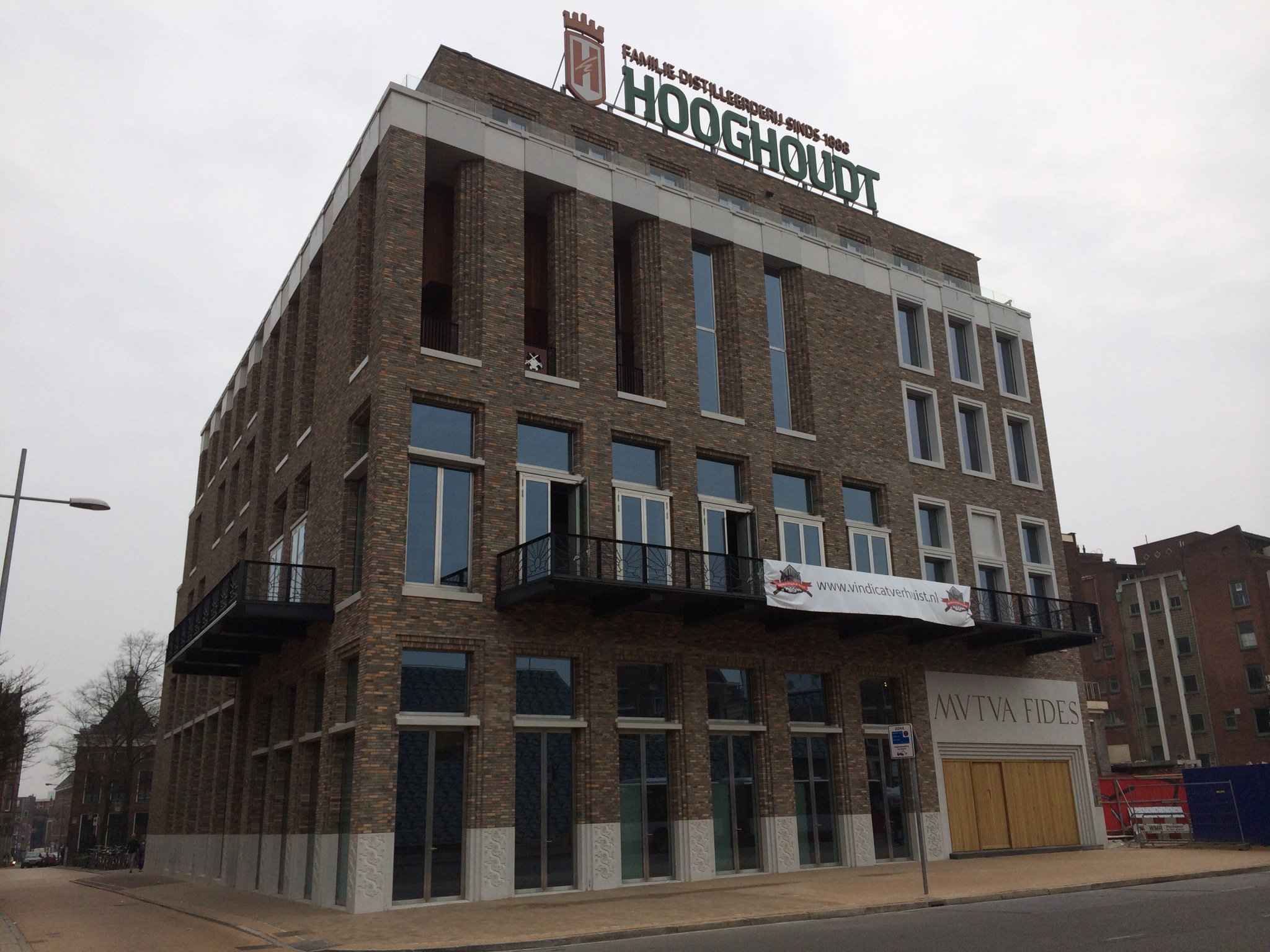
Mutua Fides on the Grote Markt
Vindicat's society building is called Mutua Fides - "Mutual Trust" or "Confidence" - and occupies a prominent position on the eastern side of Groningen's central square. The current building is unexpectedly new. Its predecessor was demolished in 2014 as part of a major redevelopment of the Grote Markt's eastern flank, and a replacement was completed the same year. The old Mutua Fides was so iconic to the city that in 2005 a scale replica was built in Madurodam, the miniature city in The Hague that catalogues Dutch landmarks in 1:25 detail. The new building keeps the address and the function. Nearly 2,500 members pass through it today, making Vindicat the second-largest student organisation in Groningen and the oldest student association in the Netherlands.
Royals, Bankers, and the Long Lineage
Vindicat's roster of former members reads like a who's-who of twentieth-century Dutch public life. Princess Christina of the Netherlands belonged. So did Prince Maurits of Orange-Nassau, van Vollenhoven, and Prince Bernhard of Orange-Nassau, van Vollenhoven. Wim Duisenberg, the Dutch economist who became the first president of the European Central Bank, was a member during his student years in Groningen. The association's continued draw is not accidental - in a country where social networks form early and matter long, two centuries of accumulated alumni produce an enduring pull on each new cohort of first-year students arriving in Groningen each September.
The Death of Reinout Pfeiffer
In 1997 an eighteen-year-old first-year named Reinout Pfeiffer died during a Vindicat hazing ritual. The death turned a long-running pattern of complaint into a national news story. The association had been warned beforehand to put protections in place. It had not done so adequately, and Pfeiffer paid the price. New rules followed, particularly around alcohol consumption during initiation and around mandatory reporting of incidents. The reforms did not hold. Further hazing injuries were recorded in 2001, in 2005, and again in 2016. Investigators discovered that members had been required to sign contracts forbidding them from speaking to the press about what happened inside the building. The pattern - injury, public outrage, new rules, quiet return to old habits - became, sadly, a feature rather than a bug of Vindicat's relationship with the country it operates in.
Bussemaker and the Suspended Subsidy
In 2016 the Dutch minister of education Jet Bussemaker described the University of Groningen's response to one of Vindicat's hazing incidents as "completely insufficient". A short-lived proposal followed: ban all hazing activities for every student society in Groningen. The proposal was withdrawn, but a university-commissioned committee called for "large cultural changes" - language that, in Dutch institutional reports, signals serious concern. In September 2017, after additional accusations of disorderly behaviour at a Groningen restaurant, the University of Groningen temporarily suspended its annual subsidy to Vindicat. The financial measure carried weight that the public reprimands had not. Then, in March 2020, in the opening week of the COVID-19 pandemic, around 900 Vindicat members travelled together to northern Italy for a group ski holiday. During the trip the Dutch government's travel advisory shifted to "only if necessary". The Party for Freedom asked questions in the House of Representatives. The students were forced to cut the trip short and return.
The Geese and the Spray Paint
In March 2023, animal welfare officers removed two geese from a Vindicat-affiliated house. On one wall of the room where the birds had been kept, someone had spray-painted a swastika. The combined facts of the story - animals confined, a symbol of fascism on the wall, a venerable institution at the centre of the country's oldest student town - produced precisely the response the previous decades of incidents had produced: public condemnation, internal suspensions of members, a leadership statement, and a slow return to the same quiet evenings on the Grote Markt. The question Vindicat has not been able to answer in two hundred years is the question its motto raises and then sidesteps. The file scrapes, certainly. But what, exactly, is it shaping?
From the Air
Vindicat's society building Mutua Fides sits at 53.219°N, 6.568°E, on the eastern side of the Grote Markt in central Groningen. The square is the historical heart of the city - the Martinitoren rises immediately to the north - and the building is part of the redeveloped eastern flank completed in 2014. Nearest airport: Groningen Airport Eelde (EHGG), about 5 nautical miles south. Recommended viewing altitude 2,000 feet for orientation; the Grote Markt is the obvious square at the centre of the diepenring canal ring, with the brightly coloured Groninger Museum visible about 700 metres to the southwest.