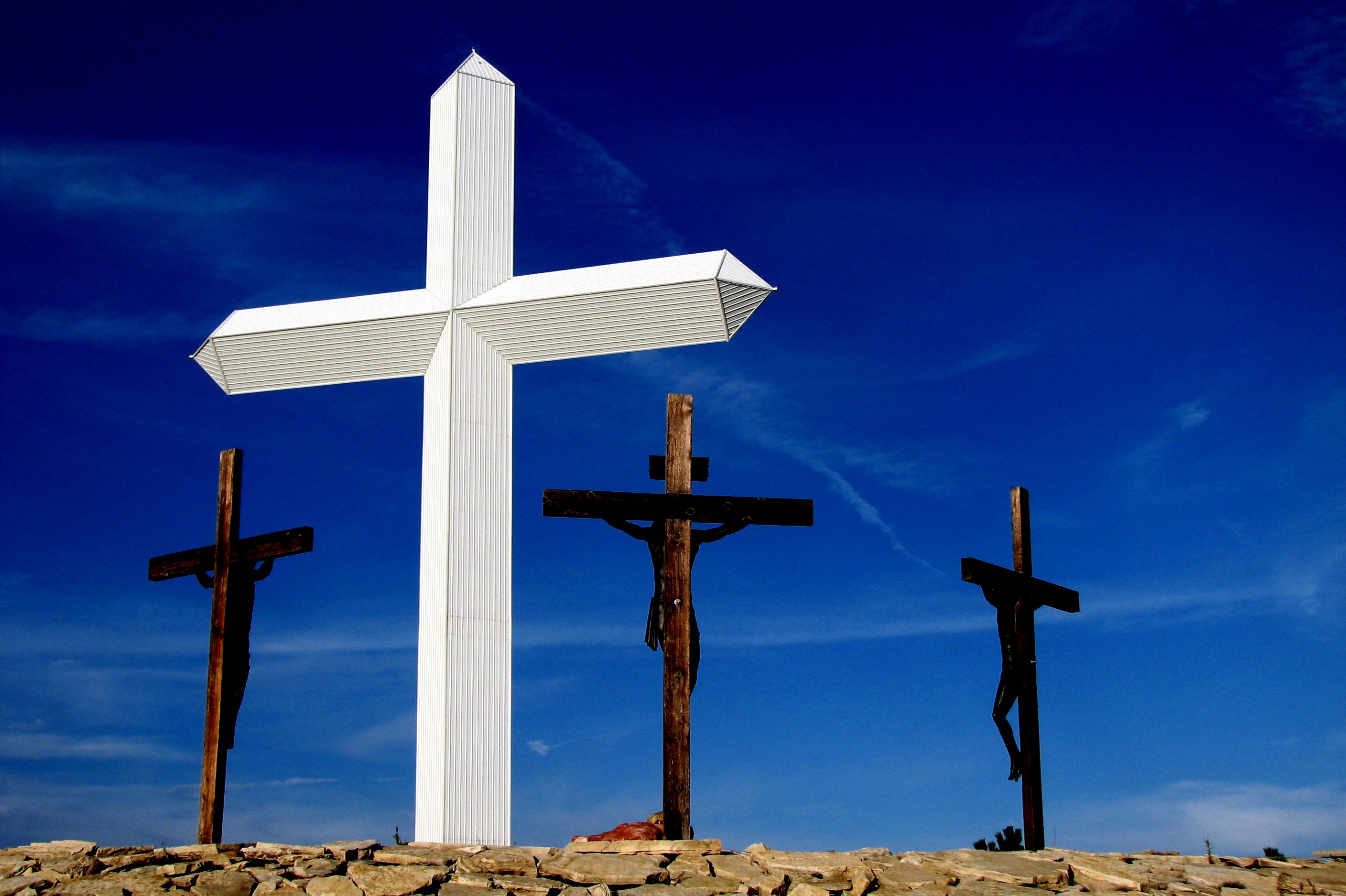
Groom's Cross: The Largest in the Western Hemisphere
You see it from miles away. The Cross of Our Lord Jesus Christ rises 190 feet above the Texas Panhandle, visible across the flat plains long before Groom itself appears. Built in 1995 by Steve Thomas, a structural steel contractor who wanted to create something visible to Interstate 40 travelers, the cross is exactly what Texas Christianity looks like: enormous, unsubtle, and impossible to ignore. It's the largest cross in the Western Hemisphere, constructed from steel, anchored against 90 mph winds, illuminated at night, surrounded by life-size bronze statues depicting the Stations of the Cross. Believers find it moving; skeptics find it audacious; everyone acknowledges that it's certainly visible.
The Construction
Steve Thomas was driving I-40 in the early 1990s when he conceived the project. A structural engineer and devout Christian, he designed a cross that could withstand Panhandle winds and be visible from maximum distance across flat terrain. The result: 190 feet tall, 110 feet arm to arm, weighing 2.5 million pounds, anchored with 425 tons of concrete. The cross was assembled on the ground and raised in sections, taking 18 months to complete. Thomas funded the project personally, later establishing the Cross Ministries Foundation to maintain the site and accept donations. The cross was finished in 1995 and has weathered every storm since.
The Site
The cross anchors a devotional complex. Life-size bronze Stations of the Cross - depicting Jesus's journey to Golgotha - line a walkway around the monument. A 'Empty Tomb' replica demonstrates resurrection. A 'Coming King' sculpture park is being developed. The gift shop sells religious merchandise. Everything is free; donations are encouraged. The site operates as a nonprofit religious ministry, welcoming all visitors regardless of faith. Thousands of travelers stop annually, some for devotion, some for photography, some simply to confirm that the enormous cross they spotted from the highway is real.
The Controversy
Not everyone appreciates the cross. Critics call it a billboard for Christianity, an imposition on a secular landscape, an example of religious excess. Supporters counter that it's private property, privately funded, imposing nothing except visibility on a voluntarily taken interstate. The debate mirrors larger American arguments about religion in public life. What's undeniable is the cross's visibility - it's impossible to drive I-40 through the Texas Panhandle without seeing it. Whether that visibility is inspiring or oppressive depends on the viewer. The cross makes no apologies; its purpose is to be seen.
The Competition
Giant crosses are an American genre. The Groom cross inspired imitators: Effingham, Illinois (198 feet, slightly taller); Corpus Christi, Texas (210 feet, claiming the record); Broken Arrow, Oklahoma (150 feet). The heights are disputed; measurement methods vary. What's consistent is the impulse: building the biggest cross, visible from the farthest distance, making faith physical at heroic scale. The Groom cross was among the first, certainly the most visible from major highways. Whether it's the largest depends on which measurement you accept and how you define 'cross.' The competition continues.
Visiting Groom Cross
The Cross of Our Lord Jesus Christ is located at Exit 112 off Interstate 40, roughly 40 miles east of Amarillo. Admission is free. The site includes the cross, Stations of the Cross walking trail, Empty Tomb replica, gift shop, and restrooms. The cross is illuminated at night, visible from many miles on the flat Panhandle. No advance arrangements are necessary. Groom is a small town with limited services; Amarillo provides fuller options. The cross is impossible to miss from I-40 in either direction - which is, of course, the point. Allow 30-60 minutes to walk the stations and appreciate the scale.
From the Air
Located at 35.19°N, 101.09°W in the Texas Panhandle, 40 miles east of Amarillo. From altitude, the cross is visible as a distinctive white structure against brown plains - its scale exaggerated by the absolute flatness of surrounding terrain. Interstate 40 runs alongside; the cross was positioned for maximum visibility from the highway. The Panhandle extends flat in all directions, occasional wind turbines the only vertical elements besides the cross. The structure is visible from remarkable distances due to atmospheric clarity and terrain geometry. From any altitude, the cross achieves its purpose: being seen, being impossible to ignore, making faith visible at Texas scale.