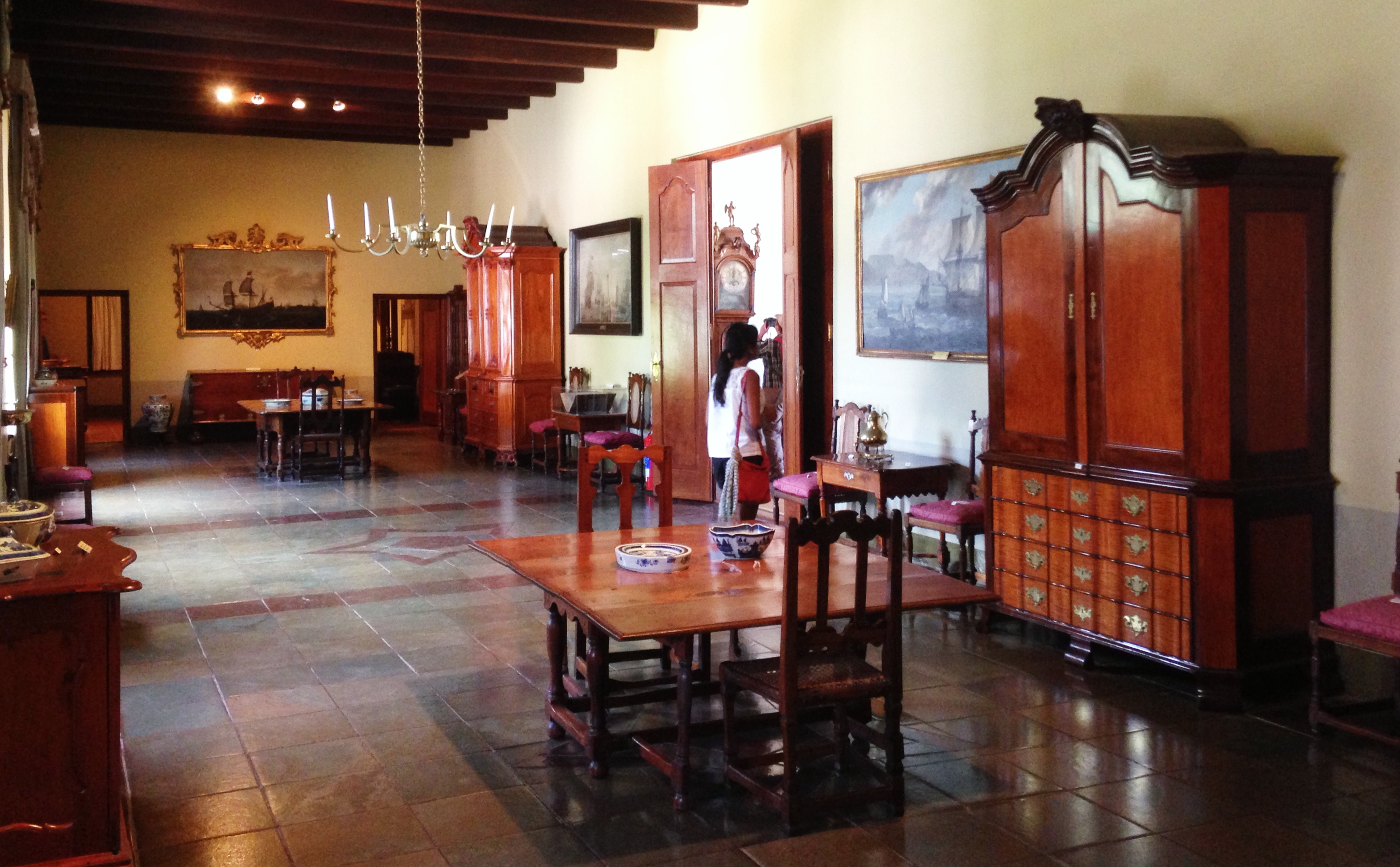
Groot Constantia
The wine cellar at Groot Constantia has a pediment gable sculpted by Anton Anreith that depicts a scene of abundance - cherubs, fruit, the celebration of the harvest. It is beautiful work, exquisitely detailed, and it sits atop a building that was built and operated with the labor of enslaved people brought to the Cape from across the Indian Ocean. Groot Constantia is the oldest wine estate in South Africa, a place where the elegance of Cape Dutch architecture and the violence of colonial exploitation occupy the same grounds, often the same room. The estate does not shy from this duality. Its museum exhibition, managed by Iziko South African Museum, is focused specifically on rural slavery and the lives of enslaved people during the early Cape colonial period. The beauty and the brutality are inseparable here. They always were.
The Governor's Reward
In 1685, during an annual visit to the Cape, Commissioner Hendrik Adriaan van Rheede tot Drakenstein granted the grounds of Groot Constantia to Simon van der Stel, the VOC Governor of the Cape of Good Hope. Van der Stel was not just an administrator collecting a perk. He built the Cape Dutch-style manor house, planted vines, and established a working farm producing wine, fruit, vegetables, and cattle. The estate's wines gained a reputation that spread through European courts. "Groot" means "great" or "large" in Dutch and Afrikaans, distinguishing this portion from its smaller neighbor. When van der Stel died in 1712, the estate was divided into three parts: Groot Constantia, Klein Constantia, and Bergvliet.
Fire and Resurrection
In 1779, the Cloete family purchased the portion that included van der Stel's original manor house. For nearly a century and a half they maintained it, but in 1925 the house burned to the ground. The fire could have been the end of Groot Constantia as a historic site, but funds were raised to reconstruct the manor to its original Cape Dutch design - the distinctive whitewashed walls, the ornamental gables, the thatched roof that is characteristic of the style. The reconstruction preserved the architecture while the passage of time changed the estate's purpose. In 1969 the manor became part of the South African Cultural History Museum. In 1993, ownership passed to the Groot Constantia Trust, which manages the estate today as both a working winery and a heritage site.
The Labor Behind the Vines
The Constantia valley's wine industry was made possible by enslaved labor. The Dutch East India Company imported enslaved people from Madagascar, Mozambique, Indonesia, and India to work the farms, vineyards, and households of the Cape Colony. At estates like Groot Constantia, enslaved workers planted and tended the vines, harvested the grapes, operated the wine presses, maintained the grounds, and served in the manor house. The exhibition in the restored manor confronts this history directly, documenting the daily realities of enslaved life - the work, the living conditions, the legal frameworks that defined human beings as property. It is a necessary counterweight to the estate's surface beauty, ensuring that visitors who admire the gables and taste the wine also reckon with who made it all possible.
The Constantia Wine Route
Today Groot Constantia anchors a wine route that winds through the Constantia valley on the eastern slopes of the Cape Peninsula. Klein Constantia, Buitenverwachting, Steenberg, Constantia Glen, Eagles Nest, and High Constantia have joined the original estate to form a corridor of vineyards that benefits from the valley's cool maritime climate and deep, well-drained soils. The setting is extraordinary - mountains rising on three sides, the distant glint of False Bay to the southeast - and the wines are serious, particularly the cool-climate Sauvignon Blancs and the dessert wines that first made Constantia famous in the eighteenth century. Visitors taste wine in rooms where enslaved people once worked, walk gardens where colonial governors once strolled, and drive home past neighborhoods whose residents were forcibly removed within living memory. The beauty is real. So is the history beneath it.
From the Air
Groot Constantia (34.031S, 18.419E) is located in the Constantia valley on the eastern side of the Cape Peninsula, roughly 12km south of Cape Town's city center. The estate and surrounding vineyards are visible as cultivated green patches on the lower mountain slopes. Table Mountain and its southern extensions rise to the west and north. Cape Town International (FACT/CPT) is approximately 20km to the northeast. The Constantia valley is flanked by mountains, with False Bay visible to the southeast. Multiple wine estates dot the valley floor.