Grote or Sint-Jacobskerk (The Hague)
On a June afternoon in 2004, Princess Catharina-Amalia was carried down a brick-paved Torenstraat to be baptised in a church older than the country that crowned her. The Hague had grown around this place. The Binnenhof, where Dutch government still meets, is roughly its contemporary. Together, the parliament and the Sint-Jacobskerk are the two oldest buildings in the city, and they have watched each other across the rooftops for seven hundred years. The carillon plays on the quarter hour. The tower, six-sided and ninety-three meters tall, leans into the wind off the North Sea.
The Brick That Made the City
In 1337, a document refers to the grote kercke, the great church, which in medieval Dutch usage simply meant a brick one. That word, recorded at a moment when most local buildings were still wood and thatch, signals something ambitious already underway. When archaeologists dug into the basement walls in 2009, they pulled out bricks fired between 1320 and 1350. By 1399, the records show the masons coming back for maintenance, a routine task that confirms the building had moved firmly into permanence. The current church grew in stages across the 14th, 15th, and 16th centuries, layer over layer, each generation extending the work the last one had left.
The Emperor's Two Windows
Charles V, who ruled an empire that stretched from Madrid to Vienna, visited Sint-Jacobskerk after a fire and decided the place deserved better glass. He commissioned the Crabeth brothers, the great Dutch glaziers of the age, to make two windows. Five centuries later, those two windows are the only original stained glass that survived. The rest is gone, lost to iconoclasm, war, weather, the slow attrition of centuries. The Emperor's gift outlasted everything else, possibly because no one dared touch what a Habsburg had paid for. Beneath one of those windows sits a small commemorative stone, placed in 1857, marking the unmarked graves of Constantijn and Christiaan Huygens. The father was a poet and diplomat. The son discovered the rings of Saturn.
The Knights and Their Shields
Thirty-four wooden panels line the walls high above the nave, each painted with a coat of arms and a knight's name. They commemorate the chapter of the Order of the Golden Fleece held here in 1456 - a meeting of the most exclusive aristocratic society in Christendom, founded by Philip the Good of Burgundy to bind his nobility to him by chivalric oath. The order survives today, split between Spanish and Austrian branches, still admitting only royalty and the rare commoner of vast accomplishment. The shields at Sint-Jacobskerk preserve the names of men who arrived on horseback in Burgundian silk and left their mark on a Hague that was still a village clustered around its count's hunting lodge.
The Buried and the Living
The floor reads like a register of the Dutch Republic. Gaspar Fagel, the Grand Pensionary who helped engineer William of Orange's invasion of England in 1688. Anthonie Duyck, another Grand Pensionary. Lieuwe van Aitzema, a spy who worked for the English during both Anglo-Dutch wars and is buried in the church he probably betrayed inside. Daniel Marot, the French Huguenot architect whose Baroque designs shaped the Dutch country house. Louis of Nassau, Lord of De Lek and Beverweerd, an illegitimate son of Prince Maurice. The Renaissance tomb of Gerrit van Assendelft, who died in 1558, still holds his marble likeness. Marot himself designed the late Baroque monument to Philip of Hesse-Philippsthal in 1721. The church is a museum no one curated - just the accumulation of everyone The Hague decided was worth remembering.
Bells and the Living Stone
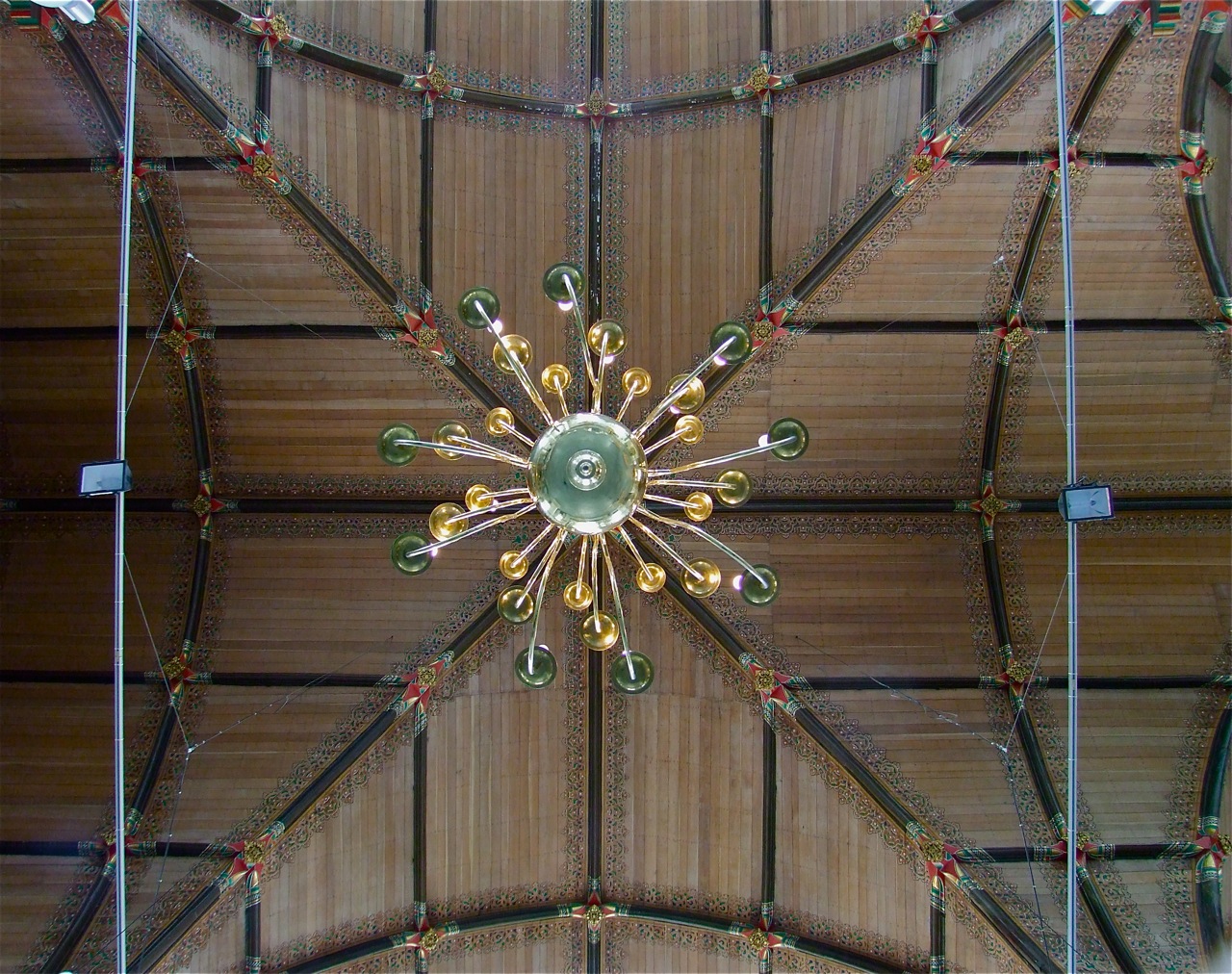
The carillon in the tower is the church's voice, and it still speaks. Members of the House of Orange-Nassau are baptised and married here - most recently King Willem-Alexander himself, and his daughter Catharina-Amalia, who will inherit the throne. The City of The Hague owns the building; a foundation called Stichting Grote Kerk Den Haag manages it, books concerts under the wooden vaulted ceiling, hosts cultural evenings, and slowly works through the never-finished business of restoring something this old. Walk inside on a winter afternoon and the light through the Crabeth windows still falls in the same red and blue patches Charles V paid for. The pulpit, carved in 1550, waits for the next sermon.
From the Air
52.0774 N, 4.3070 E in central The Hague. The 93-meter six-sided tower is one of the tallest church towers in the Netherlands and a clear visual landmark from the air, rising above the low Hague skyline. Best viewed from 2,000-4,000 feet. Nearest airports: Rotterdam The Hague (EHRD) 12 km south, Amsterdam Schiphol (EHAM) 35 km northeast. The Binnenhof parliament complex sits 600 meters east; together the two buildings anchor the medieval core of The Hague.