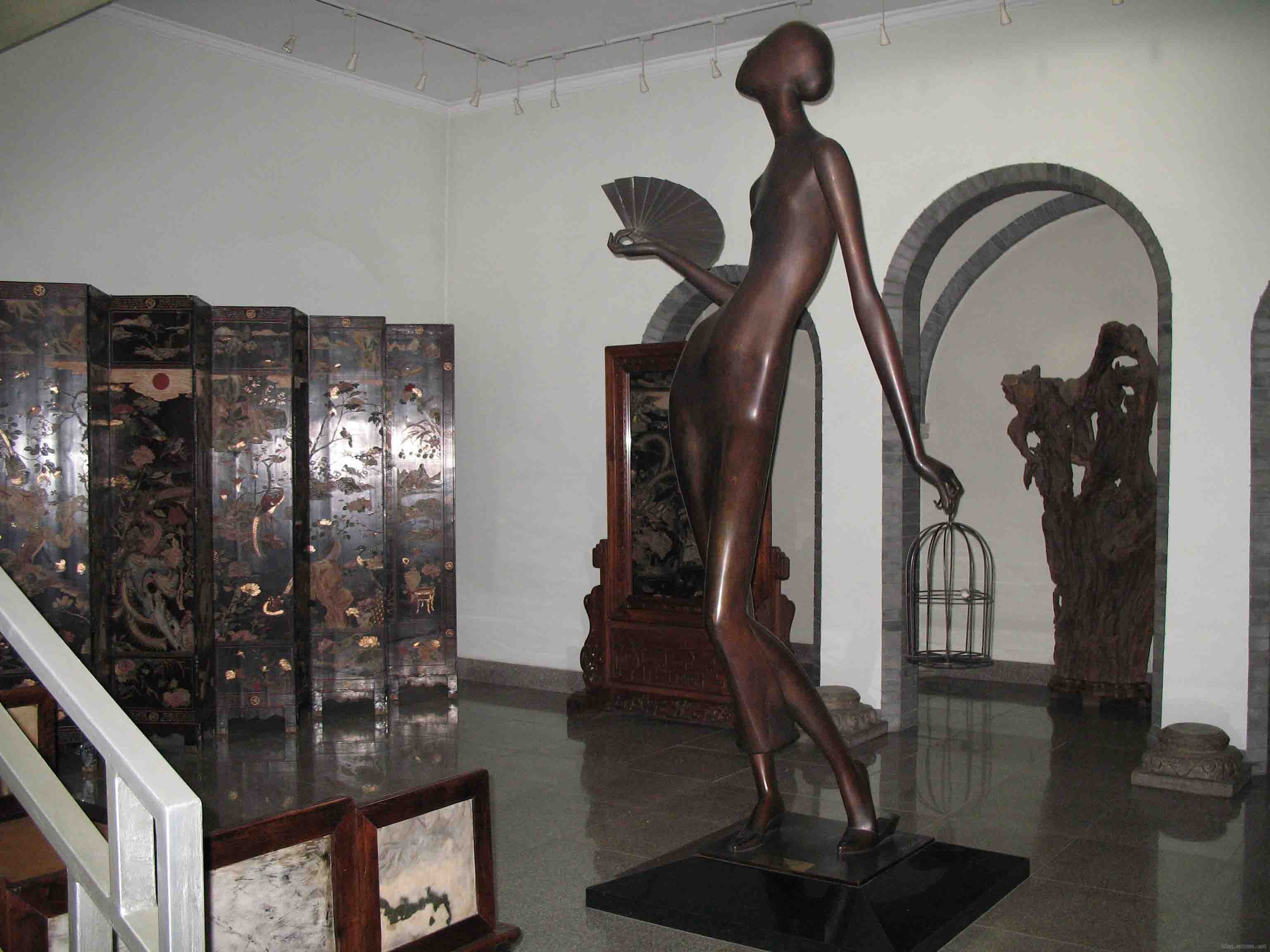
Guanfu Museum
In 1996, when Ma Weidu opened the Guanfu Museum on Liulichang Street, he was doing something almost unheard of in the People's Republic of China: founding a private museum. The concept barely existed in a country where cultural institutions had been state-run for decades. Ma, a former magazine editor turned passionate collector, had spent years assembling ceramics, furniture, jade, and lacquerwork that traced Chinese craftsmanship across dynasties. His museum -- whose name, Guanfu, means "return to contemplate again" -- became a pioneer, proving that private cultural stewardship could thrive alongside the state system.
A Thousand Years in Clay and Glaze
The Ceramics Hall is the museum's centerpiece, displaying masterworks spanning from the Tang dynasty through the Qing, more than a thousand years of evolution in one of China's most celebrated art forms. The Song dynasty pieces are particular highlights, representing the output of the Five Famous Kilns: Ru, Jun, Guan, Ge, and Ding. Each kiln developed distinctive glazes and firing techniques that ceramics scholars still study and debate. Visitors move through displays of celadon with its jade-like green, monochrome and polychrome glazes, tri-colored Tang pottery, cobalt-blue and copper-red underglaze pieces, and the delicate famille-rose porcelains that would later captivate European collectors. The breadth tells a story not just of artistry but of technology -- each innovation in kiln design and mineral chemistry opening new possibilities for color, texture, and form.
Wood That Shaped an Empire
The Furniture Hall houses over 500 pieces from the Ming and Qing dynasties, displayed across six exhibition rooms and a meticulously recreated ancient scholar's study. Ming furniture favors restraint -- smooth, flowing lines and plain ornamentation that let the wood's natural qualities speak through the joinery. The shift to Qing-era pieces is dramatic: foreign trade and advancing craftsmanship pushed designs toward rich, intricate carving and coordinated engraved patterns. These two aesthetic philosophies remain so influential that most Chinese furniture design today still follows one tradition or the other. The recreated study room, with its scholar's desk, brush stands, and contemplative arrangement, offers a window into the private intellectual life of imperial China.
A Museum That Keeps Moving
The Guanfu Museum has never stayed in one place for long. After its founding on Liulichang Street, the antiques district of old Beijing, it relocated to Nanxiaojie Street before settling in the Dashanzi area in 2004 -- the same northeastern Beijing arts district that houses the 798 Art Zone. The Craftsmanship Hall showcases jade, gold, silver, copper, cloisonne enamel, lacquer, and pieces using the ancient hundred treasures inlay technique, while upstairs the Doors and Windows Hall exhibits intricately carved architectural elements alongside contemporary Chinese oil paintings and sculptures. Ma Weidu's ambitions have extended beyond Beijing: the museum now operates branches in Shanghai, Hangzhou, and Xiamen, with additional locations planned. As a non-profit with independent legal entity status, Guanfu remains a testament to one collector's conviction that China's artistic heritage belongs not just to the state but to anyone willing to look closely.
From the Air
Located at 40.0059N, 116.5282E in the Dashanzi area of northeastern Beijing's Chaoyang District, near the 798 Art Zone. The museum compound is modest in scale compared to surrounding development. Beijing Capital International Airport (ZBAA) is approximately 12 km to the north. Beijing Daxing International Airport (ZBAD) is approximately 55 km to the south. Best viewed at lower altitudes as part of the broader Dashanzi arts district.