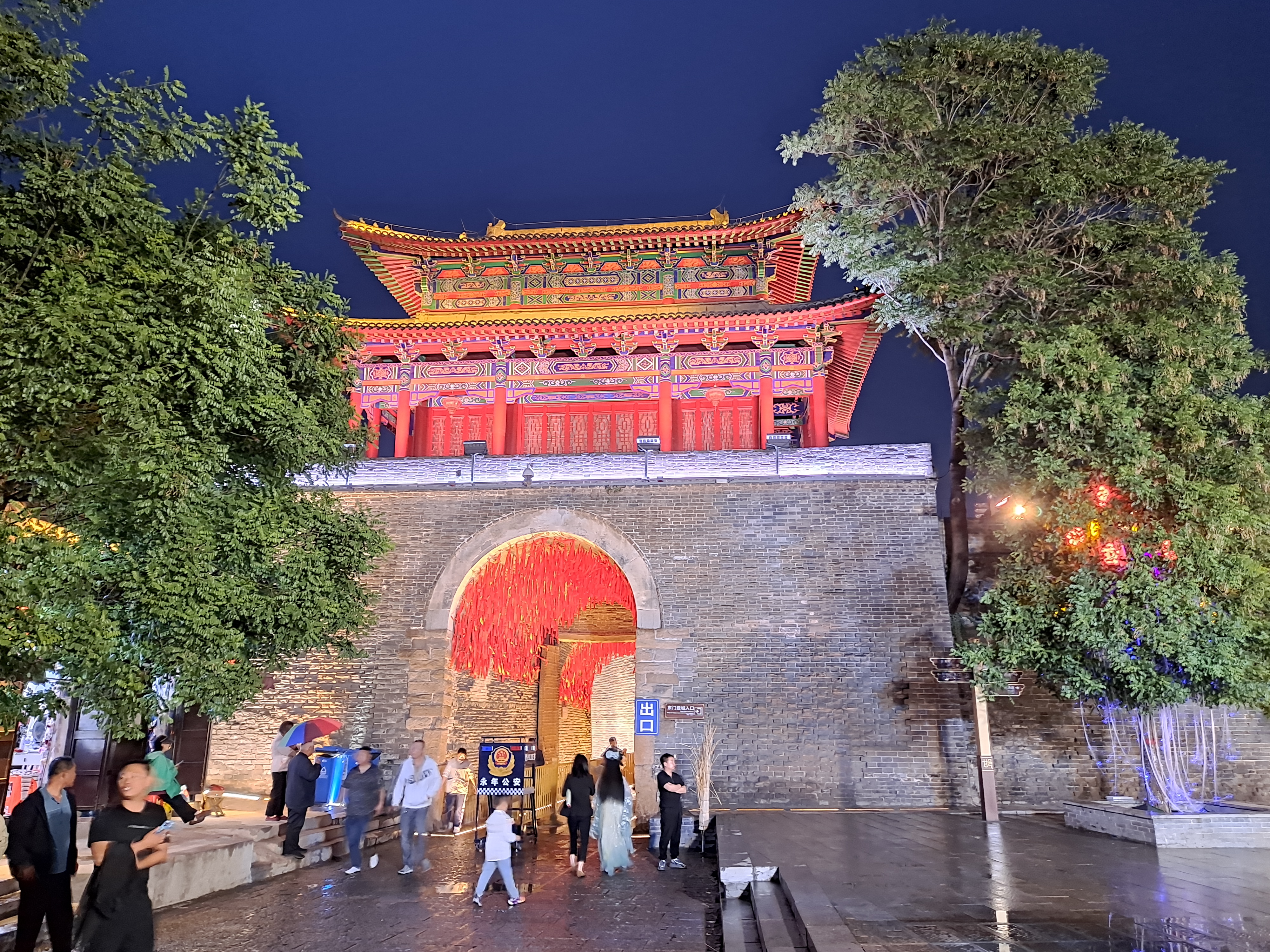
Guangfu Ancient City
The slow movements of tai chi look nothing like the violence that shaped this town. Guangfu, a walled settlement surrounded by the reed-filled wetlands of Yongnian Marsh in Hebei province, has been a site of sieges, rebellions, and executions since the Warring States period. But it is remembered today for something quieter. In the nineteenth century, two men living within these walls, Yang Luchan and Wu Yuxiang, developed the Yang and Wu styles of tai chi, founding two of the largest martial arts traditions in the world. The town that once held prisoners of war now draws visitors who come to practice breathing exercises in its restored courtyards.
Walls Built in Layers
Guangfu's city walls began as earthen ramparts during the Tang dynasty in the seventh to ninth centuries, then were reinforced with masonry under the Yuan dynasty in the thirteenth and fourteenth centuries, and again under the Ming. Each layer represents a different power's claim on this strategic position in the center of Yongnian Marsh, where water and reeds provided a natural moat that supplemented the man-made defenses. The town served as the seat of Guangping Prefecture under the Ming, a name meaning "Expansively Pacified" that suggests the authorities understood this was a place that needed pacifying. The walls that visitors see today have been refurbished since China's opening-up period, with new construction carefully mimicking the town's appearance during the Ming dynasty.
Battleground of the Tang Founding
During the chaotic years that followed the fall of the Sui dynasty, Guangfu became a prize fought over by warlords and Tang loyalists alike. The rebel leader Dou Jiande captured Li Shentong, a Tang prince, and held him in Guangfu's prison. When Dou was defeated at the Battle of Hulao in 621, his cavalry officer Liu Heita seized the town, proclaimed it the capital of his "Principality of Handong," and raised a rebellion with Turkic support. The future Emperor Taizong, Li Shimin, ended the revolt with a feat of military engineering: he built a dam across the Ming River and burst it when it could flood the Handong army. Liu Heita returned once more with Turkic reinforcements, was defeated again, and was executed in Guangping's marketplace in the first month of 623.
Where Tai Chi Found Its Form
In the nineteenth century, under the Qing dynasty, Guangfu produced two martial artists whose legacies would outlast the dynasty itself. Yang Luchan, born around 1799, is credited with founding Yang-style tai chi, which emphasizes slow, flowing movements and has become the most widely practiced form of tai chi worldwide. Wu Yuxiang, born in 1812 in the same town, developed Wu (Hao)-style tai chi, a more compact form that stresses internal energy work. Both men drew on older Chen-style tai chi traditions, but their innovations, refined within the walls and courtyards of Guangfu, created distinct schools that spread across China and eventually around the world. The town's designation as a AAAAA tourist attraction in 2017 reflects this martial arts heritage.
A Town in the Reeds
Guangfu sits in the middle of Yongnian Marsh, a wetland environment that has shaped the town's character across millennia. The marsh provided fish, reeds, and a defensive perimeter that made the town difficult to approach and easy to defend. It also created a sense of isolation, a place apart from the busier trade routes that crossed the North China Plain to the east. Today the marsh remains, its waters and vegetation creating a landscape that feels incongruously rural given the industrialized cities that surround it. The town's history stretches from the Zhou dynasty through the Warring States period, through the Tang rebellions, through the Qing martial arts masters, to the CCTV drama filmed on location in 2007. Each era left something in the walls or in the way people move.
From the Air
Located at 36.70N, 114.72E in Yongnian District, Handan, Hebei province. The walled town is surrounded by the wetlands of Yongnian Marsh, which is visible from altitude as a distinct area of water and reeds within the agricultural landscape. Nearest airport: Handan Airport (ZBHD). Recommended viewing altitude: 3,000-5,000 feet. The city walls and marsh create a distinctive pattern visible from above.