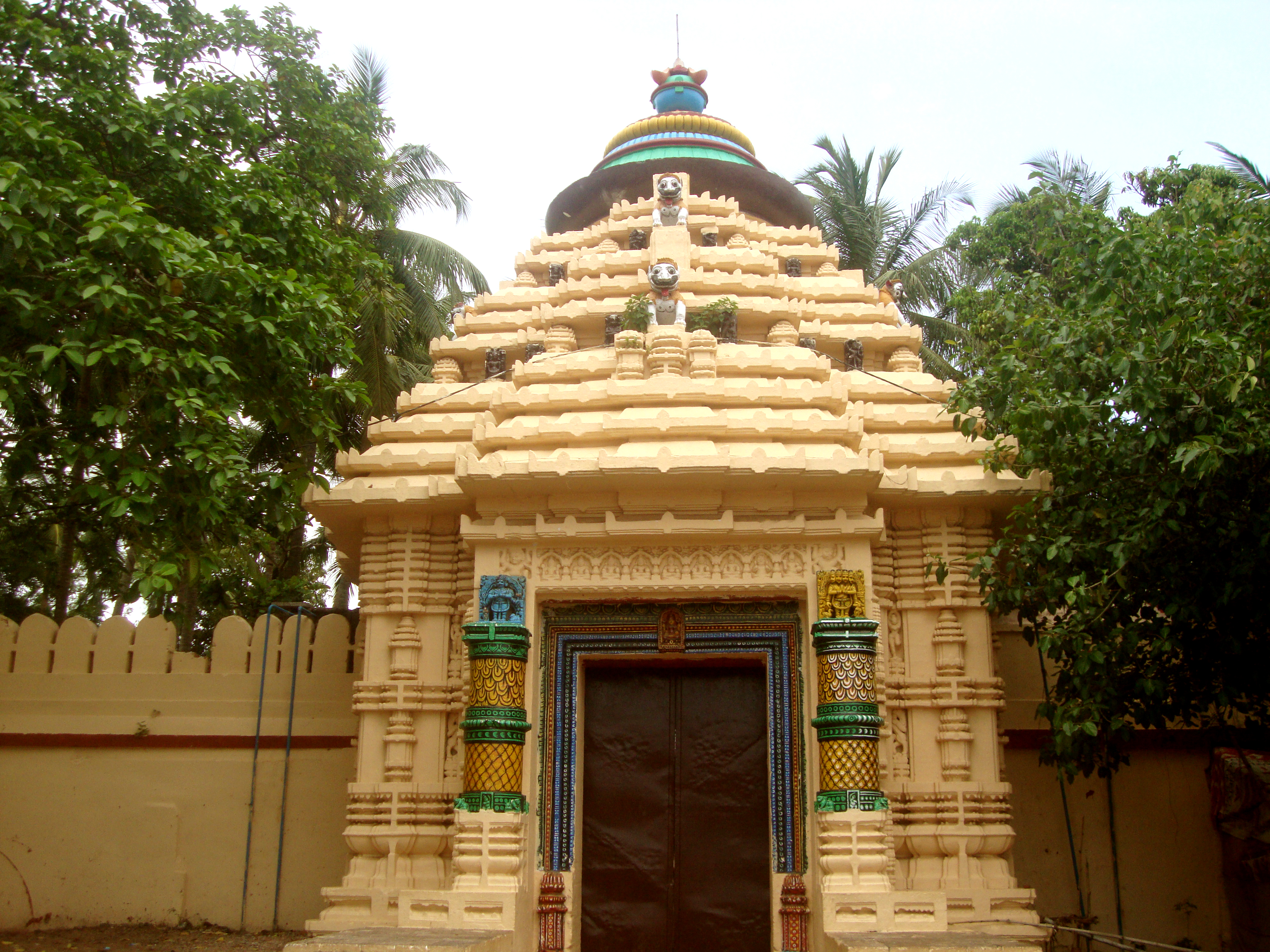
Gundicha Temple
Most of the year, the Gundicha Temple is quiet. A small band of servitors sweep its stone floors and tend its garden, maintaining a beautiful emptiness that makes it unique among India's great Hindu temples. No deity resides here permanently. The sanctum holds only a raised chlorite platform called the Ratnavedi, four feet high and nineteen feet long, waiting. Then, once a year, the wait ends. Three massive chariots come rolling down the Bada Danda - the Grand Avenue of Puri - carrying the wooden images of Lord Jagannath, his brother Balabhadra, and his sister Subhadra from their main temple three kilometers away. Hundreds of thousands of devotees pull the ropes. The gods are going on vacation. And the Gundicha Temple, their destination, becomes for nine days the most important religious site in Odisha.
The Garden House of God
Known as the Garden House of Jagannath, the Gundicha Temple sits in the center of a walled garden compound in Puri, built from the light-grey sandstone that characterizes Kalinga temple architecture. Three kilometers of straight road separate it from the Shrimandira, the great Jagannath Temple that dominates Puri's skyline. These two temples bookend the Bada Danda, and the space between them becomes, during the annual Rath Yatra, one of the most densely packed stretches of road on Earth. The temple's name carries its own stories. One legend connects it to a local goddess called Gundicha, associated with Durga and worshipped as a healer of smallpox - gundi being the Odia word for the disease. Another tradition holds that Gundicha is Jagannath's aunt, and the annual visit is simply a nephew calling on family. Whatever its etymology, the temple's function is singular: to receive gods who are not always here, and to make their temporary presence feel like a homecoming.
Nine Days of Divine Theater
The Rath Yatra is not a simple procession. It is a narrative, played out over nine days with the precision of ritual and the unpredictability of human emotion. On the first day, three chariots - the Nandighosha for Jagannath, the Taladhwaja for Balabhadra, and the Darpadalana for Subhadra - are pulled by devotees from the main temple to the Gundicha. The deities spend the night in their chariots, entering the temple only on the second day. For the next seven days, they reside on the Ratnavedi, worshipped by Brahmin priests rather than the daitas, the non-Brahmin servitors who normally tend them. The images are smeared twice daily with generous quantities of sandalwood paste - a cooling ritual usually reserved for the goddess Gundicha herself. Each day brings new dresses, new offerings, new crowds of devotees who travel from across India for the darshan that is available only during these nine days.
The Fury of Lakshmi
The most humanly recognizable drama of the Rath Yatra unfolds on the fifth day. While Jagannath vacations at the Gundicha Temple, his wife Lakshmi has been left behind in the main temple at Puri. On the day called Hera Panchami, her fury arrives. The image of Subarna Mahalakshmi is carried in a palanquin to the Gundicha Temple with great fanfare, welcomed by the priests, and brought into the sanctum to confront her husband. The divine couple sit face-to-face on the porch while devotees crowd in for the extraordinary sight of a goddess demanding her husband come home. Jagannath consents, offering Lakshmi an agyan mala - a garland of agreement - which she accepts. But her anger is not fully spent. Before departing, she orders an attendant to damage Jagannath's chariot, the Nandighosha, in a ritual known as Ratha Bhanga - the breaking of the chariot. Then she hides behind a tamarind tree outside the temple before slipping away through Hera Gohri Lane, a back route to the main temple, fearing the consequences of her outburst. It is theology rendered as domestic comedy, and the devotees love every moment of it.
The Saint Who Vanished
Chaitanya Mahaprabhu, the 16th-century Bengali mystic who founded Gaudiya Vaishnavism, spent years in Puri devoted to Jagannath. He prayed daily at the main temple, standing behind the Garuda pillar with tears streaming down his face. He led ecstatic sankirtan processions during the Rath Yatra, singing and dancing before the chariots with such fervor that he sometimes fainted. With royal permission, he personally cleaned the Gundicha Temple grounds before each festival - a tradition his followers maintain to this day. And then, according to one account, Chaitanya Mahaprabhu walked unnoticed toward the Gundicha Temple, entered the inner sanctum called the Manikotha, and was never seen again. No book written about him records this event definitively, and the mystery of his disappearance remains unsolved. The belief persists in Puri that he merged with Jagannath - that the boundary between devotee and deity dissolved in a place where, for nine days each year, those boundaries are already thinner than anywhere else.
The Return Procession
On the ninth day comes the Bahuda Yatra, the return journey. The deities emerge from the Gundicha Temple through the Nakachana Gate during the Pahandi ceremony, accompanied by the crash of cymbals and gongs and the deep resonance of conch shells. Odissi dancers perform before the chariots. Martial artists demonstrate banati, the traditional combat art of Odisha. The same three chariots that carried the gods to their aunt's house now carry them home, pulled by devotees back along the Bada Danda toward the Shrimandira. Getting a glimpse of the deities on their returning chariots is considered deeply auspicious. Then the chariots are disassembled, the Gundicha Temple is cleaned, the servitors return to their quiet maintenance of the empty sanctum, and the long wait begins again. Three hundred and fifty-six days until the next vacation. The garden grows. The stone platform waits. Puri goes on with its life, knowing the chariots will roll again.
From the Air
Located at 19.82°N, 85.84°E in the temple town of Puri on India's eastern coast in Odisha. The temple is approximately 3 km north of the main Jagannath Temple along the Bada Danda (Grand Avenue). Biju Patnaik International Airport (VEBS) in Bhubaneswar is about 60 km northwest. From altitude, Puri is identifiable by its position on the Bay of Bengal coast and the prominent towers of the Jagannath Temple complex. The Bada Danda connecting the two temples is visible as a straight road through the town. Best visibility October through February; the Rath Yatra typically occurs in June-July during monsoon season with heavy cloud cover.