Six Generations and an Earthquake
The bottles survived the earthquake. The building did not. When the 1906 San Francisco earthquake leveled Gundlach Bundschu's warehouse at Second and Bryant Streets, the company was shipping 250,000 cases of wine per year and operating a New York branch. By the time the rubble cooled, the winery that Jacob Gundlach had founded nearly half a century earlier was effectively destroyed as a major commercial operation. Most businesses would have folded. The Gundlach-Bundschu family retreated to their Sonoma County vineyards and waited. They would wait for decades, through Prohibition and a stretch of cattle ranching, before making wine again. They are still making it today, six generations later, on the same Rhinefarm estate where Jacob Gundlach first planted European vines in 1858.
A Bavarian in Sonoma
Jacob Gundlach arrived in Sonoma with the practical instincts of a German immigrant who understood that wine was not merely a drink but an industry. He founded his winery in 1858, just months after Agoston Haraszthy established neighboring Buena Vista, making it the second winery in Sonoma and one of the earliest in California. Gundlach named his property Rhinefarm, a nod to the winemaking traditions of his homeland, and planted European varieties in the volcanic soils at the base of the Mayacamas Mountains. In 1868, Charles Bundschu arrived from Mannheim, Germany, to join the business. Seven years later he married Gundlach's daughter Francisca, merging the two families permanently. J. Gundlach & Co. grew into a significant operation, distributing Rhine-style wines from its San Francisco factory in what is now the SoMa district and running a branch office in New York.
The Three Catastrophes
Gundlach Bundschu did not decline gradually. It was knocked down three times in quick succession. First came phylloxera, the root-feeding aphid that devastated vineyards across Sonoma and Napa Counties in the late 19th century. Then the 1906 earthquake destroyed the San Francisco headquarters and warehouse. The company had been a major international producer of fortified wine; after the quake, it never regained that scale. Instead, the family consolidated operations at the Rhinefarm vineyard in Sonoma County and focused on survival. The third blow landed in 1920, when Prohibition made commercial winemaking illegal in the United States. Towle Bundschu, Jacob Gundlach's grandson, kept the property alive by selling grapes to other wineries for sacramental wine and raising cattle on the land that had once held vines. For more than a decade, Rhinefarm was a ranch, not a winery.
The Long Return
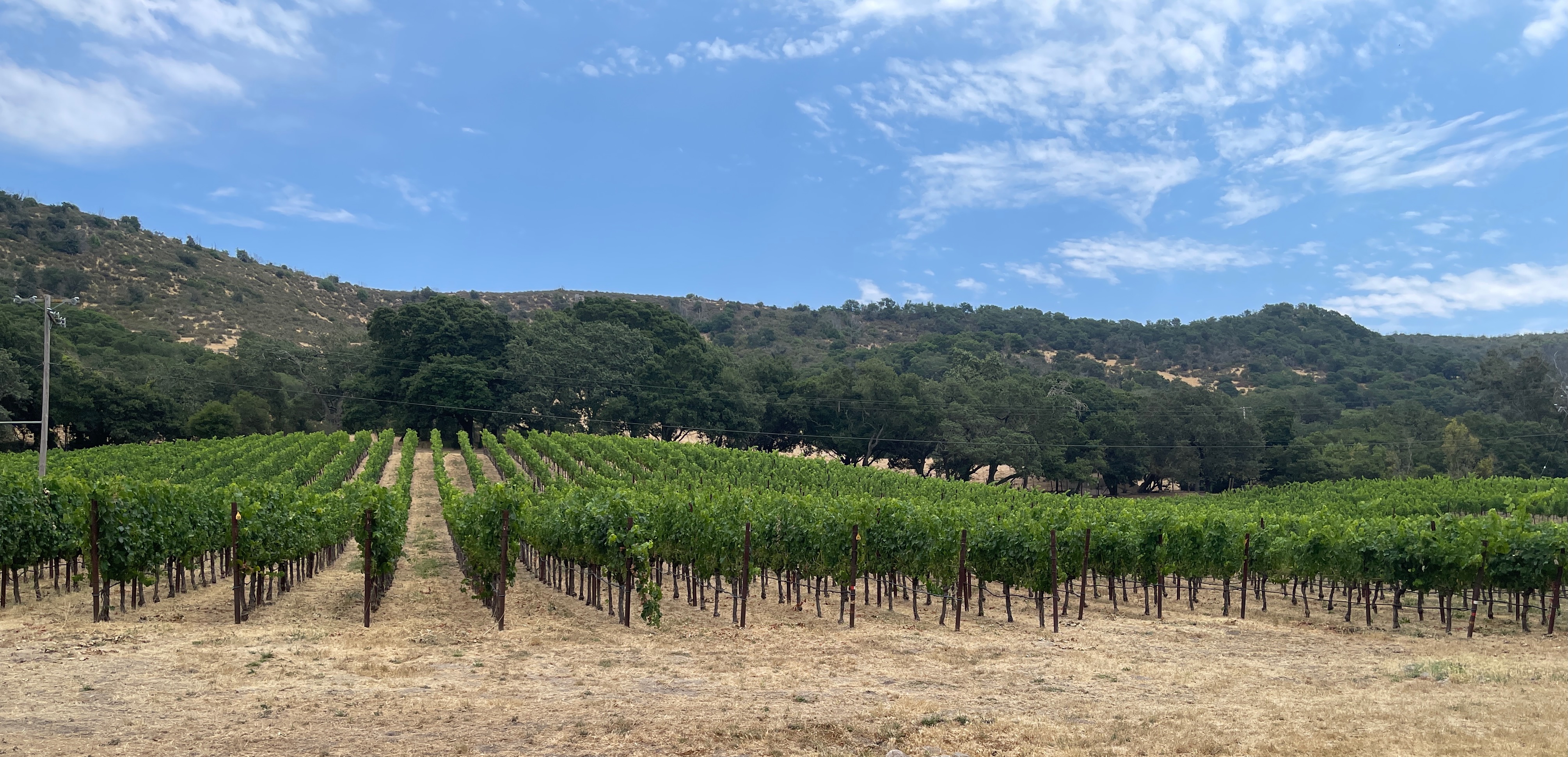
After Prohibition's repeal in 1933, Walter Bundschu planted new grapes on the estate, but the family did not resume commercial winemaking until the early 1970s. The gap speaks to how thoroughly Prohibition disrupted California's wine culture: it took an entire generation to rebuild the knowledge, equipment, and markets that had existed before. When Gundlach Bundschu finally began bottling again, the timing proved fortunate. The 1970s wine boom in Sonoma and Napa was just beginning, and the winery's deep historical roots gave it a credibility that newer operations could not match. Today Rhinefarm Vineyard stretches across 320 acres under vine, organically farmed in more than 50 distinct blocks. Approximately 150 acres have been planted in the last decade alone, including pinot noir clones on the valley floor and Bordeaux varieties on the rocky slopes of Arrowhead Mountain.
Rock and Vine
Gundlach Bundschu has cultivated a personality that few California wineries attempt: the place doubles as an outdoor concert venue. The Huichica Music Festival, hosted on the estate's grounds, draws indie and folk acts to perform among the vineyards, and the winery has partnered with the music promoter folkYEAH to program events that blur the line between tasting room and bandshell. The approach fits the family's history of improvisation. When you have survived an earthquake, a plague, and a constitutional amendment designed to put you out of business, hosting a few hundred people for live music on a Saturday afternoon must seem like a manageable challenge. Six generations in, the Bundschu family still operates the winery they affectionately call GunBun. No other continuously family-owned winery in California can trace its roots further back, and few have had to fight harder to keep them in the ground.
From the Air
Located at 38.28N, 122.42W at the base of the Mayacamas Mountains in Sonoma Valley. The Rhinefarm estate's 320 acres of vineyards are visible from low altitude, stretching from the valley floor up the slopes of Arrowhead Mountain. Nearby airports include Sonoma Skypark (0Q9) approximately 3nm northwest and Napa County Airport (KAPC) approximately 15nm northeast. Best viewed at 1,500-2,500 feet AGL. The adjacent Buena Vista Winery grounds provide a useful visual reference point.