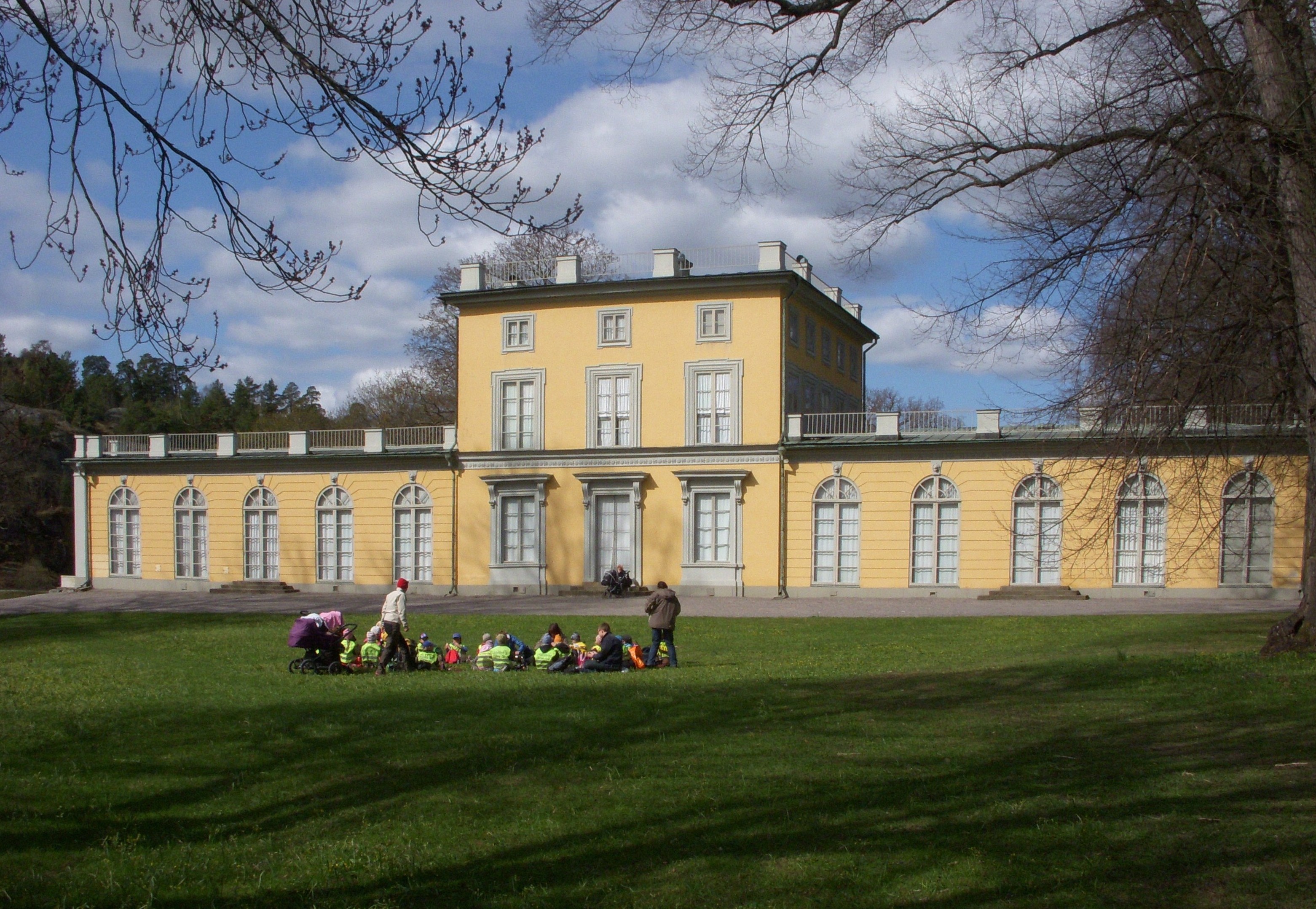
Gustav III's Pavilion
On the night of March 16, 1792, King Gustav III left his beloved pavilion in Haga Park for a masquerade ball at the Stockholm Opera. He would never return. A disgruntled nobleman shot him during the festivities, and the king died of his wounds two weeks later. The pavilion he left behind, a jewel-box of neoclassical design set amid English gardens, froze in time. Today, it stands as one of Northern Europe's finest examples of late 18th-century architecture, a monument to a king whose passion for art and beauty shaped Swedish culture in ways that outlasted his violent end.
A King's Personal Canvas
Gustav III was no passive patron. He sketched his own designs, debated proportions with his architects, and ordered changes even after construction began - including extending both wings by the span of two windows when he decided the original plans looked too modest. Built in 1787 by architect Olof Tempelman, the pavilion was just one piece of Gustav's ambitious vision for Haga Park, a vast English-style landscape garden where he could escape court formality. Most of his grand schemes never left the drawing board, but this intimate retreat was completed and became his favorite residence. The designer Louis Masreliez, who became a trendsetter in Swedish interior design, created rooms that mixed classical restraint with carefully controlled opulence. The Hall of Mirrors reflected the surrounding gardens through floor-to-ceiling glass, blurring the boundary between architecture and nature.
The Sultan's Camp
Beside the pavilion stands one of Sweden's most unusual architectural ensembles: the Sultan's Copper Tents. Designed by the French painter Louis Jean Desprez and built between 1787 and 1790, these three buildings were originally quarters for the palace guard. Desprez proposed covering them entirely with copper plates painted to resemble Turkish campaign tents, creating the illusion of an Ottoman encampment at the edge of the northern forest. Budget constraints meant only the facades facing the main lawns received the full treatment, but the effect remains striking. The middle tent burned completely in 1953 and was rebuilt in the 1960s. Today it houses the Haga Park Museum. The eastern tent contains a restaurant, while the western one offers accommodation. All three are protected as national monuments.
Layers of Restoration
The pavilion that visitors see today has passed through multiple transformations. In the 1840s, King Oscar I commissioned architect George Theodor Chiewitz to update the building. The original plain yellow facade gained grey-painted sculptures and plasterwork. Ionic columns at the gables were replaced with Italian marble. The dining room received a Pompeian makeover, complete with a painted ceiling. A major restoration between 1937 and 1946, led by palace architect Ragnar Hjort, reversed much of this Victorian-era work. Restorers discovered Masreliez's original drawings for each room, enabling them to strip away the additions and return the interiors to their 1787 appearance. The result is a rare time capsule of Gustavian design, the Swedish interpretation of neoclassicism that defined an era.
Europe's First Urban Wilderness
In 1996, the Swedish government created something unprecedented: the world's first National City Park, encompassing Haga Park along with Ulriksdal Palace, Brunnsviken lake, and Djurgarden island. The designation protects not just individual monuments but an entire landscape of parklands, palaces, and natural areas within the Stockholm metropolitan area. The combination of royal heritage and ecological preservation has no parallel elsewhere. The Royal Djurgarden Administration manages most of the territory, maintaining the careful balance between public access and conservation that keeps these grounds feeling like the private retreats they once were. Gustav III's pavilion sits at the heart of this green corridor, a place where 18th-century garden philosophy - the idea that nature, artfully arranged, could elevate the human spirit - still finds daily expression.
A Legacy in Light
After Gustav III's assassination, his brother Duke Charles used the pavilion as a temporary residence before becoming King Charles XIII. The building then settled into a quieter existence, preserved but not much inhabited. In 2005, the pavilion found an unexpected legacy when its design inspired the music pavilion at Stalboga, demonstrating how Gustavian aesthetics continue to influence Swedish architecture more than two centuries later. The original remains open to visitors, its Hall of Mirrors still catching the Scandinavian light that Gustav III sought to capture. The king who left this place for a fatal masquerade created something that outlived not just his ambitions but his century, a pocket of refined beauty in a landscape he helped shape but never saw completed.
From the Air
Gustav III's Pavilion is located at 59.363N, 18.039E in Haga Park, approximately 2km north of central Stockholm. From altitude, the pavilion appears as a small classical structure amid the English landscape gardens of Hagaparken, with the distinctive copper-green roofs of the Sultan's Tents visible nearby. The larger Haga Palace (current Crown Princess residence) is a separate building to the southwest. Look for Brunnsviken lake to the east and the formal green spaces of the park. Stockholm Bromma Airport (ESSB) is 6km west; Arlanda (ESSA) is 35km north. Best viewed at 1,500-2,500 feet. The site is part of the Royal National City Park, visible as a continuous green belt stretching from Ulriksdal in the north to Djurgarden in the south.