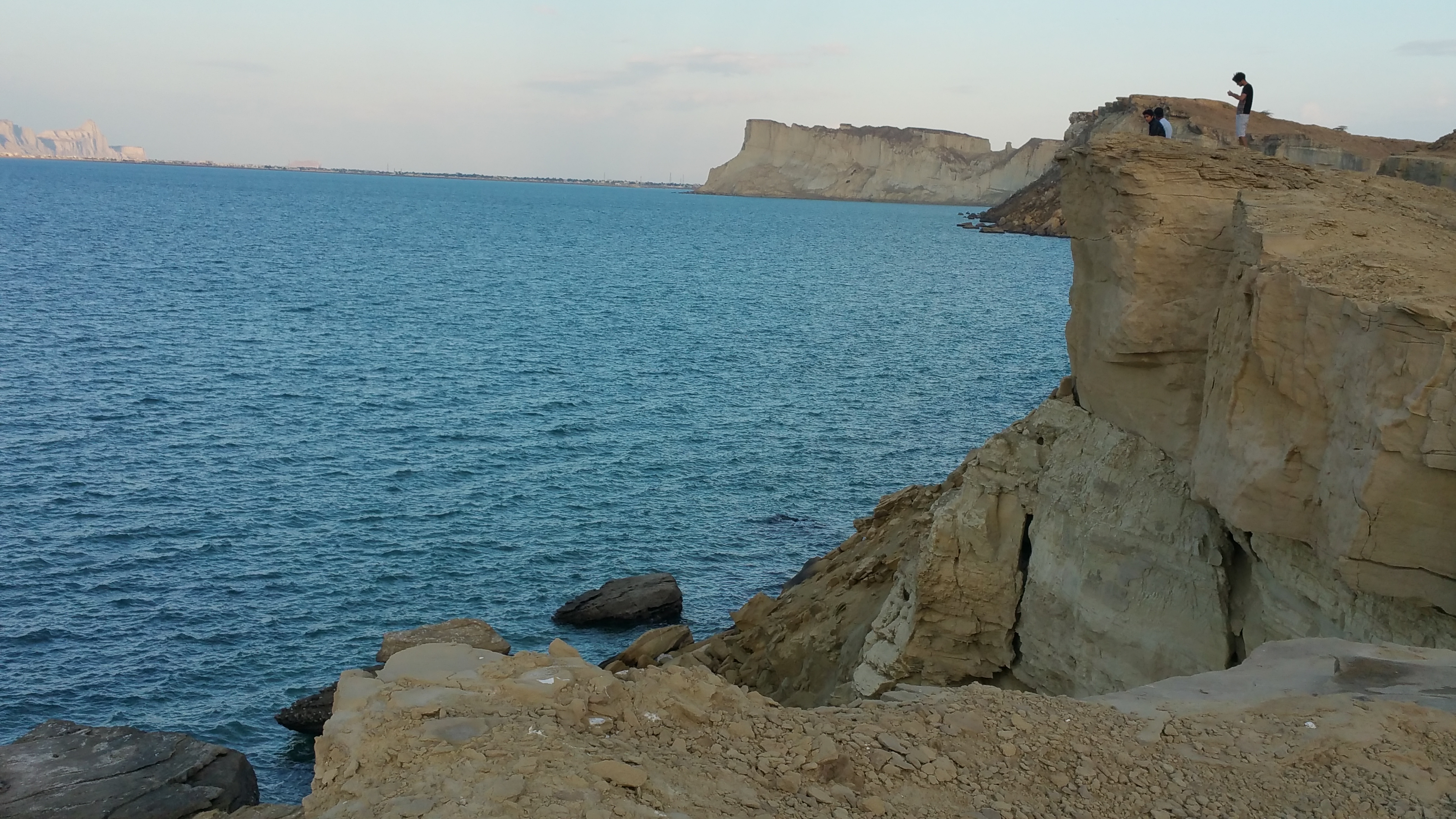
Gwadar
Until 1958, the residents of Gwadar looked across the Arabian Sea toward Oman and saw home. This port city on Pakistan's Makran coast was an Omani possession for over two centuries, excluded from every census of British India because it belonged to a different sovereign entirely. The Omani Massar -- a traditional turban style -- was brought to Gwadar by Kashmiri traders who later carried it to Oman itself, a small example of the cultural currents that flowed through this place. When Pakistan purchased Gwadar from Oman in 1958 for three million pounds, the city's identity shifted overnight. Today it is shifting again, designated the capital of South Balochistan in 2021 and reimagined as the southern terminus of China's Belt and Road ambitions.
An Omani Inheritance
Gwadar's diverse population tells the story of centuries of Indian Ocean connectivity. Baluch, Kashmiri, Pashtun, and Sindhi communities have all settled here over the generations, drawn by the port's position at the mouth of the Persian Gulf. The Arabic cultural influence runs deep, a legacy of the Omani era and Gwadar's proximity to the Arabian Peninsula. Today, 97.5 percent of the population in Gwadar tehsil speaks the Balochi language, but the cultural DNA includes strands from across South Asia and the Arab world. Alexander the Great's army marched through nearby Gedrosia in the fourth century BC. The Ottoman admiral Sidi Ali Reis mentioned the area in the 16th century. The Imperial Gazetteer of India described it under Oman's administration. Each era left its mark without fundamentally changing Gwadar's character as a fishing port where the desert meets the sea.
Between Two Futures
The Gwadar of tradition -- fishing boats, flat-roofed houses, a rhythm set by tides and seasons -- is colliding with the Gwadar that planners in Beijing and Islamabad envision. A $20 billion tax-exempt industrial zone covers 10 square kilometers. The East Bay Expressway connects the port to the national highway network. Around 2,000 acres have been leased to a Chinese company for 43 years. Yet much of the promised development remains unfinished. The power plant is incomplete. Construction timelines have slipped. Local residents have protested what they see as their displacement from development that benefits outsiders. In a city where the literacy rate was estimated at just 25 percent in 2015, the disconnect between grand infrastructure plans and daily life on the ground is stark.
The New Airport
Nothing captures Gwadar's intended transformation more clearly than its new airport. The New Gwadar International Airport, built at a cost of approximately $230 million and designed by the China Communications Construction Company, was inaugurated in October 2024 and began commercial flights in January 2025. Located 26 kilometers northeast of the city, the facility covers 4,300 acres and features a single runway measuring 3,658 meters -- long enough and wide enough to accommodate the largest commercial aircraft in the world, including the Airbus A380. A cargo terminal can handle 30,000 tonnes annually. There is space for a second runway if demand warrants it. For a city whose population according to the 2023 census was just over 70,000, the airport is an unmistakable statement of intent: Gwadar is being built not for what it is but for what someone believes it will become.
Capital of the South
On April 2, 2021, the Balochistan government granted Gwadar the title of capital of South Balochistan -- a designation that reflects both the city's strategic importance and the province's ongoing struggle with underdevelopment. Balochistan is Pakistan's largest province by area and its poorest by most measures. Gwadar District's education ranking of 61st nationally, with enrollment declining as grades advance, speaks to the depth of the challenge. The government is constructing a highway between Gwadar and the Reko Diq copper and gold mine in the province's northwest, linking one massive resource extraction project to the port that could export its products. For Gwadar's Baloch residents, the question is whether this transformation will improve their lives or simply flow around them, like the sea around the peninsula their city sits upon.
From the Air
Gwadar sits at 25.126N, 62.323E on a distinctive hammer-head peninsula extending into the Arabian Sea. The city is clearly visible from altitude as an urban area on the peninsula's western side. The New Gwadar International Airport (OPGD) lies 26 km northeast, with a 3,658m runway capable of handling wide-body aircraft. The port facilities are visible on the eastern side of the peninsula. Iran's border lies approximately 100 km to the west. The Makran Coastal Highway runs along the coast to the east toward Karachi, roughly 650 km away.