Gwadar Port
Sixty percent of China's oil comes from the Persian Gulf. It travels over 16,000 kilometers by sea, passing through the Strait of Malacca, around the South China Sea, and up to Shanghai -- a journey of two to three months through waters patrolled by rival navies, threatened by pirates, and vulnerable to political disruption. Gwadar Port, a deep-sea facility on the Arabian Sea coast of Pakistan's Balochistan province, represents Beijing's attempt to solve this problem. If the port and its associated infrastructure work as planned, the distance for Chinese oil imports could shrink to roughly 5,000 kilometers, bypassing the Malacca chokepoint entirely.
From Omani Colony to Chinese Investment
The potential of Gwadar's natural harbor was first identified in 1954, when the area was still under Omani sovereignty -- a remnant of a colonial arrangement that had lasted since the 18th century. Pakistan purchased Gwadar from Oman in 1958, but plans for a deep-water port languished for decades. Construction finally began in 2002, with China providing $198 million of the $248 million cost. The port was inaugurated by President Pervez Musharraf in 2007. After a period of management by Singapore's PSA International, operational control passed to the China Overseas Port Holding Company. In 2015, Gwadar was designated a centerpiece of the China-Pakistan Economic Corridor, with $1.62 billion earmarked for further development. The port became, on paper at least, the southern terminus of a route linking western China to the Arabian Sea.
The Belt and Road's Southern Anchor
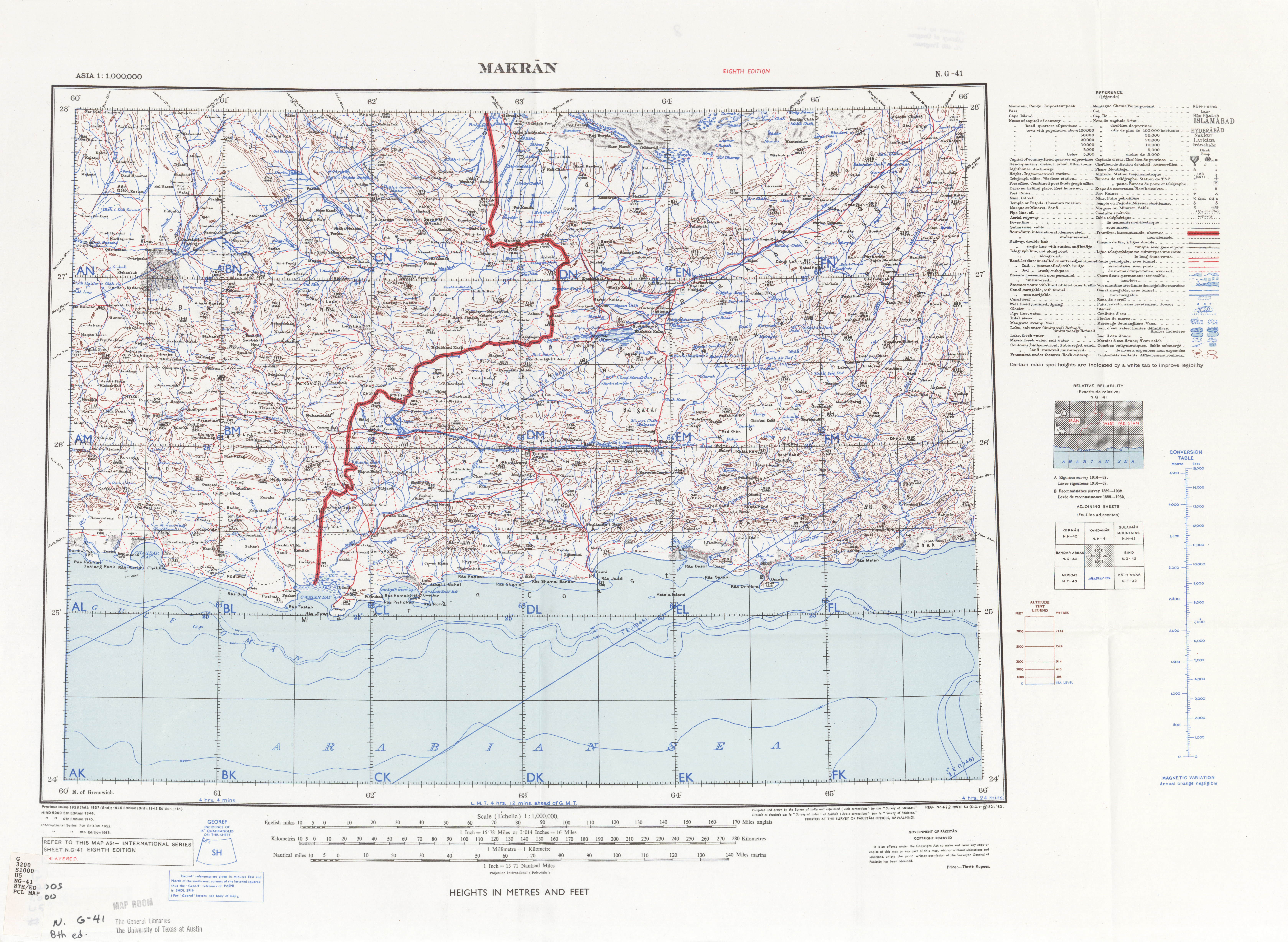
Gwadar Port features prominently in both the Belt and Road Initiative and the Maritime Silk Road -- China's grand strategy for reshaping global trade routes. The port sits about 120 kilometers southwest of Turbat and 170 kilometers east of Iran's rival port at Chabahar. Its strategic value lies in simple geography: goods and energy resources can be shipped from the Persian Gulf to Gwadar and then transported overland through Pakistan to China's western provinces, cutting thousands of kilometers off the sea route. Construction began in June 2016 on a 2,292-acre Special Economic Zone adjacent to the port. A floating liquefied natural gas facility is planned as part of a $2.5 billion pipeline project connecting Gwadar to Pakistan's gas network. In 2019, the New Gwadar International Airport broke ground at a cost of $230 million, designed to handle aircraft as large as the Airbus A380.
Promise Meets Reality
The gap between Gwadar's ambitions and its current reality remains substantial. The revenue-sharing agreement gives China 91 percent of port revenues, leaving Pakistan with 9 percent -- a ratio that has drawn criticism within Pakistan. Much of the promised infrastructure, including the power plant and parts of the free zone, remains unfinished despite years of construction. Research suggests that transporting oil by road from Gwadar to western China would be prohibitively expensive, complicated by mountainous terrain, earthquakes, disputes with India, and security threats along the route. The Karakoram Highway, which would carry northbound traffic, passes through some of the most geologically unstable territory on Earth. Pakistan has proposed building an oil pipeline to alleviate these concerns, but the project faces enormous engineering and financial challenges.
A City Remade
For the people of Gwadar, the port project has been transformative and disorienting in equal measure. The city's population stood at around 90,000 in 2017, a mix of Baluch, Kashmiri, Pashtun, and Sindhi communities who had lived here for generations, many with cultural ties to Oman across the water. Development has brought investment but also displacement, environmental concerns, and protests. Around 2,000 acres of land were leased to a Chinese company for 43 years. An East Bay Expressway now connects the port to the main highway network. Local fishermen worry about being pushed out. Amnesty International and Human Rights Watch have documented crackdowns on Baloch protests. The city exists in a state of transformation -- caught between its identity as a small fishing port with deep Omani roots and its designated future as a node in China's global supply chain.
From the Air
Gwadar Port lies at approximately 25.126N, 62.323E on a natural peninsula jutting into the Arabian Sea on Pakistan's Makran coast. The hammer-head shaped peninsula is a distinctive landmark from altitude. The new deep-water port facilities are visible on the eastern side. The New Gwadar International Airport (OPGD), inaugurated in 2024, is located 26 km northeast of the city and can accommodate wide-body aircraft with its 3,658m runway. The coastline runs roughly east-west, with the port positioned to face the open Arabian Sea. Iran's Chabahar Port lies approximately 170 km to the west.