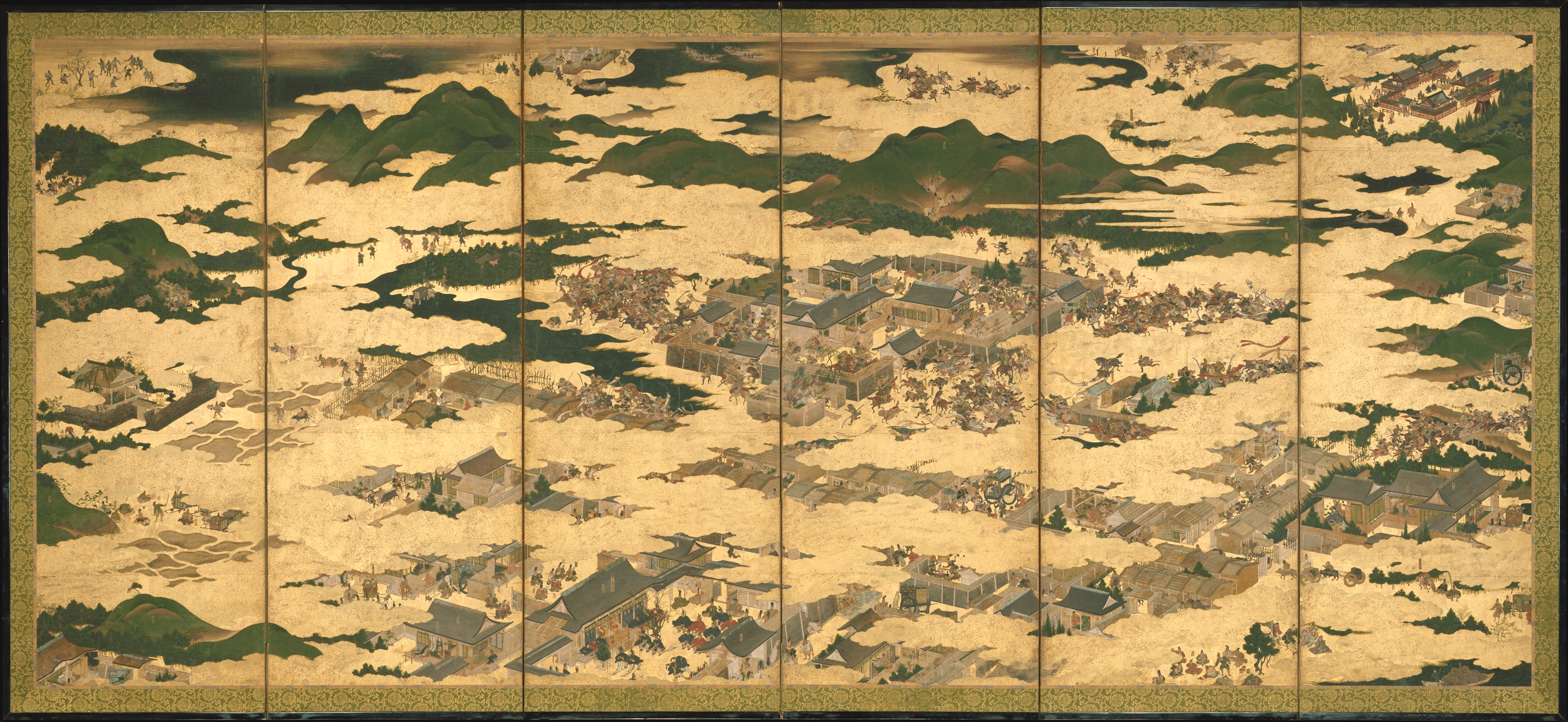
Hogen Rebellion
The battle that changed everything in Japanese history lasted less than a single night. On July 28, 1156, two factions of the imperial court clashed in the streets of Kyoto, each backing a different claimant to the Chrysanthemum Throne. By dawn, one side lay defeated, its champion emperor exiled, its warriors scattered or dead. The victors barely had time to celebrate. They had just proven something far more dangerous than any claim to the throne: that real power in Japan no longer belonged to emperors or court nobles, but to the samurai who fought for them. The Hogen Rebellion was a crack in the foundation of imperial rule, and the entire edifice of Japanese governance would eventually crumble through it.
A Family at War with Itself
The roots of the Hogen Rebellion grew from the tangled family politics of the imperial household. Emperor Toba, who had abdicated but continued to rule from behind the scenes in the Japanese tradition of cloistered rule, despised his eldest son Sutoku. Toba had forced Sutoku to abdicate in 1142, placing the young Emperor Konoe -- born to a different consort -- on the throne. Sutoku nursed his resentment quietly, hoping at least that his own son might eventually succeed Konoe. When Konoe died in 1155 at just seventeen years old, Toba blocked Sutoku's son entirely. Instead, he elevated yet another son, who became Emperor Go-Shirakawa. The slight was deliberate and unmistakable. Sutoku was left with nothing but fury, a handful of loyal warriors, and a burning desire to overturn the arrangement his father had imposed. When Toba himself died on July 20, 1156, the last restraint on open conflict vanished.
The Night Attack That Decided an Empire
The two sides gathered their forces in Kyoto. Go-Shirakawa's faction held the advantage in both numbers and strategic thinking, bolstered by the Minamoto warrior Yoshitomo and the Taira commander Kiyomori. Sutoku's camp had its own capable fighter in Minamoto no Tametomo, a legendary archer renowned for his strength, who urged an immediate night attack on the opposing palace. But Fujiwara no Yorinaga, Sutoku's chief political advisor, rejected the idea -- night raids, he argued, were beneath the dignity of an imperial cause. It was a fatal miscalculation. Across the city, Minamoto no Yoshitomo proposed the exact same tactic to Go-Shirakawa's generals and met no such objection. The attack came swiftly. Sutoku's forces, caught unprepared, were overwhelmed. The fighting was fierce but brief. By the time the sun rose over Kyoto, the rebellion was broken.
Samurai Ascendant
The Hogen Rebellion produced consequences that dwarfed the dynastic squabble that caused it. For the first time in Japanese history, the imperial succession had been decided by military force rather than court intrigue, ritual, or negotiation. The samurai who won the battle -- the Minamoto and Taira clans -- discovered that they held real leverage over the court that employed them. The rivalry between these two warrior houses, forged in the fires of the Hogen conflict, would erupt again just three years later in the Heiji Rebellion of 1159 and eventually escalate into the full-scale Genpei War. That war ended with the establishment of the Kamakura shogunate in 1185, the first of three successive military governments that would rule Japan until the Meiji Restoration in 1868. Seven centuries of samurai dominance trace back to this single night of fighting in Kyoto.
Echoes in Literature and Memory
The dramatic events of 1156 became the subject of the Hogen Monogatari, the Tale of the Disturbance in Hogen, a Kamakura-period war epic that transformed the rebellion's participants into literary archetypes. Minamoto no Tametomo, the archer whose counsel was ignored, became a figure of tragic heroism. The tale of his extraordinary strength and his eventual exile to the Izu Islands entered Japanese folklore, inspiring later writers and artists for centuries. The location of the conflict itself -- the streets and palaces of Heian-kyo, present-day Kyoto -- still resonates. Walking through the old capital today, past temples and imperial gardens that postdate the rebellion by centuries, it is easy to forget that this city of refined culture was once a battlefield where the future of Japan was decided in a few violent hours.
From the Air
Located at 35.012N, 135.768E in the Kyoto basin. The historic site of the rebellion is in central Kyoto, within the grid of streets that still follows the original Heian-kyo layout. From the air, the city's orderly grid pattern contrasts sharply with the mountains on three sides. Nearest major airports: Osaka Itami (RJOO) approximately 20nm southwest, Kansai International (RJBB) approximately 45nm south. The former imperial palace grounds are visible as a large green rectangle in the northern part of the city center. Summer brings warm, hazy conditions; winter offers clearer visibility of the surrounding mountain ring.