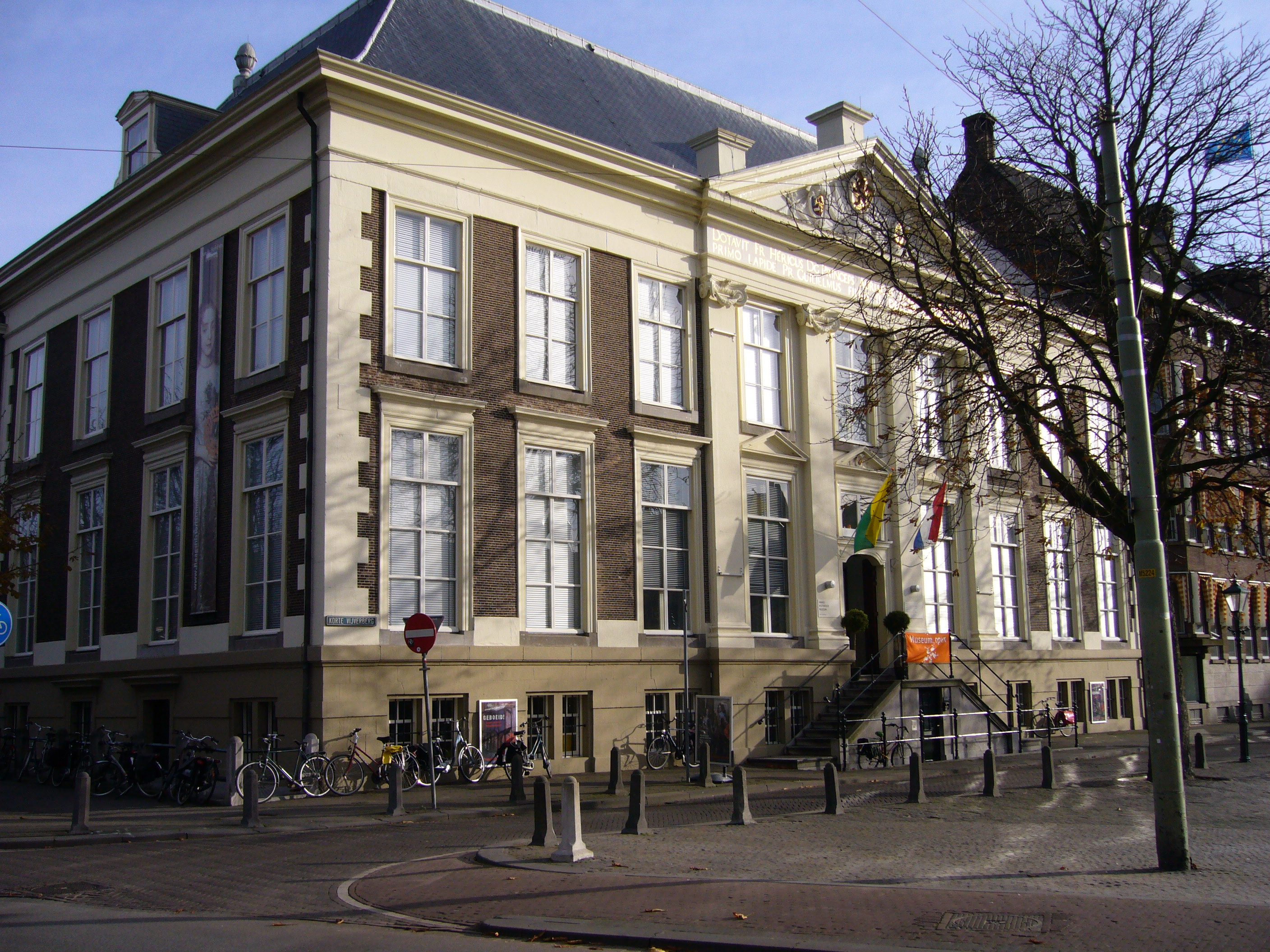
Haags Historisch Museum
Among the roughly 7,500 objects in the Haags Historisch Museum, two are kept in a small case and they are not paintings. One is a finger. The other is a tongue. They belonged, when the bodies they were attached to were still alive, to Cornelis and Johan de Witt, two of the most powerful men in 17th-century Europe. In August 1672 - the rampjaar, or Disaster Year - a mob in The Hague lynched the brothers, tore their bodies apart, and according to chronicles, ate some of the pieces. What was not eaten, a few citizens picked up and kept, and the kept pieces, centuries later, ended up here. The Hague's history museum is unusual partly because the city's history is unusual: a town of diplomats and royals, of painters and clerks, that occasionally went absolutely mad.
The Guild House of Saint Sebastian
The building stands on the Korte Vijverberg, looking across the Hofvijver pond at the Binnenhof - the parliamentary complex that has run Dutch government in one form or another for eight hundred years. The house began life as the guild hall of Saint Sebastian, the civilian militia in the 1600s tasked with defending the city. Its members, in their orange sashes and feathered hats, were exactly the sort of men Frans Hals and Jan van Ravesteyn painted in those enormous group portraits that hang in the great Dutch museums. Some of those very militia portraits hang here, in the building where the militiamen drank and drilled. In 2024, the council of The Hague approved roughly 17 million euros for a long restoration. The museum closed in autumn 2024 and is planned to reopen in spring 2027, with DP6 architects designing a new foyer, larger galleries, and clearer routes through the house.
What the Collection Holds
Beyond the relics of the de Witt brothers, the museum's holdings stretch from silver guild vases to dollhouses by Lita de Ranitz. There is an almost five-meter-wide panorama of The Hague painted by Jan van Goyen, that great chronicler of grey Dutch skies, and works by Jan Steen - whose disorderly tavern scenes the Dutch still describe with the phrase een huishouden van Jan Steen, a Jan Steen household. Paulus Constantijn la Fargue painted The Hague's streets in the 18th century with the patience of a cartographer. The main floor's permanent exhibition, Power: 800 Years of the Binnenhof, traces the city's role as the Dutch seat of government from medieval count to modern parliament. The basement holds something gentler: the MijnDenHaag (My The Hague) project, in which residents donated about 100 personal objects and explained, in their own words, what tied them to the city.
The Rampjaar
In 1672, the Dutch Republic faced simultaneous invasions by France, England, Munster, and Cologne. The country was, in the Dutch phrase, redeloos, radeloos, reddeloos - irrational, desperate, beyond saving. The de Witt brothers had governed the republic for two decades as moderate, mercantile statesmen. Their political enemies turned the panic on them. On 20 August 1672, Johan and Cornelis were summoned to the Gevangenpoort prison gate, a few minutes' walk from where the museum now stands. A militia loyal to the young Prince William of Orange let the mob in. The brothers were shot, beaten, hanged upside down, and mutilated. Witnesses recorded that pieces of the bodies were carried away and sold or eaten. The horror of the day has never quite left the city's bones. The finger and the tongue on display are not curiosities. They are the kept evidence of what a frightened crowd is capable of doing to two men they had cheered the year before.
Where the Museum Came From
The museum's own history is a series of moves. From the 18th century onward, paintings of magistrates and councillors lived in the city town hall. In 1871, the collection moved to a house on the Beestenmarkt and became The Hague's first museum. In 1884 it shifted again, into the guild house of Saint Sebastian. In 1912 the art and historical collections were separated, leaving the historical one with the guild house. In 1934 they were reunited inside the Berlage-designed Kunstmuseum, where the paintings drew the crowds and the historical objects quietly vanished into storage. Only in the 1980s did the historical collection return to Saint Sebastian's old hall, and in 1991 the Kunstmuseum formally handed it to a newly founded Haags Historisch Museum. Today Tjeerd Vrij directs the institution, which runs in tandem with the nearby Gevangenpoort prison museum on a combined budget of around four million euros a year.
A City That Looks at Itself
The first floor hosts rotating exhibitions, always tied to the city. The second floor covers The Hague since 1945, including the dollhouse collection - those small mirrored rooms that Dutch women in particular spent decades furnishing in obsessive miniature. There is a replica 19th-century salon where children, on weekends and school holidays, can sit at a table and learn how the city's bourgeoisie ate, dressed, and argued. The museum's argument is that a city is not just its parliament or its painters. It is also its dollhouses, its butchers' silver, its bad afternoons. When the building reopens after restoration, the de Witt brothers' relics will be back too. The Hague has always been the Netherlands' polite city. The museum is honest about how thin that politeness sometimes was.
From the Air
Located at 52.0813 degrees N, 4.3141 degrees E at Korte Vijverberg 7, on the north side of the Hofvijver pond facing the Binnenhof parliamentary complex. Best viewed at 1500-2500 ft AGL on approach to Rotterdam The Hague Airport (EHRD, about 6 nm south-southeast). From the air, look for the rectangular Hofvijver reflecting pool with the Binnenhof towers and the Mauritshuis (Vermeer's Girl with a Pearl Earring) on the south side; the museum sits on the north shore. The Hague lies under the Schiphol TMA - check NOTAMs for royal-family movements that occasionally restrict the city center. Note that the museum is closed for renovation until spring 2027.