Hachigata Castle
Three thousand against thirty-five thousand, and the three thousand held for a month. In March 1590, the armies of Maeda Toshiie and Uesugi Kagekatsu -- two of the most powerful warlords in Japan, marching under the banner of Toyotomi Hideyoshi -- surrounded a hilltop fortress on a river peninsula in what is now Yorii, Saitama Prefecture. The castle's commander, Hojo Ujikuni, had wanted to ambush the Toyotomi forces in the mountain passes before they reached the Kanto Plain. Overruled by his superiors, he withdrew behind the walls of Hachigata Castle and prepared to fight. The siege that followed was one of the last great defensive stands of the Sengoku period, and the ruins that remain tell a story of stubborn engineering and impossible odds.
A Peninsula Between Two Rivers
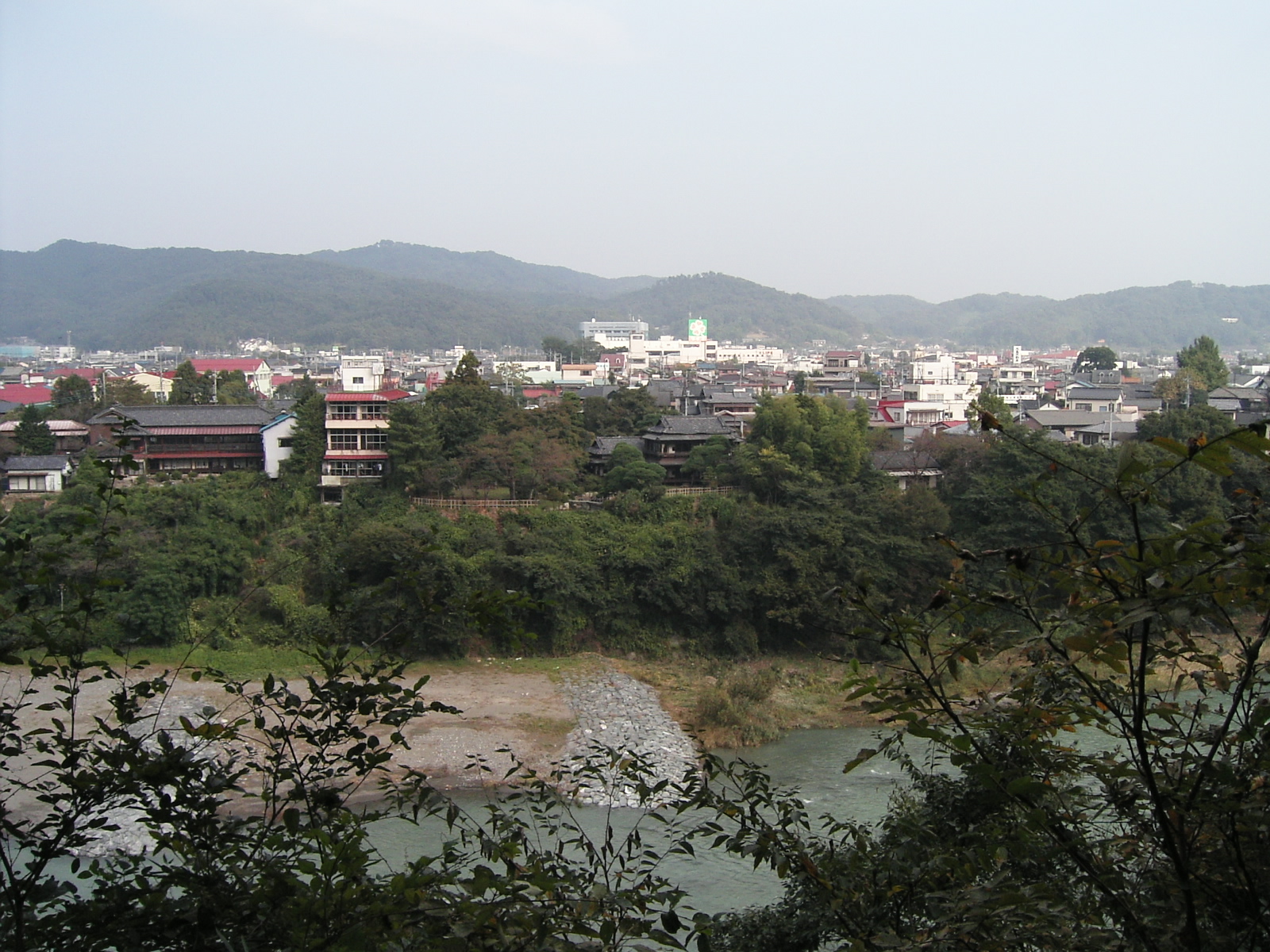
Hachigata Castle's greatest weapon was geography. Builders chose a narrow peninsula where the Arakawa River and the Fukasawagawa River converge, creating natural water barriers on two sides. The castle sat at the western edge of the Kanto Plain, the vast lowland that stretches to modern Tokyo, and whoever controlled Hachigata controlled access to the interior of Musashi Province. The fortress was originally constructed around 1476 by Nagao Kageharu, a vassal of the Yamanouchi Uesugi clan who held the hereditary title of Kanto Kanrei. Nagao had rebelled against his own overlord and needed a stronghold from which to wage his twenty-year feud. The castle served that purpose well, and after the Nagao were eventually driven out, the Uesugi installed the Fujita clan as castellans to guard this strategically vital chokepoint.
The Hojo Transformation
Everything changed when the Later Hojo clan swept through Musashi Province. After the Uesugi defeat at the Siege of Kawagoe Castle in 1546, the Fujita were forced to submit to the Hojo. In 1564, Hojo Ujikuni took command of the northern Hojo territories and began a massive expansion of Hachigata's defenses. Trapped between the aggressive Takeda clan pressing from the west and the resurgent Uesugi pushing from the north, Ujikuni needed a fortress that could withstand assault from any direction. He dug wide dry moats, raised clay ramparts at the base of the hill, and -- unusually for a Hojo castle -- incorporated stone walls at critical points, including the main gate. These were not merely functional; they were a statement of power. By the time he finished, the castle stretched nearly a kilometer along its east-west ridge and 500 meters from north to south, a fortified landscape of layered defenses.
Thirty Days in March
When Toyotomi Hideyoshi launched his campaign to destroy the Hojo in 1590, Ujikuni saw the danger clearly. He urged his clan to intercept Hideyoshi's forces in the mountain passes before they reached the plains -- a guerrilla strategy that might have succeeded. But Hojo Ujimasa, the clan head at Odawara, chose a static defense. Ujikuni obeyed and withdrew his garrison to Hachigata. The opposing force that arrived was staggering: 35,000 soldiers under two of Japan's finest commanders, Maeda Toshiie and Uesugi Kagekatsu. Ujikuni had 3,000. For a full month, the defenders held. The interlocking moats and ramparts, the stone-reinforced gates, and the natural river barriers turned every assault into a costly grind. When Ujikuni finally surrendered, he did so on his own terms: his men's lives would be spared. The condition was honored.
What Remains on the Ridge
The Edo period brought peace, and with peace came demolition. Hachigata Castle was torn down, its strategic purpose rendered obsolete by Tokugawa unification. But the earthworks proved harder to erase than timber and stone. Today the site preserves some of the finest surviving examples of Sengoku-era dry moats and clay ramparts in the Kanto region. Visitors walk through deep trenches that once channeled attackers into killing zones and stand atop ramparts where defenders poured fire downhill. A reconstructed pond and small building hint at the castle's domestic side, while the Hachigata Castle Historical Museum provides context for the ruins. The site has been a designated National Historic Site since 1932, and in 2006 the Japan Castle Foundation named it one of Japan's Top 100 Castles -- recognition that a fortress does not need towers or keep walls to tell one of the great stories of the Sengoku age.
From the Air
Located at 36.110N, 139.196E in Yorii, Saitama Prefecture, at the confluence of the Arakawa River and the Fukasawagawa River. From the air, the castle site is identifiable as a wooded ridge on a river peninsula, with the distinctive curves of the Arakawa visible to the south and east. The surrounding terrain transitions from the mountainous interior of Saitama to the western edge of the Kanto Plain. Nearest airports: Iruma Air Base (RJTJ) approximately 35 km east-southeast, Honda Airfield (RJTS) approximately 15 km southeast. Clear visibility in autumn reveals the full extent of the earthwork defenses radiating from the hilltop.