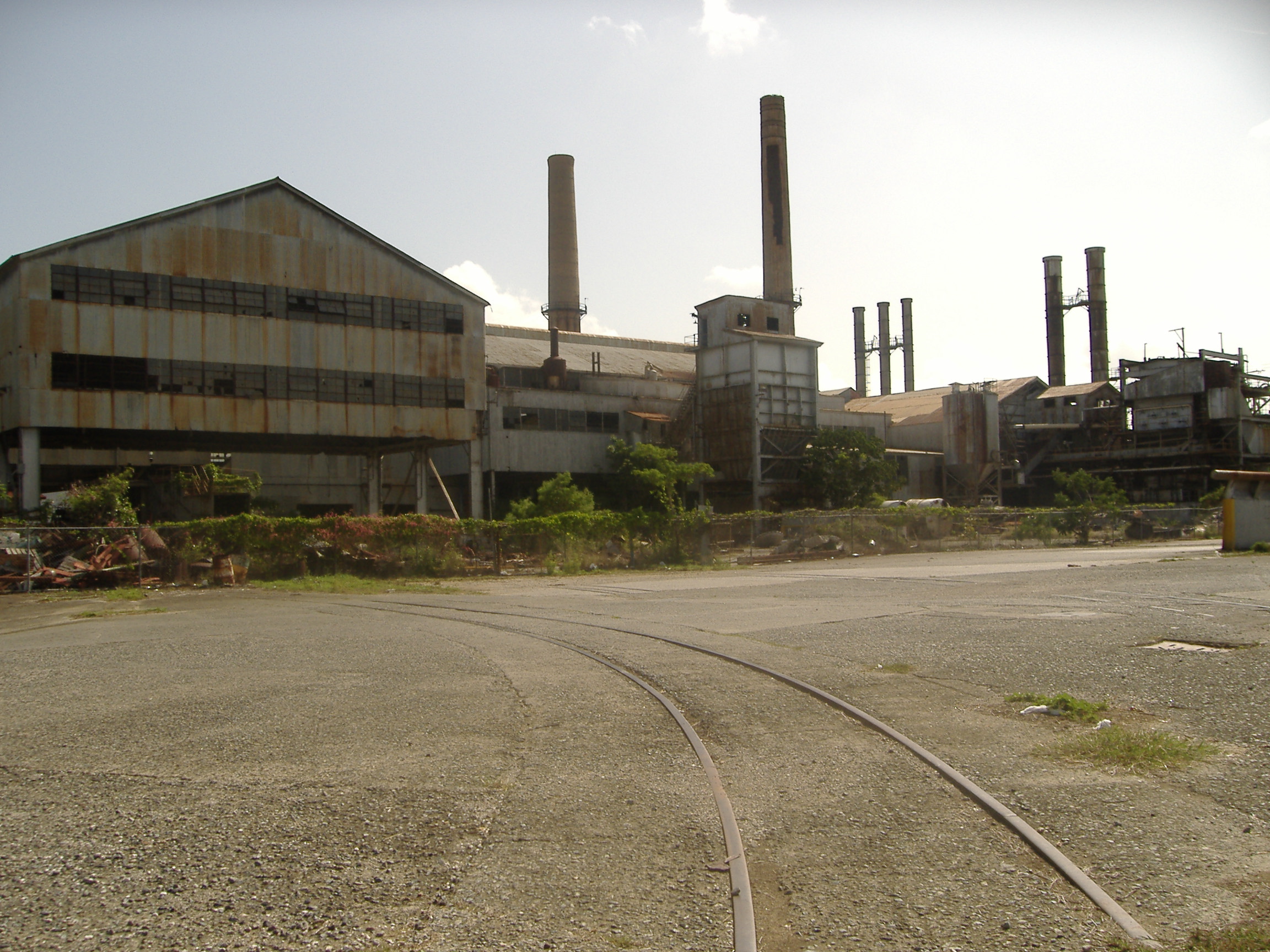
Hacienda Mercedita
The sign on the abandoned building still reads "Snow White Sugar," its letters fading into the concrete of a refinery that processed its last cane in 1994. Across La Esperanza street, however, the air smells of molasses and oak. The Destileria Serralles rum distillery -- born on this same patch of Ponce flatland in 1865 -- continues to expand, producing Don Q and shipping it worldwide. Hacienda Mercedita tells two stories at once: the collapse of Puerto Rico's sugar industry and the unlikely survival of its most spirited byproduct.
From Catalonia to Cane Country
The Serralles saga begins not in Puerto Rico but in Begur, a coastal town in Catalonia, Spain. Don Sebastian Serralles settled in Ponce in the early nineteenth century and founded Hacienda Teresa, a modest sugar operation. His son Juan Serralles Colon inherited the ambition and, in 1861, founded his own sugarcane plantation on 300 acres of Ponce flatland. He named it Hacienda Mercedita in honor of his wife, Mercedes Perez. Within a single year the hacienda's sugar production was so exceptional that Juan began buying out neighboring mills -- La Laurel, La Fe, Destierro, Bronce, Mallorquinas, and others -- absorbing them into what would become the sprawling Central Mercedita complex. By 1879, ox carts had been replaced by a railroad system to move cane from field to mill. The plantation was becoming an industrial operation.
The Spirit in the Sugar
Sugar was the visible product, but rum was the quiet fortune. Juan Serralles began distilling in 1865, perfecting his formula as the years passed. By 1890, the hacienda cultivated over 4,000 acres of rum-making sugarcane. For decades the family produced various local brands, most short-lived, until 1934, when they launched Ron Don Q -- a refined rum aimed at export markets. Puerto Ricans embraced it, many preferring its smoothness to the harsher taste of rival Bacardi, which they also regarded as a foreign brand from Cuba. With rum profits flowing in during the 1930s, Juan Serralles built a grand hilltop home overlooking Ponce, today known as the Serralles Castle and open to visitors as a museum. The family's twin operations -- Snow White sugar and Don Q rum -- ran in parallel through the 1950s, each with its own corporate structure, each feeding off the same cane.
The Workers' World
Life inside Hacienda Mercedita was its own enclosed economy. Originally built as the Serralles family residence in 1861, the hacienda evolved into something closer to a company town as the sugar business expanded. After the abolition of slavery in Puerto Rico in 1873, the owners offered free garden plots to workers in exchange for dependent labor -- a system that replaced one form of bondage with another. The hacienda operated a general store where laborers bought goods on credit, and planters paid wages in tokens redeemable only at company shops. The cycle of indebtedness was deliberate, designed to bind workers to the estate. This was not unusual for Caribbean sugar plantations of the era, but understanding it is essential to seeing the hacienda as more than an entrepreneurial success story. The people who cut the cane, fed the mills, and tended the fires lived within a system engineered to keep them there.
Sugar's Long Decline
Puerto Rico's sugar industry did not die suddenly; it bled out over decades. By 1979, Central Mercedita was sold to the government of Puerto Rico as the cane industry declined across the island. The government corporation that took over, managing thirteen remaining sugar mills and the Snow White refinery, immediately lost money. In 1983, the price of Snow White sugar was frozen by law in an attempt to keep voters happy -- a political gesture that only accelerated the financial hemorrhage. On December 31, 1994, Central Mercedita stopped milling sugarcane for good. The refinery limped on briefly, processing cane from other sources, but soon shut down entirely. In 1998, the government deeded the old plantation homes and their surrounding land to the residents who still lived there, a community that retains the name Central Mercedita to this day.
Ruins and Rhythm
Today the abandoned refinery buildings stand rusting on the Ponce flatlands -- a Plymouth locomotive corroding on its tracks, the Sugar Corporation offices empty behind their Snow White sign. The municipality has discussed converting the grounds into a city park, but the ruins persist for now, overgrown and photogenic. In June 2020, the hacienda served as the backdrop for an educational photoshoot of traditional Puerto Rican Bomba dance, the Afro-Puerto Rican art form pulsing among the old ironwork. Meanwhile, across La Esperanza street, Destileria Serralles keeps expanding -- proof that the most enduring thing to come from this plantation was never the sugar itself but the spirit distilled from it.
From the Air
Located at 18.02N, 66.56W on the southern coastal flatlands of Ponce, Puerto Rico. The hacienda grounds sit near the intersection of PR-10 and PR-52, with the Serralles rum distillery clearly visible as an active industrial complex adjacent to the abandoned sugar refinery. Nearest airport is Mercedita Airport (TJPS/PSE) less than 2 miles south. The Serralles Castle is visible on the hilltop to the north. From altitude, the contrast between the active distillery and the ruined refinery is striking.