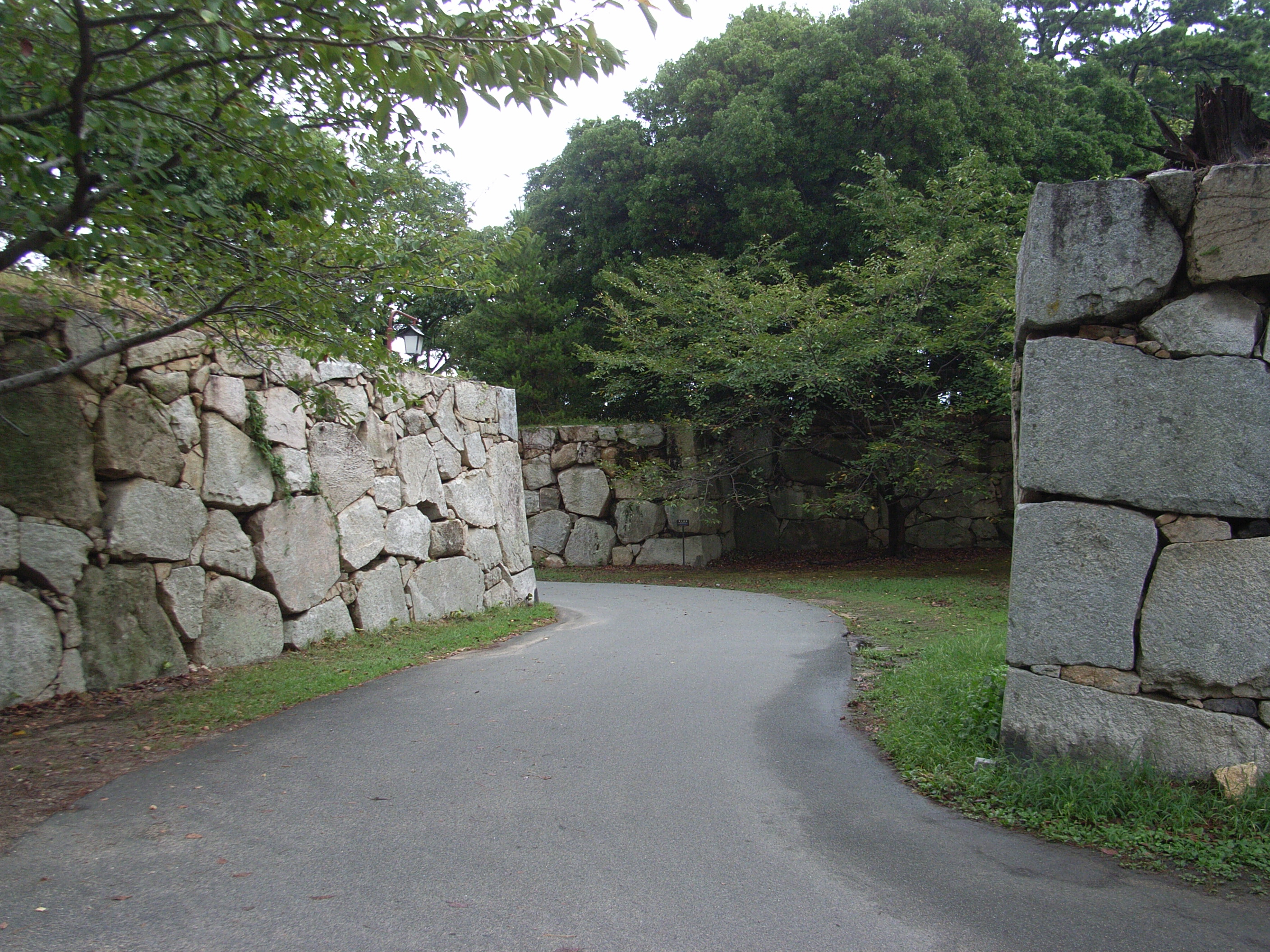
Hagi Castle
The Tokugawa shogunate intended Hagi as exile. After the Battle of Sekigahara in 1600, the Mori clan -- once rulers of much of western Japan from their grand seat at Hiroshima Castle -- found themselves stripped of two-thirds of their territory. When they petitioned to build a new stronghold along the strategic Sanyodo highway connecting Kyoto to Kyushu, the shogunate refused. Build at Hagi, they were told: a small fishing village, swampy, hemmed in by hills and rivers, distant from any important road. It was a deliberate humiliation. The Mori began construction in 1604 and finished by 1608, raising a five-story keep on Mount Shigetsu, a 150-meter hill that had once been an island before sandbars linked it to the delta of the Abu River.
A Fortress Between Sea and Mountain
The castle's designers turned Hagi's isolation into defensive advantage. Mount Shigetsu formed the castle's backbone, with two square enclosures arranged on its slopes and the connecting sandbank. The Sea of Japan served as a natural moat behind the castle, while a water moat linked to the ocean protected the front approach. From the landward side, the enclosures were angled so that a corner -- the hardest point to assault -- faced any approaching force from the southeast. Stone walls rose in tiers, punctuated by yagura watchtowers, and compound gates guarded every entrance. The tenshu, the castle's five-story keep, dominated the skyline. Below, on the mainland, a tertiary compound housed the residences of high-ranking retainers, and the castle town grew outward from there.
Two and a Half Centuries of Quiet Resentment
The Mori never forgot what they had lost. For over 250 years, the lords of Choshu Domain governed from Hagi Castle while nursing a grudge against the Tokugawa that would outlast generations. The irony of their exile was that it incubated revolution. Hagi became a center of intellectual ferment in the late Edo period, home to scholars like Yoshida Shoin whose ideas about modernization and imperial restoration would reshape Japan. The castle itself saw no major battles -- its importance was political, not military. In 1863, fearing attack by foreign naval forces after the Shimonoseki campaign, the Mori moved their seat to Yamaguchi Castle, and Hagi's role as a center of power quietly ended.
Demolition and Memory
The new Meiji government ordered most of Hagi Castle's structures demolished in 1874, and some moats were filled in. What the wrecking crews left behind, however, remains substantial. The stone walls of both the central and hilltop enclosures stand largely intact, their careful masonry weathered but unbroken. The outer gate and a corner turret were later restored. Japan designated the ruins a National Historic Site in 1951 and the surrounding castle town in 1967. Mount Shigetsu itself received protection as a National Natural Monument in 1971. In 2006, the Japan Castle Foundation named Hagi one of Japan's Top 100 Castles.
From Exile to World Heritage
On July 5, 2015, Hagi Castle received UNESCO World Heritage status as part of the Sites of Japan's Meiji Industrial Revolution: Iron and Steel, Shipbuilding and Coal Mining. The designation recognized not the castle as a fortress but as part of the broader story of how Japan transformed itself from a feudal society into an industrial power in barely half a century. The castle town around the ruins preserves the layout of Edo-period streets, with samurai residences, merchant quarters, and temple grounds still traceable in the modern cityscape. Visitors walk paths that the young revolutionaries of the Meiji Restoration once walked -- men who grew up in this remote, deliberately marginalized place and went on to remake their nation.
From the Air
Located at 34.42N, 131.38E on the Sea of Japan coast of Yamaguchi Prefecture. The castle ruins sit on Mount Shigetsu at the edge of the Abu River delta. Nearby airports include Iwami Airport (RJOW) to the northeast and Yamaguchi Ube Airport (RJDC) to the south. Best viewed at 2,000-4,000 feet to appreciate the coastal setting and the relationship between the mountain, the delta, and the Sea of Japan.