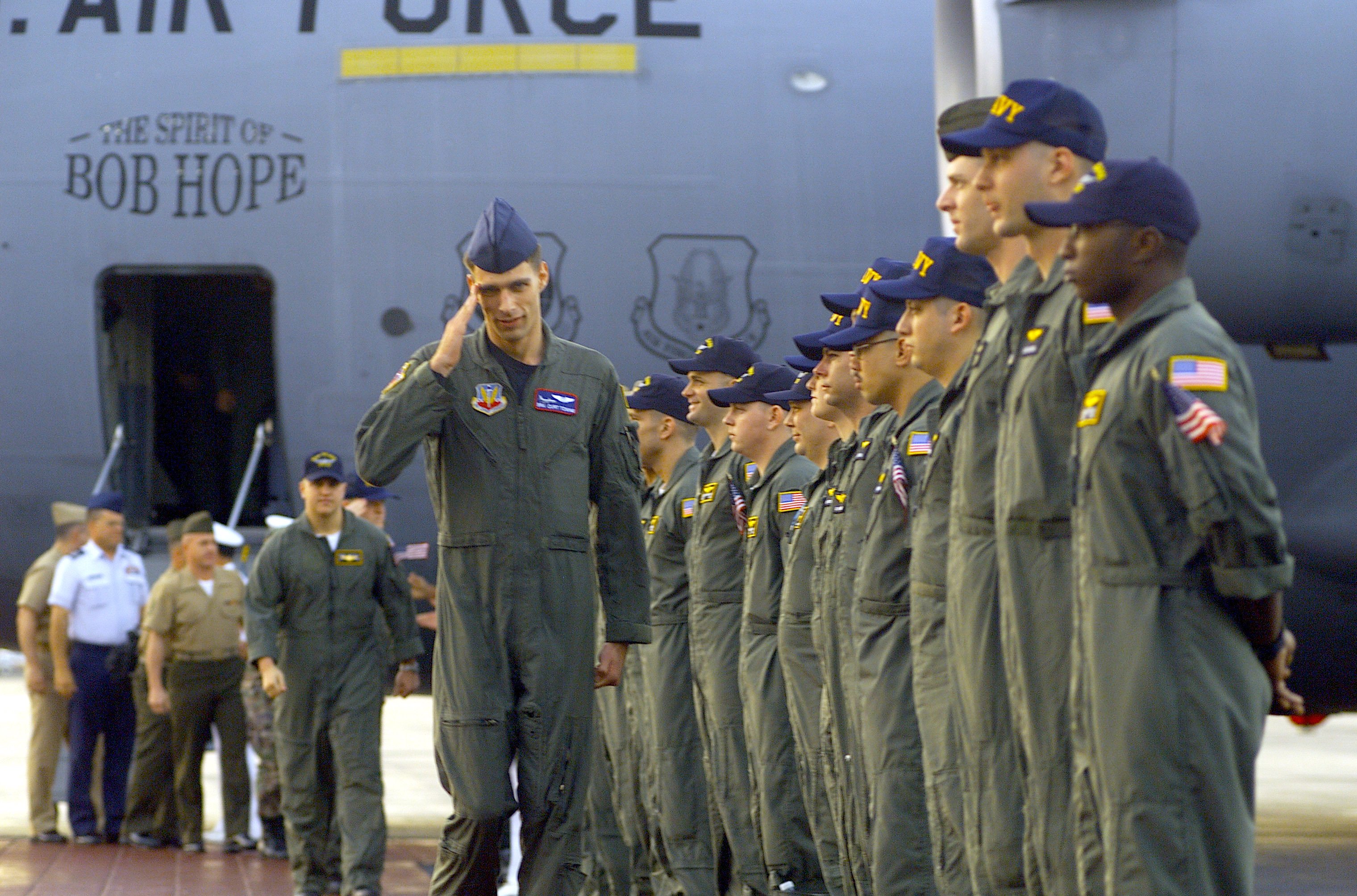
Hainan Island Incident
On the morning of April 1, 2001, Lieutenant Shane Osborn was guarding the autopilot. His EP-3E ARIES II signals intelligence aircraft, a lumbering four-engine turboprop packed with eavesdropping equipment, was nearing the end of a six-hour surveillance mission over the South China Sea. Flying at 22,000 feet and 180 knots on a heading of 110 degrees, roughly 70 miles from Hainan Island, the crew of 24 had settled into the monotony of routine. Then two Chinese J-8 interceptors rose from Lingshui airfield to meet them. What happened next would ground the plane, strand its crew, kill a Chinese pilot, and push two nuclear powers toward a confrontation that neither wanted but neither knew how to avoid.
Thirty Seconds of Falling
Lieutenant Commander Wang Wei had a reputation. American crews knew him from previous intercepts - he had flown close enough on earlier missions for his email address to be readable on a sign he held up to his cockpit canopy. On this morning, his J-8 made two close passes by the EP-3, each one tighter than the last. On the third pass, the fighter collided with the larger aircraft. The J-8 broke into two pieces and plummeted into the sea. Wang ejected but was never found.
The EP-3 fared only slightly better. Its radome tore away entirely. The number one propeller was shredded. An antenna wrapped itself around the tailplane, and the J-8's tail fin jammed the left aileron fully upright, throwing the American plane into a roll three to four times its normal maximum rate. The aircraft pitched into a 30-degree dive at a bank angle of 130 degrees - nearly inverted - and dropped 8,000 feet in thirty seconds. Osborn fought the controls through another 6,000 feet of descent before leveling the wings. He called for the crew to prepare to bail out.
Coffee and Axes
They did not bail out. Instead, for 26 minutes, the crew executed an emergency destruction plan they had never formally rehearsed. Classified equipment had to be rendered useless before landing on Chinese soil. The improvisation was frantic: freshly brewed coffee was poured into disk drives and across motherboards, while someone grabbed an axe from the survival kit and went to work on hard drives. The plane's interior was later described as resembling the aftermath of a frat party.
The destruction was only partly successful. Cryptographic keys, signals intelligence manuals, and the names of National Security Agency employees survived the coffee and the axe. Osborn brought the crippled EP-3 down at Lingshui airfield on Hainan - the very base from which the interceptors had launched. There was no permission to land. There was no alternative. The 24 Americans stepped off their battered aircraft and into Chinese custody, and the phones in Washington and Beijing began to ring.
The Letter of the Two Sorries
What followed was ten days of diplomatic theater played out against genuine peril. China demanded a formal apology. The United States refused to give one. George W. Bush was ten weeks into his presidency; this was his first foreign policy crisis, and it arrived with no playbook. Three American diplomats were dispatched to Hainan but were not allowed to see the crew for three days.
The resolution came through language. Ambassador Joseph Prueher delivered a letter to Foreign Minister Tang Jiaxuan expressing that the United States was "very sorry" for the loss of Wang Wei and "very sorry" that the EP-3 had entered Chinese airspace and landed without permission. Washington insisted this was an expression of regret, not an apology. Beijing chose to interpret it as the apology it had demanded. General Secretary Jiang Zemin accepted the phrasing, and both sides claimed victory. The crew flew home on April 11. The ambiguity was the point - it let two governments step back from the edge while telling their own publics different stories about what had just happened.
A Plane Comes Home in Pieces
The EP-3 itself had a longer journey. Navy engineers estimated eight to twelve months of repairs, but China refused to let the aircraft fly out. Instead, it was disassembled and loaded onto two Russian Antonov An-124 cargo planes - the same massive transports that had once ferried Soviet military hardware. The irony was lost on no one. Released on July 3, 2001, the components traveled to Lockheed Martin in Marietta, Georgia, for reassembly, then to L3 Technologies in Waco, Texas, for the classified systems that made it a spy plane rather than just a turboprop.
The United States paid China $34,567 for eleven days of food and lodging for the crew. Beijing had demanded a million dollars for the lost J-8 and its pilot. Washington refused, and no further negotiation followed. The EP-3 eventually returned to service, flying missions until October 2024, when it was retired to the Pima Air and Space Museum in Arizona - a quiet ending for an aircraft that had once nearly started something much louder.
The Sea That Remembers
The South China Sea did not become quieter after April 2001. Hainan Island grew more militarily significant, not less. An underground submarine base capable of sheltering nuclear ballistic missile boats was built into the island's coast. In 2009, Chinese vessels harassed the USNS Impeccable 75 miles south of Hainan. In 2014, a Chinese J-11 performed a barrel roll within 10 meters of a patrolling American P-8 Poseidon. In 2016, two J-11s closed to within 15 meters of another EP-3 flying 50 miles east of the island.
The collision of 2001 established patterns that persist: American surveillance flights continue, Chinese interceptions continue, and the legal disagreement over whether a nation's exclusive economic zone grants it authority over foreign military aircraft remains unresolved. The stretch of ocean where Wang Wei's fighter broke apart is still contested water, still watched from above and below, still the place where two great powers test each other's tolerance with closing distances and careful language.
From the Air
The collision occurred at approximately 17.61N, 111.36E, over the South China Sea roughly midway between Hainan Island and the Paracel Islands. Hainan Island itself is clearly visible from altitude - China's second-largest island at roughly 33,920 sq km, with mountainous terrain reaching 1,867m at Wuzhi Mountain. Lingshui airfield (military, no ICAO code for public use) sits on the southeastern coast. Nearby civilian airports include Haikou Meilan International (ZJHK) on Hainan's north coast and Sanya Phoenix International (ZJSY) on the south coast. The South China Sea in this area is typically warm and hazy, with visibility often reduced by moisture. Expect heavy military and commercial shipping traffic. The Paracel Islands are visible to the southeast as scattered low coral atolls.