Hakone Open-Air Museum
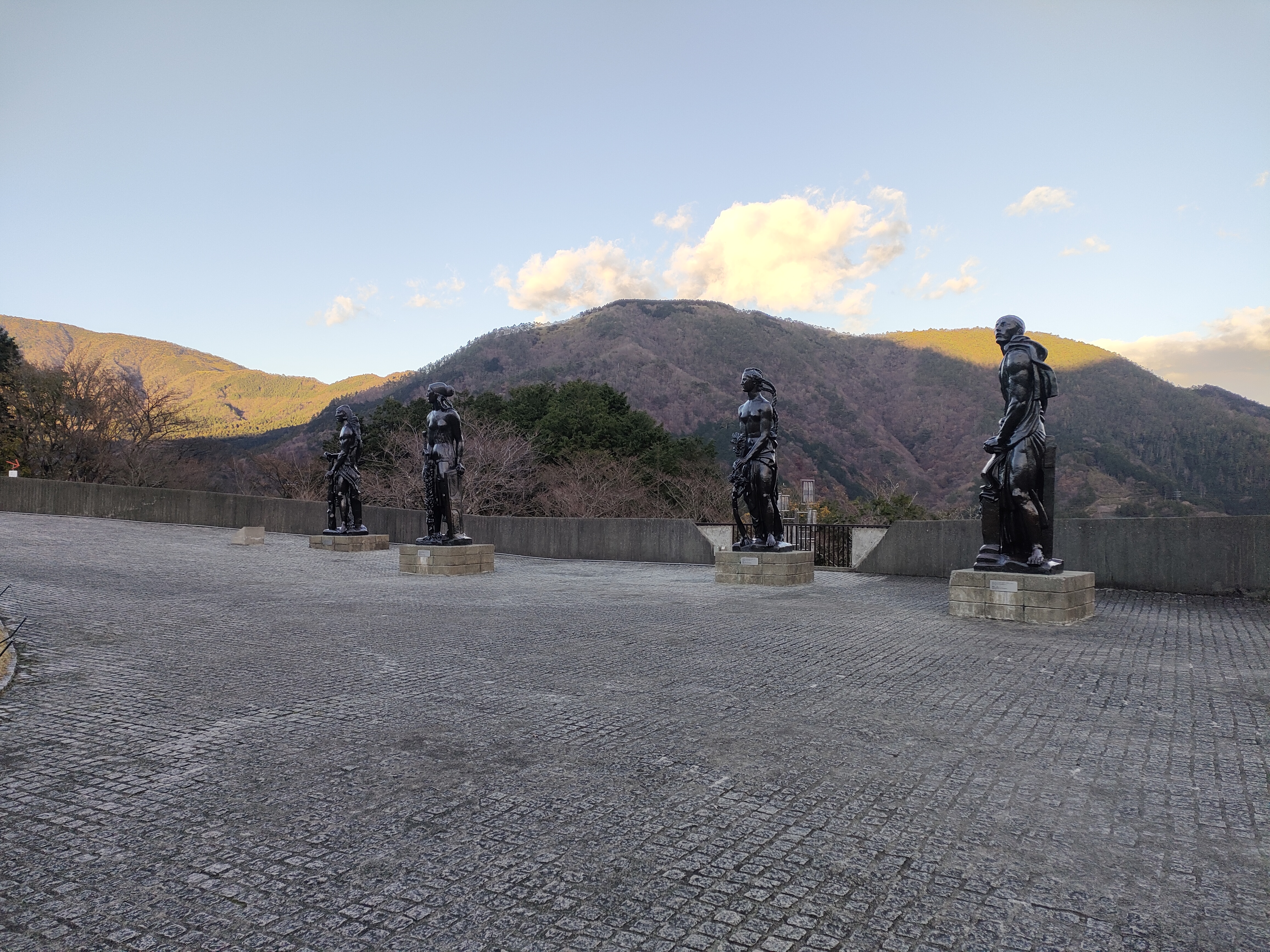
Three hundred works by Pablo Picasso share wall space with volcanic mountains. That is the central improbability of the Hakone Open-Air Museum -- or Hakone Chokoku no Mori Bijutsukan, as the Japanese name translates to "Hakone Forest of Sculpture Art Museum." When it opened in 1969 as Japan's first open-air museum, the idea was radical: take monumental sculpture out of climate-controlled galleries and set it against the ridgelines, cedar forests, and steaming valleys of the Hakone caldera. More than half a century later, the experiment endures across 70,000 square meters of mountainside, where a Henry Moore bronze reclines against a backdrop that Moore himself could never have imagined.
Sculpture Against the Volcano
The museum spreads across a hillside near Chokoku-no-Mori Station on the Hakone Tozan Railway, its grounds shaped by the contours of volcanic terrain. About 120 sculptural works stand on permanent outdoor display, placed so that the surrounding landscape becomes part of each composition. A Joan Miro figure from 1972 catches the light differently as clouds roll across the Hakone ridgeline. Arnaldo Pomodoro's Sfera con Sfera -- a fractured bronze sphere within a sphere -- sits in a clearing where the scale of the mountains gives it unexpected intimacy. Aristide Maillol's Action Enchained, cast between 1905 and 1906, stands with a gravity that the forested slopes behind it amplify. The collection spans the major movements of 20th-century sculpture, with works by Constantin Brancusi, Barbara Hepworth, Taro Okamoto, Churyo Sato, Susumu Shingu, Rokuzan Ogiwara, and Kotaro Takamura among others. But the constant companion is the landscape itself -- volcanic, moody, and never quite the same from one visit to the next.
Picasso in the Mountains
The Picasso Pavilion is the museum's crown jewel, housing around 319 works by the Spanish master across multiple media: oil paintings, prints, sculptures, ceramics, and objects in precious metal. The ceramic collection alone -- 188 pieces purchased from Maya Picasso, the artist's daughter -- constitutes one of the most significant Picasso ceramics holdings outside of Europe. The pavilion is one of five indoor exhibition halls, but its concentration of a single artist's output gives it a depth that the outdoor galleries, spread thin across the hillside, deliberately avoid. Inside, Picasso's restless experimentation is displayed in sequence; outside, the mountain air and the sound of wind through cedar trees provide a palate cleanser between rooms. The contrast between intimate interior galleries and expansive outdoor sculpture gardens is one of the museum's most effective curatorial choices.
Where Art Meets Onsen
In a touch that could only happen in Hakone, the museum offers visitors a naturally fed onsen footbath. After walking the hillside grounds, guests can soak their feet in volcanic hot spring water while looking out over the sculpture park -- a collision of high art and ancient bathing culture that perfectly captures the spirit of this place. Interactive outdoor sculptures invite children to climb and explore, making the museum one of the rare contemporary art institutions that genuinely welcomes families. The Fujisankei Communications Group, the media conglomerate that operates the museum, has maintained this balance between serious artistic ambition and populist accessibility since opening day. The museum sits within walking distance of Ni-no-taira Onsen, one of Hakone's many hot spring resorts, and on clear days the Sagami Bay is visible from the grounds. It is a place where the boundaries between gallery, garden, and geological wonder blur beyond recognition.
A Pioneer's Legacy
When the Hakone Open-Air Museum opened in 1969, Japan had no tradition of outdoor sculpture parks. The concept was borrowed from European models but adapted to a landscape unlike anything in Scandinavia or Britain -- a volcanic caldera where steam vents and hot springs punctuate the forest floor. The gamble paid off. The museum became a template for outdoor art spaces across Japan and drew international attention for its integration of Western modernist sculpture with a distinctly Japanese sense of place. More than 1,000 pieces now fill the permanent collection. Hosting over a million visitors in peak years, the museum has proved that monumental art does not need white walls and controlled lighting to move people. Sometimes it needs a volcano, a footbath, and a clear view of Mount Fuji.
From the Air
Located at 35.24N, 139.05E on the northern slopes of the Hakone caldera, within the Fuji-Hakone-Izu National Park. The museum grounds are not individually distinguishable from cruising altitude, but the site is identifiable by its proximity to the Hakone Tozan Railway switchback route climbing the mountainside. The broader Hakone volcanic complex -- with Lake Ashi in the caldera, the steaming Owakudani geothermal area, and the distinctive mountain rim -- provides clear visual orientation. Mount Fuji is prominent to the west-northwest. Nearest major airport: Tokyo Haneda (RJTT), approximately 95 km northeast. The Sagami Bay coastline is visible to the south and east. Expect frequent orographic cloud formation around the caldera rim, with clearest conditions in late autumn and winter.