Hala-Bala Wildlife Sanctuary
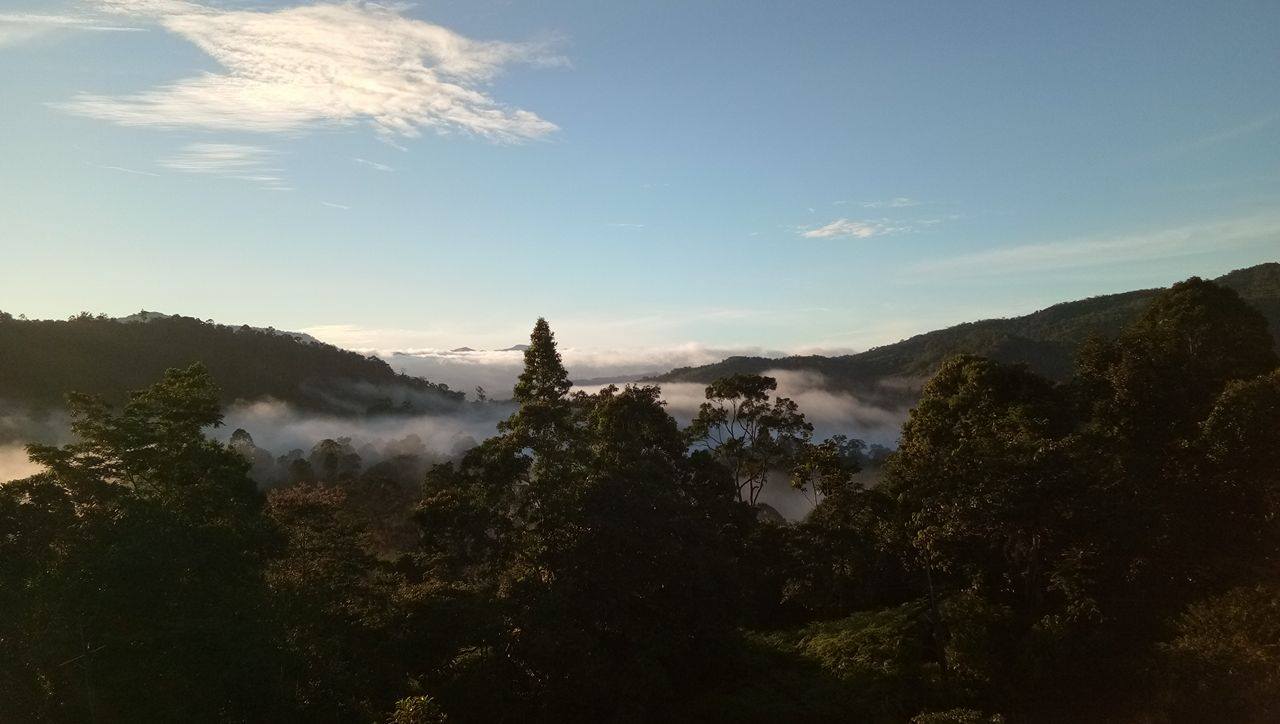
Every May, the sky above the Hala forest fills with hornbills. Flocks of 500 or more plain-pouched hornbills arrive from central Thailand's Huai Kha Khaeng Wildlife Sanctuary, having crossed the length of the country to reach this southern refuge. They join rhinoceros hornbills, helmeted hornbills, and seven other species already resident in the canopy -- ten of the thirteen hornbill species found in all of Thailand, concentrated in a single stretch of forest that most Thais have never visited. Hala-Bala Wildlife Sanctuary, established in 1996, covers 627 square kilometers of rainforest straddling the Titiwangsa Range in Thailand's deep south. Its nickname, the "Amazon of ASEAN," sounds like tourism branding. It is not far from the truth.
Two Forests, One Name
The sanctuary is actually a composite of two separate forestlands separated by settled lowlands. Hala forest lies in Betong district of Yala Province and Chanae district of Narathiwat Province. Bala forest covers territory in the Waeng and Sukhirin districts of Narathiwat. Which name comes first depends on where you are from: residents of Waeng call it Bala-Hala, while people in Betong say Hala-Bala. The name itself traces to Khlong Bala, a natural canal that flows from the Hala mountaintop through dense tropical forest into the Bang Lang Reservoir in Yala. The sanctuary presses directly against Malaysia's Belum-Temengor Reserve, creating a continuous cross-border corridor of old-growth rainforest -- one of the largest intact forest blocks remaining in Southeast Asia.
Primeval Canopy
The flora here reaches back deep into evolutionary time. Tree ferns of the genus Cyathea -- plants whose ancestors fed dinosaurs -- grow tall enough in the understory to make the forest feel genuinely prehistoric. Thailand's largest known baing tree, Tetrameles nudiflora, stands somewhere in this forest, its buttress roots sprawling across the forest floor. Among the rarer plants is the golden-leaved liana, known locally as Yan Da-o (Bauhinia aureifolia), an endemic species found only in the provinces of Narathiwat, Yala, and Pattani. The canopy itself is classic lowland tropical rainforest -- layered, dense, and dripping. Emergent trees tower above the main canopy at 40 to 50 meters, their crowns providing the perches and nesting cavities that make this forest so critical for hornbills.
The Hornbill Kingdom
Hornbills are the signature species of Hala-Bala, and the sanctuary's importance for their conservation is difficult to overstate. Ten of Thailand's thirteen hornbill species live here, including the critically endangered helmeted hornbill, hunted elsewhere for its solid casque -- a block of ivory-like keratin prized on the black market. Rhinoceros hornbills, with their dramatic orange-red casques and wingspans exceeding a meter, can be spotted along the Ban To Mo-Ban Bala road, sometimes at startlingly close range. But the most spectacular event is the annual arrival of the plain-pouched hornbills each May. These birds migrate from Huai Kha Khaeng in central-western Thailand, arriving in flocks that can number in the hundreds. The sight of massed hornbills in flight -- heavy-bodied, loud, their wingbeats producing a rushing sound audible from the ground -- is one of Southeast Asia's great wildlife spectacles.
Beyond the Birds
The sanctuary's biological census reveals extraordinary richness: 179 mammal species, 384 bird species, 130 reptiles, and 61 amphibians. Six species found here are classified as critically endangered. Gaurs -- massive wild cattle weighing up to 1,500 kilograms -- graze the grasslands along Khlong Bala. The forest supports the full range of large Southeast Asian mammals: Malayan sun bears, Asian elephants, clouded leopards, and Malayan tapirs, among others. This diversity reflects the sanctuary's position at a biogeographic crossroads. The Titiwangsa Range, which forms the sanctuary's backbone, marks a transition zone between the flora and fauna of mainland Southeast Asia and the distinct ecosystems of the Malay Peninsula and Sundaic region. Species from both zones overlap here, inflating the count in every category.
A Remote Frontier
Hala-Bala sits in Thailand's southernmost provinces -- Yala and Narathiwat -- a region that most foreign tourists and many Thai visitors avoid due to a long-running separatist insurgency. This remoteness has, paradoxically, helped preserve the forest. Development pressure is lower here than in Thailand's more accessible national parks. The sanctuary receives a fraction of the visitors that places like Khao Sok or Doi Inthanon attract, which means the wildlife is less habituated and the forest less disturbed. From the air, Hala-Bala appears as an unbroken carpet of green stretching south to the Malaysian border, the Titiwangsa ridgeline rising from its center. There are no resort towers, no cleared hillsides. It looks, from altitude, the way much of Southeast Asia looked before the twentieth century -- a reminder of what 627 square kilometers of untouched tropical forest actually looks like when it has been left alone.
From the Air
Located at approximately 5.80N, 101.83E in Thailand's deep south, along the Titiwangsa Range at the Malaysian border. The sanctuary is a continuous green canopy visible from FL350. Nearest airports: Betong International Airport (VTSY) to the west, and Sultan Ismail Petra Airport in Kota Bharu (WMKC) across the border in Malaysia. Terrain rises along the Titiwangsa ridgeline; maintain safe altitude. Afternoon convective weather is common over the forested mountains.