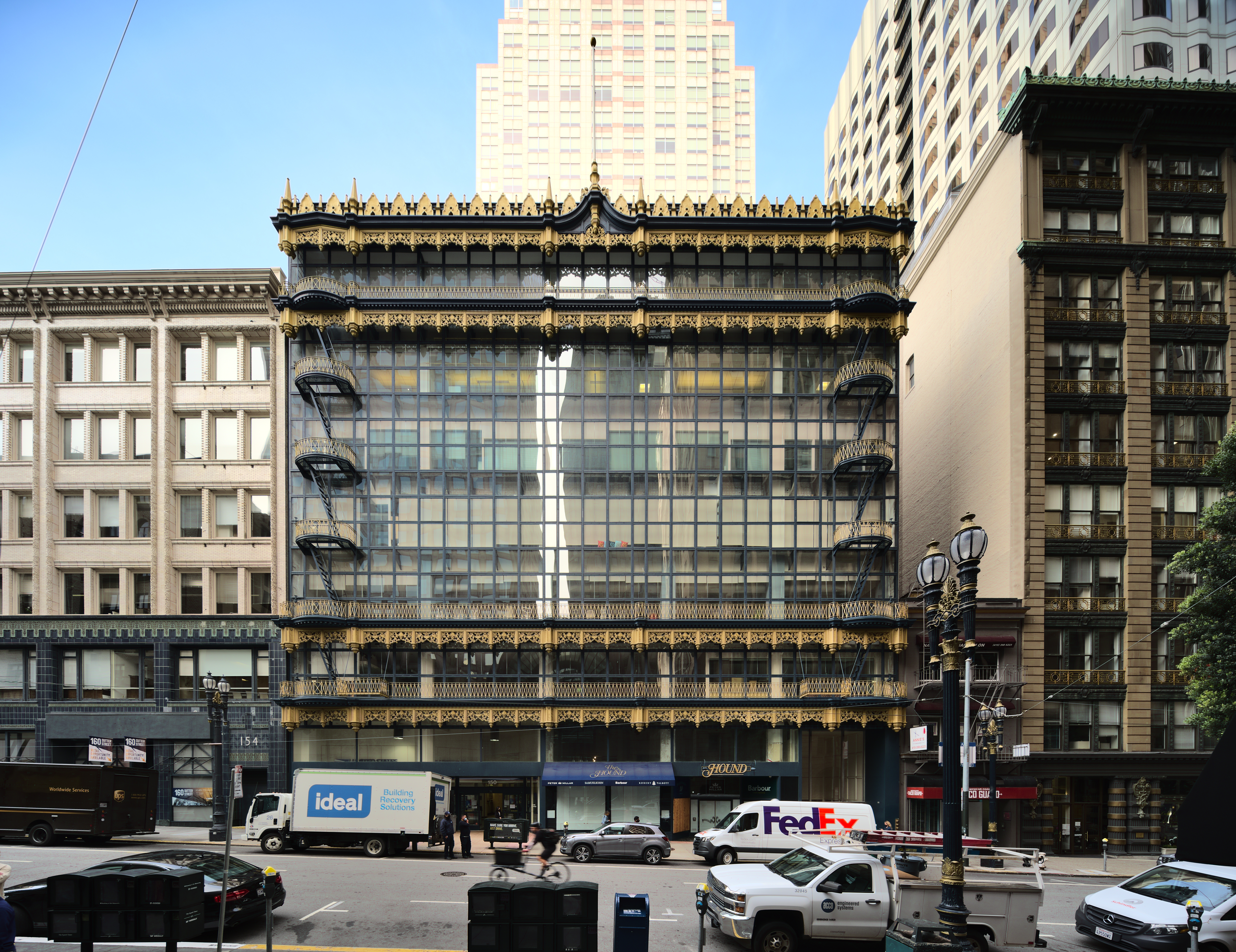
Hallidie Building
Walk down Sutter Street between Montgomery and Kearny in San Francisco's Financial District, and you'll pass a building that changed architecture. The Hallidie Building, completed in 1918, is credited as the first American building to feature a glass curtain wall -- a facade of glass panels hung in front of the structural frame rather than filling it. Architect Willis Polk named it for Andrew Smith Hallidie, the cable car pioneer, and designed a facade that anticipated the glass-and-steel modernism of Mies van der Rohe by four decades. The building is modest in size -- just seven stories -- but its influence on the buildings that came after it is immeasurable.
The Glass Comes First
A curtain wall is a facade that carries no structural load. The glass hangs from the frame like a curtain, letting light flood the interior while the steel skeleton does the work of holding the building up. In 1918, this was a radical idea. Most buildings embedded their windows in load-bearing masonry walls, limiting the amount of glass to what the wall could structurally accommodate. Polk reversed the relationship: at the Hallidie Building, the glass came first and the structure hid behind it. The result was a facade that seemed to float -- transparent, luminous, and decades ahead of the architectural mainstream.
A Prophet Without Honor
The Hallidie Building did not immediately inspire imitators. The curtain wall concept would not become standard practice in American architecture until the postwar era, when Lever House (1952) and the Seagram Building (1958) in New York brought glass facades to corporate architecture. Polk's building preceded them by thirty to forty years, sitting on Sutter Street as a quiet prophecy that nobody recognized. Today the Hallidie Building is a National Historic Landmark, honored for its pioneering role in the development of modern architecture -- an honor that would have puzzled its contemporaries, who saw it as merely unusual.
130 Sutter Street Today
The Hallidie Building remains an active office building, its glass facade preserved but its architectural significance invisible to most passersby. The Financial District surrounds it with glass towers that owe their existence, in part, to the principle that Polk demonstrated here: that a building's skin and its structure could be independent. Every glass office tower in every American city is a descendant of this modest seven-story building on Sutter Street, the place where an architect named a building after a cable car inventor and accidentally predicted the future of commercial architecture.
From the Air
Located at 37.790°N, 122.404°W at 130 Sutter Street in San Francisco's Financial District. The building is small relative to its neighbors and not easily distinguished from the air. Best viewed at 2,000-3,000 feet AGL. Nearest airports: KSFO (11 nm south), KOAK (10 nm east).