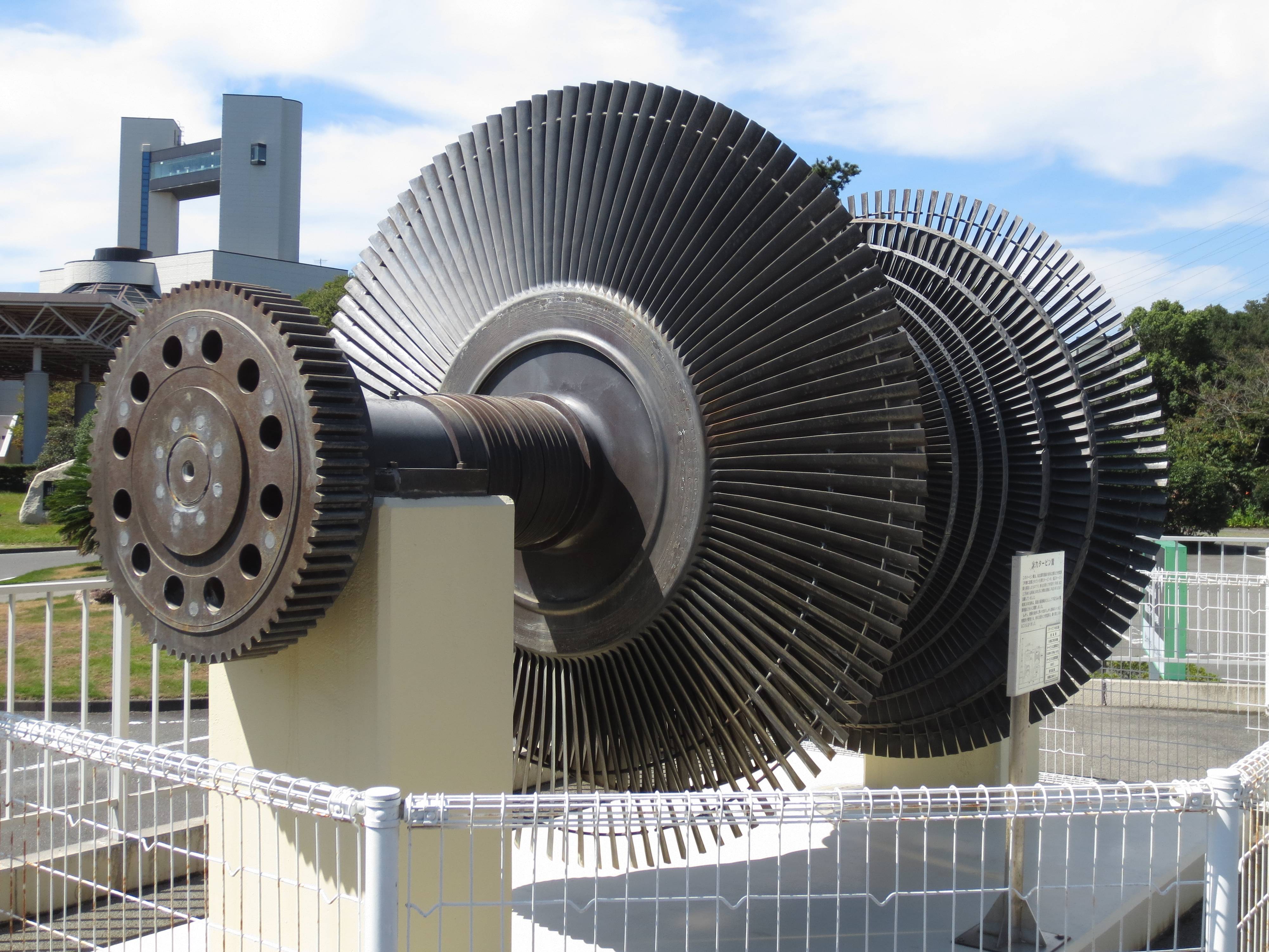
Hamaoka Nuclear Power Plant
Seismologist Kiyoo Mogi identified the danger in 1969: a shallow magnitude 8.0 earthquake was overdue in the Tokai region of central Japan. Seven months later, the government granted permission to build a nuclear power plant at that very spot. The Hamaoka Nuclear Power Plant sits on the coast of Omaezaki in Shizuoka Prefecture, 200 kilometers southwest of Tokyo, straddling the junction of two tectonic plates where the Philippine Sea Plate dives beneath the Eurasian Plate. Five reactors eventually rose on this 395-acre site. Today, every one of them stands silent -- two being torn apart, three waiting behind a massive concrete seawall for a restart that may never come.
Built on a Fault Line
Construction of Hamaoka-1 began on June 10, 1971, and the reactor went commercial in 1976. A second unit followed in 1978, both General Electric BWR-4 boiling water reactors sharing infrastructure on the narrow coastal strip. Units 3, 4, and 5 arrived over the following decades, the last being an advanced ABWR design that reached criticality in March 2004 and entered service in 2005. The plant was originally engineered to withstand a magnitude 8.5 earthquake. But the ground beneath it told a different story. In 2004, Professor Katsuhiko Ishibashi, a former member of a government nuclear safety panel, declared Hamaoka "the most dangerous nuclear power plant in Japan." The Coordinating Committee for Earthquake Prediction had flagged the Tokai seismic zone before a single foundation was poured. By the time Hamaoka-5 went online, the question was not whether a major earthquake would strike, but when.
The Fukushima Reckoning
When the Tohoku earthquake and tsunami devastated the Fukushima Daiichi plant in March 2011, Hamaoka's fate was sealed within weeks. Scientists estimated an 87 percent probability of a magnitude 8.0 or greater earthquake hitting the Tokai region within 30 years. On May 6, 2011, Prime Minister Naoto Kan made a direct request: shut Hamaoka down. Units 4 and 5 went cold on May 13 and 14. Unit 3 had already been offline for inspections since October 2010. Japan's largest newspaper, the Yomiuri Shimbun, called Kan's decision "abrupt" and questioned whether it was "a political judgment that went beyond technological worthiness." But the numbers were stark. Until 2011, the plant's tsunami defense consisted of a row of natural sand dunes standing 10 to 15 meters above sea level -- barely adequate against the 10-meter waves expected from a magnitude 9 event.
Fortress Against the Sea
Chubu Electric Power Company responded with one of the most ambitious nuclear hardening projects in history. A breakwater wall rose to 22 meters above sea level along the coast. Seawater pumps were waterproofed. Spare diesel generators with long-term fuel supplies were installed on a hill 25 meters above sea level. Power grid connections were doubled. Gas turbine generators were placed on high ground for emergency cooling. Building basements received flood pumps. Outdoor equipment was secured against tornado impacts. Pipes and cables were reinforced for seismic resistance. The full suite of upgrades, responding to evolving Nuclear Regulation Authority standards issued in June 2013, took six years to complete, finishing in 2017. The barrier now stands 10 meters taller than the highest waves expected even if three major earthquakes struck simultaneously.
A Community Divided
The shutdown transformed Omaezaki overnight. In the April 2012 mayoral election, the plant's future dominated every debate. Three candidates offered three visions: incumbent Shigeo Ishihara favored a conditional restart, Communist Party candidate Haruhisa Muramatsu demanded decommissioning, and former city councilor Katsuhisa Mizuno promised the plant would stay dark. Ishihara won. Yet the tension persisted -- in 2013, nearby mayors split evenly on whether to allow a restart. Over the following decade, public sentiment slowly shifted. By 2022, supporters of restarting Hamaoka outnumbered opponents 36 to 32 percent. Meanwhile, Units 1 and 2, deemed too old and vulnerable after the 2007 Chuetsu offshore earthquake, entered a decommissioning process expected to last until 2036. On March 17, 2025, workers began dismantling the Number 2 reactor -- the first such operation in Japanese history.
Waiting on the Verdict
Chubu Electric filed for a restart review of Unit 4 in February 2014 and Unit 3 in June 2015. More than a decade later, the Nuclear Regulation Authority's review grinds on, delayed by investigations into a possible geological fault beneath the plant. Chubu's own surveys found no active fault line. The plant sits behind its towering seawall, its cooling towers quiet, its exhibition center still welcoming visitors to learn about nuclear energy. From the air, Hamaoka is a study in contrasts: gleaming industrial architecture pressed between green tea fields and the Pacific surf, a monument to both human ambition and geological humility.
From the Air
Located at 34.62°N, 138.15°E on the Omaezaki headland along Shizuoka's Pacific coast. The plant's five reactor buildings, massive breakwater wall, and adjacent exhibition center are clearly visible from the air. The nearest major airport is Mt. Fuji Shizuoka Airport (RJNS), approximately 30 km to the northeast. Hamamatsu Air Base (RJNH) lies about 50 km to the west. Best viewed at 3,000-5,000 feet altitude on approach from the sea, where the scale of the seawall against the coastline becomes apparent. The Cape Omaezaki lighthouse to the southeast serves as a useful visual landmark.