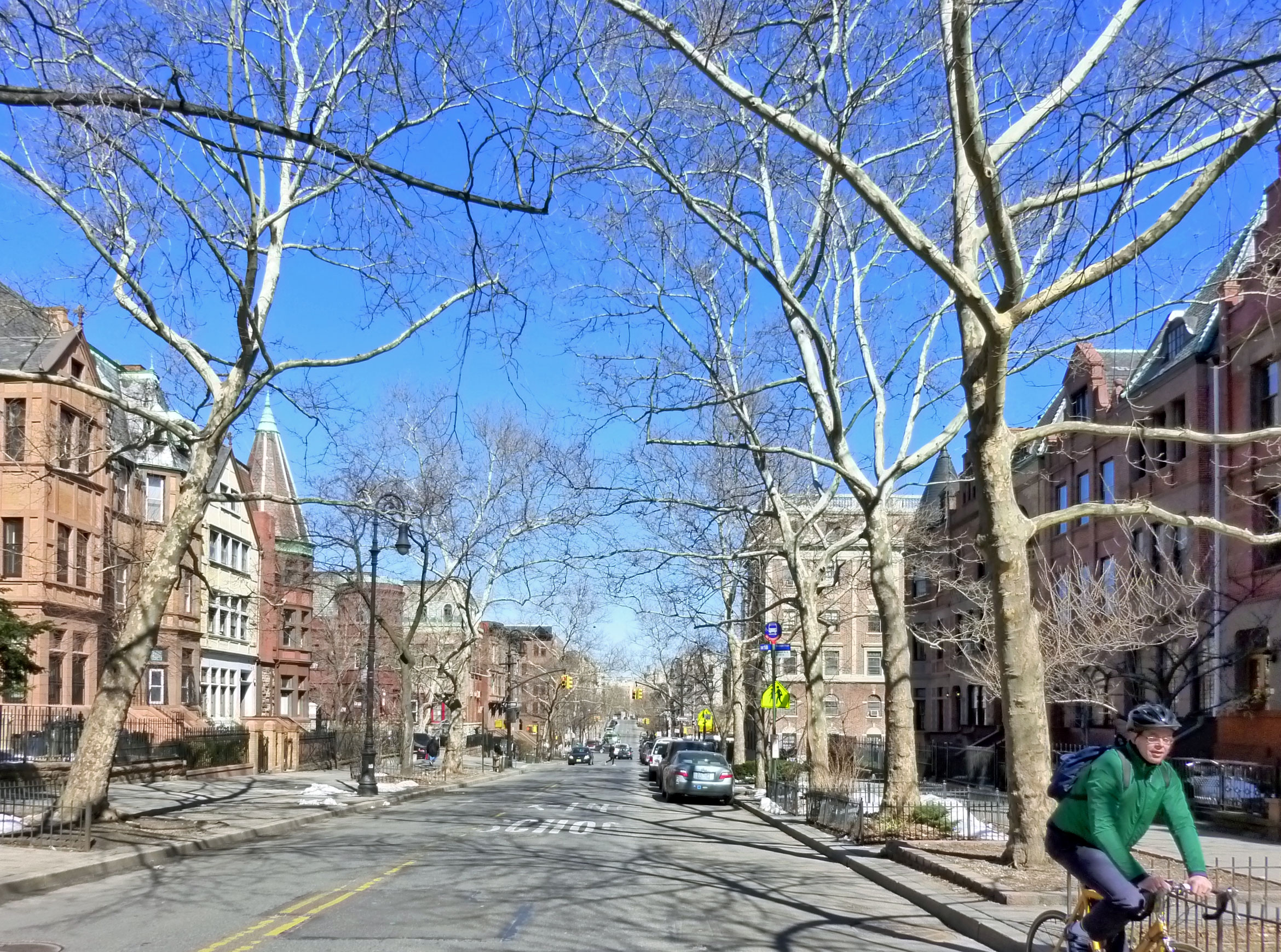
Hamilton Heights, Manhattan
Alexander Hamilton chose this piece of upper Manhattan when it was still farmland, building his country estate where the grid of streets had not yet been imagined. Two centuries later, the neighborhood that bears his name sits between 135th and 155th Streets on Manhattan's west side -- a place where the Founding Father's restored grange shares blocks with the gothic towers of City College, the brownstones of Sugar Hill, and bodegas whose awnings advertise in Spanish. Hamilton Heights has been remade by every wave of New Yorkers who found it, and each one left something behind.
Sugar Hill and the Sound of Harlem
The sub-neighborhood of Sugar Hill, perched along the high ground of Edgecombe Avenue, earned its name in the 1920s from the sweet life its residents enjoyed. This was where Black professionals and artists settled during the Harlem Renaissance, and the roster of former residents reads like a catalog of American culture: Duke Ellington, Count Basie, Harry Belafonte, Diahann Carroll, Ralph Ellison, and Malcolm X all lived in Hamilton Heights at various points. The concentration of talent was no accident. Sugar Hill offered well-built apartments at a remove from the density of central Harlem, and its elevation -- both literal and social -- attracted people who had arrived. Norman Rockwell, who lived in the neighborhood before moving to New England, and George Gershwin, who composed here before his early death in 1937, added to a creative ecosystem that crossed racial lines in ways the rest of the city rarely managed.
The Russian Corner
After the Russian Revolution, and especially from the 1940s onward, a community of Ukrainians, White Russian emigres, and Poles settled in Hamilton Heights. Broadway between the 140s and 150s became a corridor of Russian bookstores, bakeries, delicatessens, and theaters. The house at the corner of Broadway and West 141st Street was known as the "Russian House" -- Russky Dom -- and a Russian library stood on the opposite corner. Russian Orthodox churches rose to serve the community. By the late 1950s and through the 1960s, many of these families departed for the suburbs of New York and New Jersey, following the same centrifugal forces that reshaped neighborhoods across the city. Today, the Holy Fathers Russian Orthodox Church on 524 West 153rd Street remains the last visible landmark of that era, and notable Russian Americans rest in the adjacent Trinity Cemetery.
The Grange and the Campus
Hamilton Grange National Memorial preserves the Federal-style house where Alexander Hamilton spent the last two years of his life before his fatal duel with Aaron Burr in 1804. The house has been moved twice since Hamilton's death -- first from its original site to Convent Avenue in 1889, then to St. Nicholas Park in 2008 -- but it remains the neighborhood's defining historical artifact. A few blocks south, the City College of New York spreads its neo-Gothic campus across the hillside, its towers visible from Riverside Drive. City College, part of the City University of New York system, has offered tuition-free or low-cost education to generations of New Yorkers, and its presence gives Hamilton Heights a concentration of young people, academic energy, and the kind of foot traffic that sustains local businesses.
Parks on the Edge
Hamilton Heights benefits from geography that most Manhattan neighborhoods lack: proximity to genuine green space on multiple sides. Riverside Park runs along the Hudson River to the west, with Riverbank State Park -- built atop the North River Wastewater Treatment Plant -- offering swimming pools, athletic fields, and river views that feel improbable in Manhattan. Jackie Robinson Park and St. Nicholas Park provide interior green corridors, while smaller sites like Carmansville Playground and the William A. Harris Garden give the neighborhood a texture that the high-rise districts further south cannot match. The Hudson River itself, visible from the western edge of the neighborhood, connects Hamilton Heights to a waterfront that is increasingly accessible to pedestrians and cyclists.
A Neighborhood in Motion
The demographic shifts in Hamilton Heights have been sharp. Between 2000 and 2010, the white population increased by 231 percent while the Black population decreased by 26 percent. The Hispanic and Latino community, which made up 52 percent of residents, remained the majority but experienced a slight decline. These numbers tell a story of gentrification -- a word that means different things to longtime residents watching rents rise and to newcomers discovering brownstones they can almost afford. Crime dropped 78 percent between 1990 and 2019, a transformation that tracks the broader changes reshaping upper Manhattan. The neighborhood remains connected to the rest of the city by multiple subway lines on Broadway, St. Nicholas Avenue, and the branching Concourse Line, ensuring that Hamilton Heights stays woven into the fabric of a city that never stops remaking itself.
From the Air
Located at 40.825N, 73.949W in upper Manhattan, between 135th and 155th Streets. From the air, Hamilton Heights is identifiable by the Gothic campus of City College, the green corridor of St. Nicholas Park, and its proximity to the Hudson River and Riverside Park. Nearby airports include LaGuardia (KLGA) to the east and Teterboro (KTEB) to the northwest. Best viewed at 2,000-3,000 feet AGL. The George Washington Bridge to the north provides a strong visual reference.