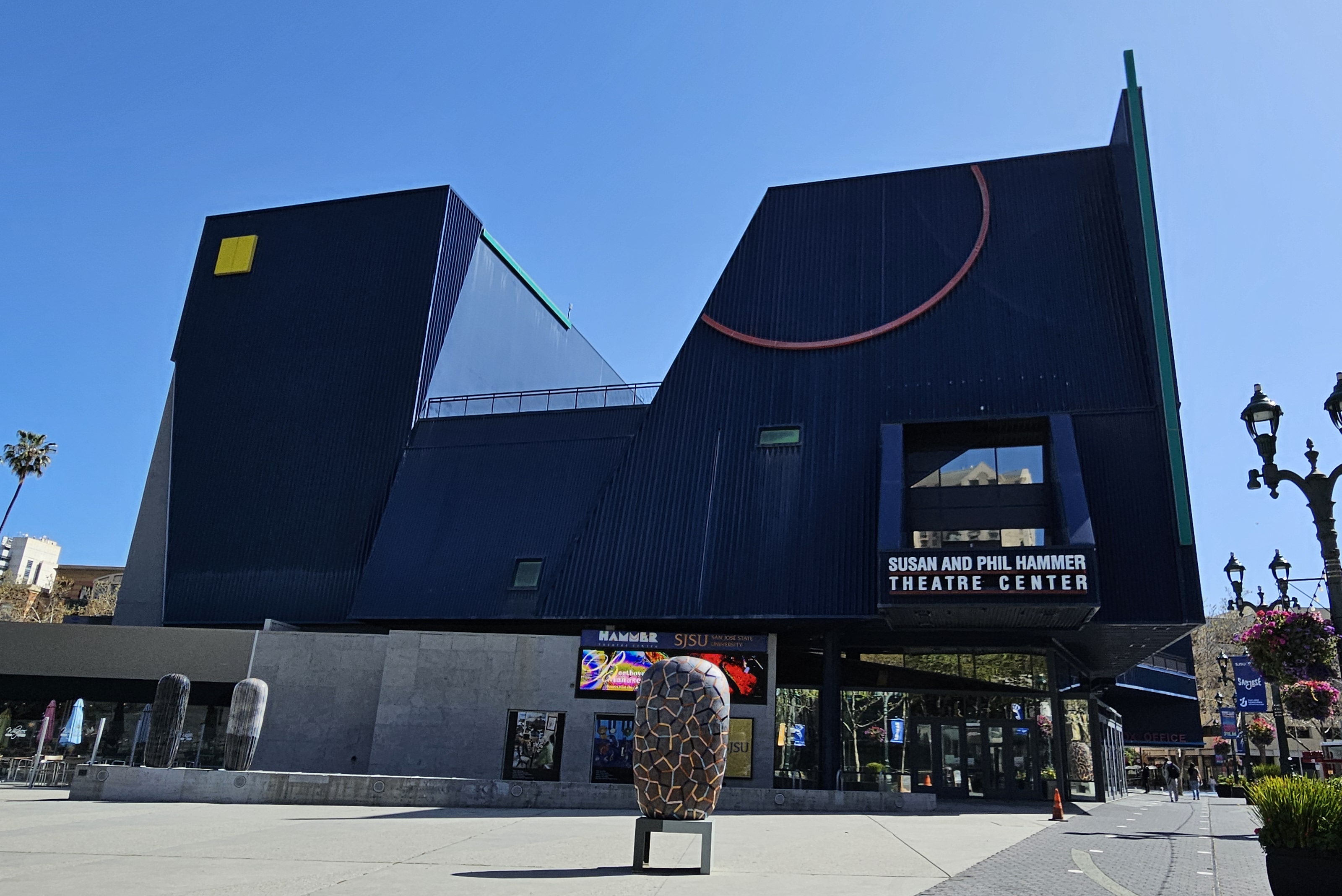
Hammer Theatre
For two years, the theater sat empty on the Paseo de San Antonio, its marquee dark, its 520-seat auditorium gathering dust in the heart of downtown San Jose. The building that had been purpose-built for the fastest-growing professional theater company in America became, almost overnight, a monument to how quickly ambition can collapse. When the San Jose Repertory Theatre declared bankruptcy in June 2014, the Hammer Theatre Center joined a long list of cultural venues that Silicon Valley had tried and failed to sustain. What happened next was not a rescue so much as a reinvention.
A Company Outgrows Its Ambition
The San Jose Repertory Theatre was founded in 1980, during a period when the city was eager to prove it was more than a bedroom community for San Francisco's cultural life. The company grew fast, earning a reputation as one of the country's most dynamic regional theaters. But performing in borrowed and rented spaces limited what the company could stage. In the early 1990s, the Rep collaborated with the San Jose Redevelopment Agency on a plan to build a permanent home in the city's downtown core. The result was the Hammer Theatre, completed in 1997 on the Paseo de San Antonio, the pedestrian promenade that threads through downtown. The building was named after Susan Hammer, San Jose's mayor from 1991 to 1998, and her husband Phil. For seventeen years, it gave the Rep a stage worthy of its reputation.
When the Curtain Fell
Bankruptcy, when it came in 2014, ended thirty-four years of continuous production. The Rep had survived recessions and shifting audiences before, but the financial pressures of maintaining a downtown theater in one of America's most expensive real estate markets proved fatal. The building was shuttered. Downtown San Jose, which had spent decades trying to cultivate a walkable arts district along the Paseo de San Antonio, lost its theatrical anchor. For nearly two years, the Hammer sat locked and dark, its Sobrato Auditorium empty, its black box studio silent. The question was not whether the building would reopen, but whether anyone could make a performing arts venue work in a city where the dominant industry measured success in code commits and quarterly earnings.
The University Steps In
San Jose State University, whose campus sits just blocks away, partnered with the city to reopen the Hammer in March 2016. The arrangement was pragmatic: the university gained a professional-grade venue for its music, theater, and dance programs, while the city preserved its investment in the Paseo de San Antonio's cultural infrastructure. The reopened Hammer Theatre Center operates as something broader than a repertory house. Its programming spans seven categories, from university productions to off-Broadway touring shows, world music concerts to lecture series featuring National Geographic Live and the Sundance Film Institute. The SJSU connection brought a built-in audience of students and faculty, while the diverse programming drew audiences who might never have attended the Rep.
Rooms Within the Room
The building itself is more versatile than its exterior suggests. The Sobrato Auditorium seats up to 520 in a traditional proscenium configuration, suitable for full theatrical productions and orchestral performances. Upstairs, the Hammer 4 studio -- a black box space accommodating 120 seats -- hosts experimental work, student showcases, and intimate performances that would be lost in the larger hall. A rooftop terrace connects to the studio, offering views of the downtown skyline. The Curtain Call Cafe on the ground floor and the Mercury News Lounge on the second floor serve as gathering spaces before and after shows. The Hammer2 Gallery on the second floor lobby rotates artwork by San Jose State University alumni, threading the university's creative output through every corridor of the building.
A Second Act for Downtown
The Hammer's resurrection matters beyond its own walls. Downtown San Jose has long struggled to develop the kind of street-level cultural energy that defines neighborhoods in San Francisco or Oakland. The Paseo de San Antonio was designed as a pedestrian spine connecting San Jose State's campus to the civic center, but empty storefronts and quiet evenings often undercut that vision. A functioning theater generates foot traffic, fills restaurants before curtain time, and gives people a reason to be downtown after dark. The Hammer's second act is modest compared to the Rep's heyday, but it may prove more durable. Rather than relying on a single company's fortunes, it distributes risk across a university, a city, and a rotating cast of performers from around the world. The lights are back on.
From the Air
Located at 37.334N, 121.887W on the Paseo de San Antonio in downtown San Jose, California. The theater is part of the dense downtown core and not individually distinguishable from the air, but the Paseo de San Antonio pedestrian corridor is visible as a tree-lined break in the urban grid running east-west between San Jose State University and the civic center. Nearest airports: Reid-Hillview (KRHV, 5nm E), San Jose International (KSJC, 3nm NW). Best viewed at 1,500-2,000 feet AGL where the downtown grid and university campus are clearly defined.