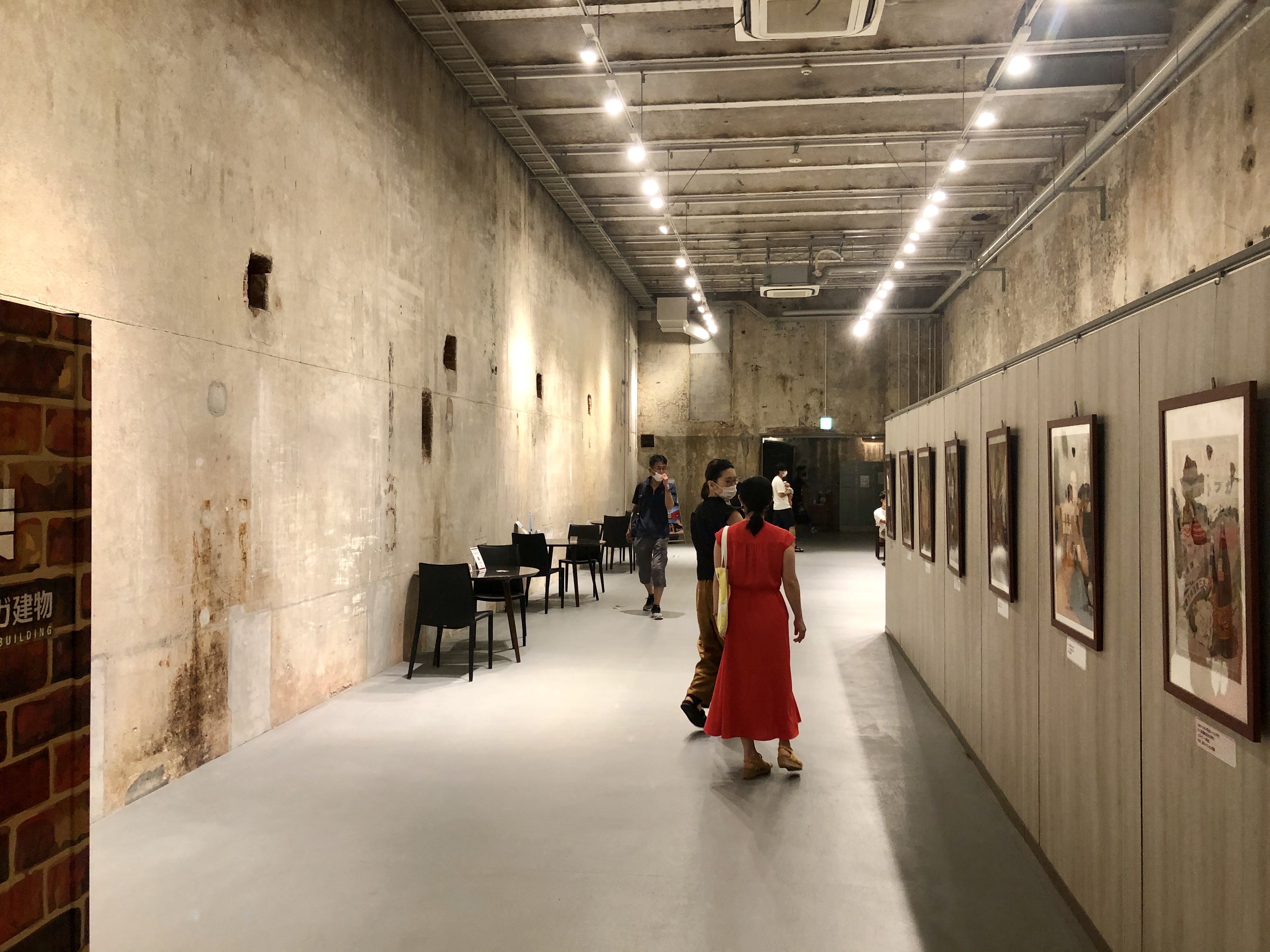
Handa Red Brick Building
The bullet holes are still there. Run your fingers along the outer wall of the Handa Red Brick Building and you can feel the pockmarks left by P-51 Mustang machine guns during the Handa Air Raid in the final months of World War II. The building absorbed the bullets the way it had absorbed everything else: the 1944 Tonankai earthquake, the 1945 Mikawa earthquake, decades of industrial use, and years of neglect. Built from approximately 2.4 million red bricks laid in the British method, this former beer brewery in Handa City, Aichi Prefecture, has refused to fall down for over 125 years. Today it stands as a certified Heritage of Industrial Modernization site, a place where visitors can drink the very beer that once made this small coastal city a serious competitor in Japan's brewing wars.
When Samurai Helmets Sold Beer
In the late nineteenth century, beer was still a novelty in Japan, an imported Western drink that a handful of ambitious Japanese entrepreneurs were racing to produce domestically. In Handa, a city already famous for its vinegar and sake brewing traditions, one of those vinegar makers pivoted to beer. The Marusan Brewing Company commissioned a state-of-the-art brewery, and in 1898, the red brick building opened for production. The beer they produced was called Kabuto, named after the iconic helmet worn by samurai warriors. The branding was inspired -- and the product was world-class. At the 1900 Paris Exposition, Kabuto Beer won the Gold Medal in the alcoholic beverages category, placing a small Japanese coastal town on the international stage. For a brief, remarkable period in the early twentieth century, Kabuto stood alongside Kirin, Dai Nippon, and Teikoku as one of Japan's four major beer brands.
An Architect of the Meiji Revolution
The building was designed by Tsumaki Yorinaka, one of the most important architects of Japan's Meiji-era industrialization. Tsumaki's portfolio reads like a catalog of Japan's emergence as a modern industrial power: he designed the Yokohama Red Brick Warehouse, contributed to the facade of Tokyo's Nihonbashi Bridge, and brought Western industrial construction techniques to a nation rapidly transforming itself. For the Handa brewery, Tsumaki specified the British bond brick-laying method, which alternates rows of headers and stretchers for maximum structural strength. The approximately 2.4 million bricks that compose the building were not merely decorative -- they were engineered to support the weight of brewing equipment and the thermal demands of fermentation. The result is a building that feels more like a European industrial cathedral than a Japanese beer factory.
Earthquakes, Bombs, and Bullets
The brewery's beer production ended in the early 1920s as consolidation swept through Japan's brewing industry, and the building was subsequently used as a corn starch factory and warehouse. But history was not done with it. On December 7, 1944, the Tonankai earthquake struck offshore, generating violent shaking across the Tokai region. Just weeks later, on January 13, 1945, the Mikawa earthquake followed. Both were devastating to the surrounding area, yet the red brick building held. Then came the air raids. American P-51 Mustang fighters strafed Handa, their machine gun rounds stitching lines of holes across the brick facade. The building survived that too. Those bullet scars remain unrepaired today, deliberately preserved as a physical record of what the structure endured. For visitors, running a hand across the pitted brick surface collapses the distance between a quiet afternoon in Aichi and the final desperate months of the Pacific War.
A Billboard from a Ghibli Film
In March 2022, a full-scale reproduction of the Kabuto Beer advertising tower was erected on the grounds, standing approximately ten meters tall. The original billboard had once towered over Nagoya Station during the Meiji period, a bold statement of Kabuto Beer's ambitions in Japan's third-largest city. That original tower gained unexpected fame when it appeared in Hayao Miyazaki's 2013 animated film The Wind Rises, which depicted 1920s and 1930s Japan through the eyes of an aircraft designer. The reconstruction was built partly to attract tourists ahead of the 2022 opening of Ghibli Park in nearby Nagakute, creating a link between Handa's brewing past and Studio Ghibli's celebration of Meiji and Taisho-era Japan.
Kabuto Beer Lives Again
After extensive seismic reinforcement and renovation work between 2014 and 2015, the Handa Red Brick Building reopened to the public on July 18, 2015, as a cultural and tourist facility. The site now includes a permanent exhibition room documenting the building's history and the story of Kabuto Beer, a special exhibition space, and clubhouse rooms used for music performances and community events. Most importantly, visitors can taste Kabuto Beer itself -- brewed again using revived recipes and served on draft at the on-site Cafe and Beer Hall Re-BRICK. The building sits about fifteen minutes on foot from Handa Station on the JR Taketoyo Line, an easy day trip from Nagoya. Toyota Enterprise Corporation has managed the facility since April 2020, ensuring that a building constructed to make beer in the age of the samurai continues to pour it in the age of the electric car.
From the Air
Located at 34.90°N, 136.93°E in Handa City on the western coast of the Chita Peninsula, Aichi Prefecture, Japan. The red brick building sits in an urban area near the coast and is not easily distinguished from altitude, but Handa's position on the Chita Peninsula between Ise Bay and Mikawa Bay provides clear geographic orientation. Nearest major airport is Chubu Centrair International Airport (RJGG), located on an artificial island approximately 15 km to the southwest. Nagoya Airfield (RJNA) lies about 30 km to the north. Best approached at 2,000-3,000 ft AGL following the Chita Peninsula coastline south from Nagoya.