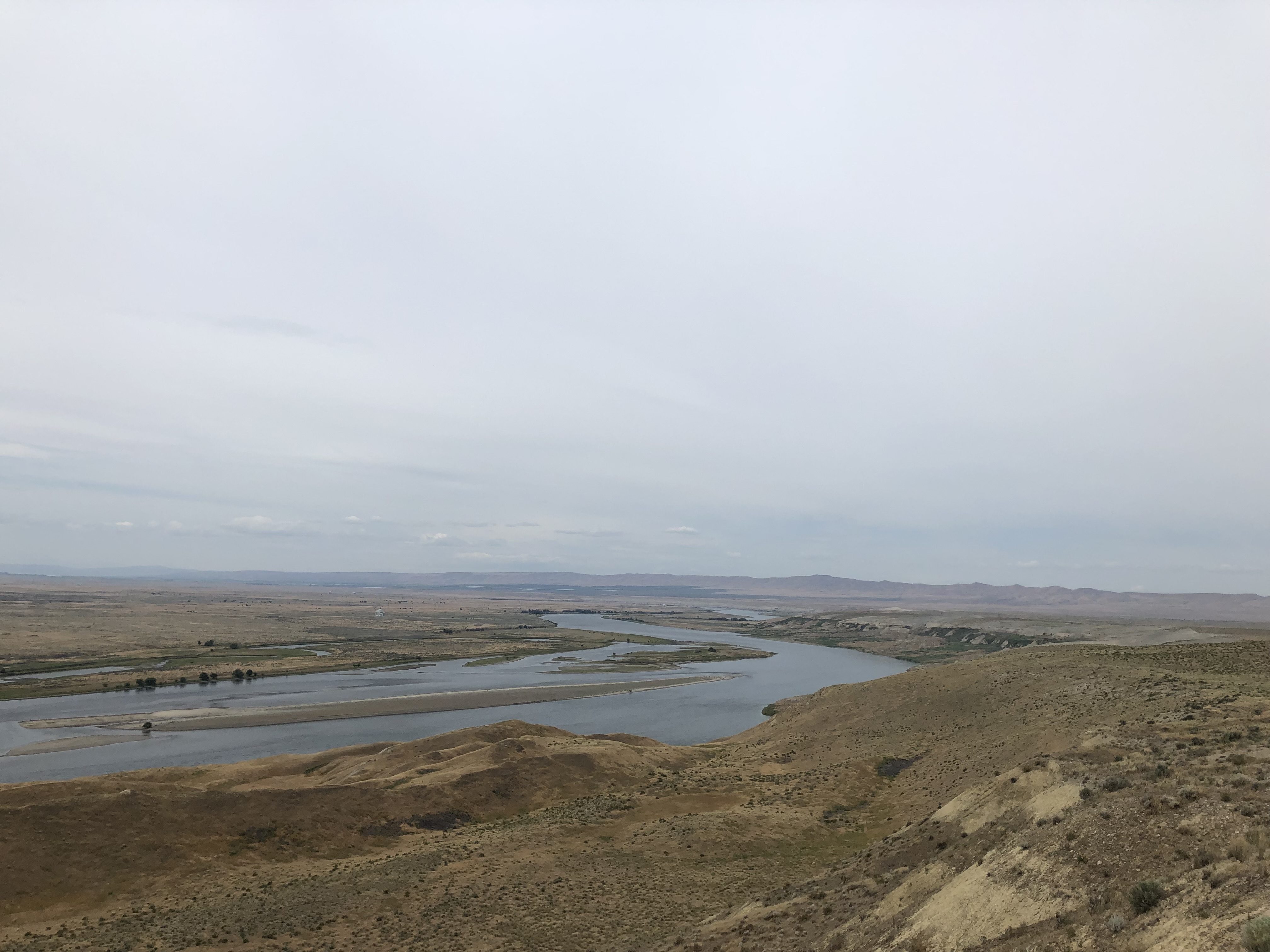
Hanford Site
In 1943, the U.S. government secretly acquired 586 square miles of Washington desert and evicted its residents. The Manhattan Project needed a remote site to produce plutonium for atomic weapons. The Hanford Site became the world's first industrial-scale nuclear reactor complex, producing the plutonium for the Trinity test and the bomb that destroyed Nagasaki. For four decades, Hanford continued producing nuclear materials for the Cold War arsenal, operating nine reactors and processing millions of gallons of radioactive waste. When production ended in 1987, the bill came due. Hanford had released radioactive contamination into the air, water, and soil. The cleanup - still ongoing - is the largest environmental remediation project in history, expected to cost hundreds of billions of dollars and take decades more. Hanford made the atomic age possible; it also created a poisoned landscape that may never be fully clean.
The Manhattan Project
The Hanford Site was chosen for plutonium production in 1943: remote, sparsely populated, with abundant water from the Columbia River for cooling and hydroelectric power from Grand Coulee and Bonneville Dams. The government evicted residents of the towns of Hanford and White Bluffs, giving them 30 days to leave. At peak construction, 50,000 workers built reactors, processing plants, and support facilities at unprecedented speed. Most didn't know what they were building. The B Reactor, the world's first production-scale nuclear reactor, went critical on September 26, 1944. By early 1945, it was producing plutonium. The plutonium for the Trinity test and for 'Fat Man,' the bomb dropped on Nagasaki, came from Hanford.
The Cold War
After World War II, Hanford expanded to meet Cold War demands. Nine reactors eventually operated along the Columbia River. The N Reactor, completed in 1963, was the last and largest, producing both plutonium and electricity. The site employed 50,000 people at its peak, many of them in the Tri-Cities (Richland, Kennewick, Pasco). Richland's high school teams are still called the 'Bombers,' with a mushroom cloud on the logo. Production continued until 1987, when the last reactor shut down. By then, Hanford had produced more than 74 tons of plutonium - about two-thirds of all plutonium produced in the United States.
The Contamination
Producing plutonium generated enormous amounts of radioactive waste. In the rush of wartime production and the secrecy of the Cold War, Hanford released contamination with little concern for consequences. Radioactive gases were vented into the air. Cooling water, containing radioactive isotopes, was discharged into the Columbia River. Liquid waste was stored in underground tanks, many of which leaked. The soil beneath the site became contaminated; groundwater plumes spread toward the river. Workers were exposed to radiation; so were downstream communities. Documents released in the 1980s revealed decades of deliberate releases, including a 1949 'Green Run' experiment that intentionally released radioactive iodine to test detection methods.
The Cleanup
The cleanup of Hanford began in 1989 and may not end until 2070 or later. The site contains 56 million gallons of radioactive waste in 177 underground tanks, a third of which have leaked or are suspected of leaking. Over 500 buildings require decontamination and demolition. Groundwater contamination threatens the Columbia River. The B Reactor, now a National Historic Landmark open for tours, represents the easier part of the legacy. The estimated cost of cleanup ranges from $300 billion to $640 billion - making Hanford the most expensive environmental remediation project in history. The site employs thousands of workers who monitor, contain, and slowly reduce the contamination that will outlast everyone who created it.
Visiting Hanford
The B Reactor, the world's first production-scale nuclear reactor, is open for tours operated by the Department of Energy and National Park Service. Tours are free but must be booked well in advance and require security screening. The reactor interior, control room, and surrounding facilities can be visited. The Manhattan Project National Historical Park, established in 2015, includes Hanford along with sites in Los Alamos and Oak Ridge. The REACH Museum in Richland tells the story of Hanford and the region. The Tri-Cities area (Richland, Kennewick, Pasco) has hotels and services. Tri-Cities Airport (PSC) has commercial service; Seattle-Tacoma (SEA) is 200 miles west. Most of the Hanford Site remains restricted - an active cleanup zone and permanent exclusion area covering hundreds of square miles.
From the Air
Located at 46.55°N, 119.49°W in the desert of southeastern Washington, about 200 miles east of Seattle. From altitude, the Hanford Site is visible as a vast restricted area along the Columbia River - largely empty desert punctuated by industrial facilities, contamination areas, and the distinctive B Reactor building. The Columbia River winds through the site; the Tri-Cities lie to the southeast.